
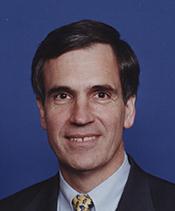
Historical · U.S. House · Maine · District 1
Tom Allen
Former U.S. Representative · Maine District 1 · 1997–2009 · Democratic
Tom Allen represented Maine's District 1 in the United States House of Representatives (1997–2009) for the Democratic party. The page below collects sourced biographical facts, term history, committee roles, and provenance for Allen.
Bioguide ID: A000357
Key facts
- Full name
- Tom Allen
- State
- Maine
- District
- District 1
- Party
- Democratic
- House service
- 1997–2009
- First House term
- 1997
- Status
- Left office
- Current term ends
- —
- Born
- 1945
- Bioguide ID
- A000357
- Committee assignments
- —
- Dataset version
- 1.20260605
Biographical narrative
1,050 words · sourced from the Wikipedia REST extract
Thomas H. Allen is a former American politician and author who served as a member of the United States House of Representatives, representing Maine's 1st congressional district. A member of the Democratic Party, Allen was first elected to the House in 1996 and served for six consecutive terms until his tenure ended in January 2009. Following his time in Congress, he became the president and CEO of the Association of American Publishers. In addition to his congressional career, Allen was the Democratic nominee for the U.S. Senate in 2008, where he ran against the incumbent Republican senator, Susan Collins.
Early life and career
Thomas H. Allen was born on April 16, 1945, in Portland, Maine, to Genevieve ("Sukey") Lahee and Charles W. Allen. His family background included civic engagement, as his grandfather, Neal W. Allen, was a notable figure in Portland's history, serving as the city's mayor from 1925 to 1926. This early exposure to public service likely influenced Allen's later political aspirations. He completed his secondary education at Deering High School before attending Bowdoin College in Brunswick, Maine.
Allen's academic journey took a significant turn when he was awarded a Rhodes Scholarship, which allowed him to study at Wadham College, Oxford. During his time at Oxford, he developed a friendship with fellow Rhodes scholar Bill Clinton, who would later become the 42nd President of the United States. After completing his studies in England, Allen returned to the United States to attend Harvard Law School, where he earned his law degree. Following his graduation, he practiced law, which provided him with a solid foundation for his future political career.
Allen's entry into politics began with his work as a staff member for Governor Kenneth M. Curtis and later for Senator Edmund S. Muskie. These positions allowed him to gain valuable experience in the political arena and understand the workings of government. In 1989, he was elected to the city council of Portland, Maine, marking the beginning of his elected political career. He served as the city's mayor from 1991 to 1992, further solidifying his reputation as a public servant. In 1994, Allen sought to advance his political career by running for governor of Maine but was unsuccessful, losing in the Democratic primary to Joe Brennan.
House tenure
Allen's congressional career began when he was elected to the U.S. House of Representatives in 1996, defeating the Republican incumbent James Longley, Jr. in a competitive election. His victory was marked by a significant margin, as he received a majority of the votes cast. Allen's tenure in the House spanned from 1997 to 2009, during which he was re-elected five times, consistently garnering over 55 percent of the vote in his district. His ability to maintain strong electoral support reflected his connection with constituents and his effectiveness as a representative.
Throughout his time in Congress, Allen was actively involved in various legislative initiatives and committees. He was a member of the Committee on Energy and Commerce, where he served on several subcommittees, including those focused on health, energy and air quality, and environmental issues. His work on these committees allowed him to advocate for policies that aligned with his priorities, particularly in the areas of health care and environmental protection.
Allen was known for his commitment to combating Republican efforts to weaken environmental regulations during his time in office. He advocated for a pay-as-you-go system that would require new tax cuts and spending to be offset by corresponding revenue increases, mirroring the fiscal discipline that Democrats had enacted in their early days of control in the 110th Congress. This approach underscored his focus on responsible budgeting and fiscal accountability.
In addition to his work on environmental issues, Allen prioritized health care reform, campaign finance reform, and support for small businesses. His legislative efforts reflected a broader Democratic agenda aimed at addressing the needs of constituents and promoting social welfare. Allen's dedication to these issues contributed to his reputation as a proactive and engaged member of Congress.
Legislative focus and committees
During his time in the House, Allen served on several key committees that shaped his legislative focus. As a member of the Committee on Energy and Commerce, he was involved in discussions and decisions regarding critical issues related to health care, energy policy, and environmental protection. His participation in the Subcommittee on Health allowed him to advocate for policies aimed at improving health care access and affordability for his constituents.
In addition to his work on health care, Allen was also active in the Subcommittee on Energy and Air Quality, where he addressed issues related to energy production and environmental sustainability. His involvement in the Subcommittee on Environment and Hazardous Materials further demonstrated his commitment to protecting the environment and promoting responsible resource management.
Allen's leadership extended beyond traditional committee roles; he co-chaired the House Affordable Medicines Task Force, which focused on making prescription medications more affordable and accessible to the public. This initiative highlighted his dedication to health care reform and his efforts to address the rising costs of medications for consumers.
Furthermore, Allen was a member of the House Oceans Caucus, reflecting his interest in marine and coastal issues, which are particularly relevant to Maine's economy and environment. His participation in this caucus underscored his commitment to protecting the state's natural resources and promoting sustainable practices.
In 2007, Allen announced his candidacy for the U.S. Senate seat held by Susan Collins. His campaign aimed to challenge Collins, who was a well-regarded moderate Republican. Despite his efforts to connect Collins to the policies of President George W. Bush, Allen was ultimately unsuccessful in the general election held in November 2008. He lost to Collins by a significant margin, as she received a substantial majority of the votes in a state that leaned Democratic in the presidential election that year.
After concluding his congressional career, Allen transitioned to a leadership role in the publishing industry, becoming the president and CEO of the Association of American Publishers in 2009. He continued to engage with public policy and civic issues, authoring a book titled "Dangerous Convictions: What's Really Wrong with the U.S. Congress," which was published in 2013. Through his various roles, Allen has remained an influential figure in both political and literary circles, contributing to discussions on governance and public policy.
Notable legislation
Sponsored and co-sponsored legislation for Tom Allen is pending operator curation. The biographical narrative above carries the same provenance trail until per-bill rows are written.
Sources
- [1]https://en.wikipedia.org/wiki/Tom_Allen_(Maine_politician)Wikipedia · retrieved 2026-06-05
Notable quotes
Sourced quotes for Tom Allen are pending operator curation. Narrative-scope provenance remains attached below.
Sources
- [1]https://en.wikipedia.org/wiki/Tom_Allen_(Maine_politician)Wikipedia · retrieved 2026-06-05
Key positions
Curated policy positions for Tom Allen are pending operator review. The biographical narrative above carries the same provenance trail until per-topic positions are written.
Sources
- [1]https://en.wikipedia.org/wiki/Tom_Allen_(Maine_politician)Wikipedia · retrieved 2026-06-05
Terms served
- 1997–1999U.S. House · Term 1 · Democratic
- 1999–2001U.S. House · Term 2 · Democratic
- 2001–2003U.S. House · Term 3 · Democratic
- 2003–2005U.S. House · Term 4 · Democratic
- 2005–2007U.S. House · Term 5 · Democratic
- 2007–2009U.S. House · Term 6 · Democratic
Sources & provenance
Every attributable claim above carries a per-section [N] marker that resolves to the corresponding URL below. Each entry records the upstream provider, the canonical URL, and the timestamp at which the source was retrieved by the ingest pipeline.
Key facts
- https://bioguide.congress.gov/search/bio/A000357bioguide · retrieved 2026-06-05
- http://tomallen.house.govhouse.gov · retrieved 2026-06-05
Biographical narrative
- https://en.wikipedia.org/wiki/Tom_Allen_(Maine_politician)wikipedia · retrieved 2026-06-05
Find your representative
Every U.S. state elects representatives by district. Browse Maine’s delegation, the full former-representative roster, or explore the role and term length.
Related on The Candidate
- Preceded by James LongleyEarlier holder of the Maine District 1 House seat · Republican.Open
- Amos AllenFormer U.S. Representative · Maine District 1 · RepublicanOpen
- Asher HindsFormer U.S. Representative · Maine District 1 · RepublicanOpen
- Carroll BeedyFormer U.S. Representative · Maine District 1 · RepublicanOpen
- Daniel SomesFormer U.S. Representative · Maine District 1 · RepublicanOpen
- Democratic PartyFederal candidates and office holders on the Democratic line.Open