
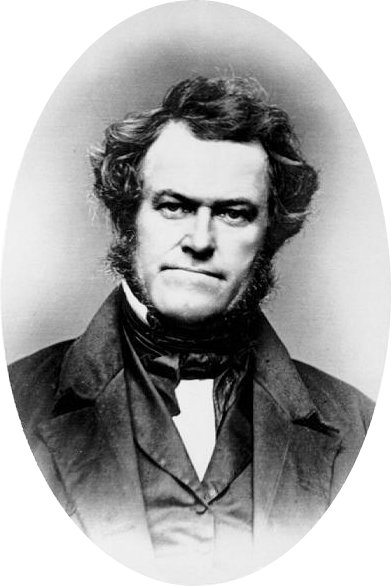
Historical · U.S. House · Maine · District 5
Virgil Parris
Former U.S. Representative · Maine District 5 · 1837–1841 · Democratic
Virgil Parris represented Maine's District 5 in the United States House of Representatives (1837–1841) for the Democratic party. The page below collects sourced biographical facts, term history, committee roles, and provenance for Parris.
Bioguide ID: P000081
Key facts
- Full name
- Virgil Parris
- State
- Maine
- District
- District 5
- Party
- Democratic
- House service
- 1837–1841
- First House term
- 1837
- Status
- Left office
- Current term ends
- —
- Born
- 1807
- Bioguide ID
- P000081
- Committee assignments
- —
- Dataset version
- 1.20260606
Biographical narrative
948 words · sourced from the Wikipedia REST extract
Virgil Parris was a prominent figure in 19th-century American politics, serving as a U.S. Representative from Maine. A member of the Democratic Party, Parris's political career spanned several decades, during which he held various significant roles at both the state and federal levels. His tenure in the U.S. House of Representatives lasted from 1837 to 1841, during which he contributed to the legislative process in a period marked by significant national developments. Parris's life and career reflect the political landscape of his time, as well as the evolving nature of governance in the United States.
Early life and career
Virgil Parris was born on February 18, 1807, in Buckfield, Massachusetts, which is now part of the state of Maine. His early education took place in common schools, where he laid the foundation for his future academic pursuits. Parris furthered his education at Hebron Academy, a well-regarded institution in Hebron, Maine, before attending Colby College in Waterville. He completed his studies at Union College in Schenectady, New York, graduating in 1827. This educational background provided him with a strong foundation in the liberal arts and sciences, which would later inform his work in law and politics.
Following his graduation, Parris studied law and was admitted to the bar in 1830, commencing his legal practice in Buckfield, Maine. His legal career began during a transformative period in American history, as the nation was grappling with various social, economic, and political changes. In addition to his legal work, Parris was active in local governance. He served as the assistant secretary of the Maine Senate in 1831, which provided him with valuable experience in legislative processes. Subsequently, he was elected to the Maine House of Representatives, where he served from 1832 until 1837. This role allowed him to engage directly with the political issues of his time and to establish himself as a capable leader within the Democratic Party.
House tenure
Parris's congressional career began when he was elected to the U.S. House of Representatives as a Democrat to fill the vacancy left by the death of Timothy J. Carter. He officially took office in 1837, marking the start of his first term in the Twenty-fifth Congress. His election to Congress occurred during a period of significant political realignment in the United States, as the Democratic Party was solidifying its influence in various regions, including Maine.
During his time in the House, Parris was reelected to the Twenty-sixth Congress, serving from May 29, 1838, until March 3, 1841. His tenure in Congress coincided with a number of critical national issues, including debates over economic policy, territorial expansion, and the role of the federal government. However, despite his contributions, Parris was not successful in his bid for renomination in 1840, which marked the end of his time in the House. His departure from Congress did not signify the end of his public service, as he continued to be active in various capacities within the state of Maine.
Following his congressional career, Parris returned to state politics. He served in the Maine Senate in 1842 and 1843, where he held leadership roles, including that of president. During this time, he also acted as the governor of Maine for a period, further demonstrating his commitment to public service and governance. His experience in the Senate and as acting governor allowed him to influence state policy and engage with the pressing issues facing Maine during the early 1840s.
Legislative focus and committees
Throughout his congressional career, Parris was involved in a range of legislative activities that reflected the priorities of the Democratic Party and the interests of his constituents in Maine. While specific details regarding the bills he sponsored or the committees on which he served are not documented, it can be inferred that his legal background and experience in state politics informed his legislative focus. As a member of the House, he would have participated in discussions and debates on key issues of the day, including economic development, infrastructure, and social policies.
In addition to his legislative work, Parris's political engagement extended beyond Congress. He served as a delegate to the Democratic National Conventions in 1852 and 1872, highlighting his ongoing involvement in national politics and party organization. These roles allowed him to contribute to the shaping of the Democratic Party's platform and to engage with prominent political figures of his time.
After leaving Congress, Parris held several important positions that further demonstrated his commitment to public service. From 1844 to 1848, he served as the United States marshal for the district of Maine, a role that involved overseeing federal law enforcement and judicial matters within the state. This position underscored his legal expertise and his ability to navigate complex governmental structures. In 1853, he took on the role of special mail agent for New England, which involved overseeing postal services and ensuring efficient communication across the region.
In 1856, Parris was appointed as a naval storekeeper at the Portsmouth Naval Shipyard, a position that involved managing supplies and resources for the U.S. Navy. This role further exemplified his versatility and adaptability in various governmental functions. His career trajectory reflects the interconnectedness of legal, political, and administrative roles in the 19th century, as individuals often transitioned between different forms of public service.
Virgil Parris passed away on June 13, 1874, in Paris, Maine. He was interred in the Rawson family knoll in the Old Cemetery, marking the end of a life dedicated to public service and governance. His contributions to Maine and the broader political landscape of the United States during a formative period in American history remain a part of the legacy of those who shaped the nation’s early legislative framework.
Notable legislation
Sponsored and co-sponsored legislation for Virgil Parris is pending operator curation. The biographical narrative above carries the same provenance trail until per-bill rows are written.
Sources
- [1]https://en.wikipedia.org/wiki/Virgil_D._ParrisWikipedia · retrieved 2026-06-06
Notable quotes
Sourced quotes for Virgil Parris are pending operator curation. Narrative-scope provenance remains attached below.
Sources
- [1]https://en.wikipedia.org/wiki/Virgil_D._ParrisWikipedia · retrieved 2026-06-06
Key positions
Curated policy positions for Virgil Parris are pending operator review. The biographical narrative above carries the same provenance trail until per-topic positions are written.
Sources
- [1]https://en.wikipedia.org/wiki/Virgil_D._ParrisWikipedia · retrieved 2026-06-06
Terms served
- 1837–1839U.S. House · Term 1 · Democratic
- 1839–1841U.S. House · Term 2 · Democratic
Sources & provenance
Every attributable claim above carries a per-section [N] marker that resolves to the corresponding URL below. Each entry records the upstream provider, the canonical URL, and the timestamp at which the source was retrieved by the ingest pipeline.
Key facts
- https://bioguide.congress.gov/search/bio/P000081bioguide · retrieved 2026-06-06
- https://www.govtrack.us/congress/members/408491govtrack · retrieved 2026-06-06
Biographical narrative
- https://en.wikipedia.org/wiki/Virgil_D._Parriswikipedia · retrieved 2026-06-06
Find your representative
Every U.S. state elects representatives by district. Browse Maine’s delegation, the full former-representative roster, or explore the role and term length.
Related on The Candidate
- Preceded by Moses Mason Jr.Earlier holder of the Maine District 5 House seat · Jackson.Open
- Succeeded by Benjamin WhiteLater holder of the Maine District 5 House seat · Democratic.Open
- Amos AllenFormer U.S. Representative · Maine District 1 · RepublicanOpen
- Asher HindsFormer U.S. Representative · Maine District 1 · RepublicanOpen
- Carroll BeedyFormer U.S. Representative · Maine District 1 · RepublicanOpen
- Daniel SomesFormer U.S. Representative · Maine District 1 · RepublicanOpen