
Historical · U.S. House · Michigan · District 1
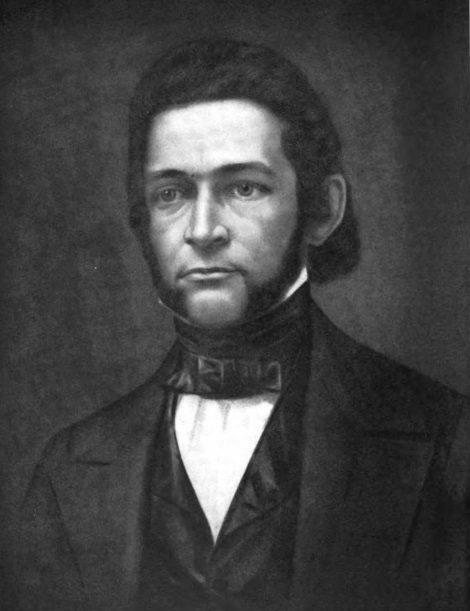
Alexander Buel
Former U.S. Representative · Michigan District 1 · 1849–1851 · Democratic
Alexander Buel represented Michigan's District 1 in the United States House of Representatives (1849–1851) for the Democratic party. The page below collects sourced biographical facts, term history, committee roles, and provenance for Buel.
Bioguide ID: B001037
Key facts
- Full name
- Alexander Buel
- State
- Michigan
- District
- District 1
- Party
- Democratic
- House service
- 1849–1851
- First House term
- 1849
- Status
- Left office
- Current term ends
- —
- Born
- 1813
- Bioguide ID
- B001037
- Committee assignments
- —
- Dataset version
- 1.20260606
Biographical narrative
954 words · sourced from the Wikipedia REST extract
Alexander Buel was an American lawyer and politician who served as a U.S. Representative for Michigan's 1st congressional district from 1849 to 1851. A member of the Democratic Party, Buel is recognized for his contributions to both state and national politics during a formative period in American history. His career included significant roles in the Michigan House of Representatives and as a city attorney in Detroit, where he was known for his legal expertise and community involvement.
Early life and career
Born on December 13, 1813, in Castleton, Vermont, Alexander Buel displayed remarkable intellectual capabilities from a young age. He began his education in the public schools of Poultney, Vermont, but by the age of eight, he was engaged in an accelerated course of studies under the guidance of Henry Howe, a former principal of Canandaigua Academy in New York. Buel's academic prowess allowed him to pass the admission exams for Middlebury College at just ten years old. However, due to concerns about his age relative to other students, he was encouraged to continue his independent studies for a few more years.
In 1827, at the age of 13, Buel enrolled as a sophomore at the University of Vermont in Burlington, where he studied for one year. He then returned to his original choice, Middlebury College, enrolling as a junior while also taking on teaching responsibilities at local common schools in Clarendon. Buel graduated from Middlebury College in August 1830, ranking first in his class at the age of 16. Following his graduation, he took on the role of superintendent at a classical academy in West Rutland.
Buel's career in education continued when he became the principal of a classical academy in Fort Covington, New York, in 1831. During this time, he began studying law, which would become his primary profession. By December 1832, he had returned to Castleton to continue his legal studies while also teaching at the Castleton Academy.
In October 1834, Buel relocated to Detroit, Michigan, where he quickly became involved in local governance, serving as Deputy Register of the Court of Probate. His proficiency in languages allowed him to communicate effectively with the French-speaking population and the growing German immigrant community in Detroit. He was admitted to the bar in the spring of 1835 and began practicing law in the city.
Buel's political career began to take shape as he was appointed city attorney in 1837. He was elected to the Michigan House of Representatives in 1838 and again in 1848, serving as speaker during his second term. Additionally, he held the position of prosecuting attorney for Wayne County from 1843 to 1846. His early political experiences laid the groundwork for his future endeavors at the national level.
House tenure
Buel's first attempt to enter the United States Congress came in 1846 when he ran for the 1st congressional district of Michigan. Although he did not win that election, he persevered and successfully secured a seat in the Thirty-first Congress in 1848. He was elected as a Democrat, succeeding fellow party member Robert McClelland, who chose not to seek re-election.
Buel's term in the House of Representatives began on March 4, 1849, and concluded on March 3, 1851. During his time in Congress, he participated in the legislative process during a period marked by significant national debates, including issues related to slavery and territorial expansion. His tenure was characterized by the complexities of a nation grappling with its identity and the challenges posed by sectional tensions.
Despite his initial success, Buel faced challenges in his political career. He sought re-election in 1850 but was unsuccessful in his bid to continue serving in the Thirty-second Congress. Following his departure from Congress, he returned to the practice of law, where he continued to apply his legal expertise in various capacities.
Buel's political involvement did not end with his congressional tenure. He returned to the Michigan House of Representatives in 1859 and 1860, further contributing to state governance. In 1860, he was appointed postmaster of Detroit, a position he held until March 1861, reflecting his ongoing commitment to public service.
Legislative focus and committees
While specific details regarding Buel's legislative focus and committee assignments during his time in Congress are not extensively documented, it is known that he served during a critical period in American history. The issues of the day included debates over the expansion of slavery into new territories, the implications of the Mexican-American War, and the growing sectional divides that would eventually lead to the Civil War.
As a member of the Democratic Party, Buel was likely aligned with the party's positions on various national issues, which at the time often revolved around states' rights and the expansion of slavery. His background as a lawyer and his experience in state politics would have informed his contributions to legislative discussions and decisions.
Buel's involvement in the Michigan House of Representatives, both before and after his congressional service, indicates a sustained interest in legislative matters at the state level. His roles in various capacities, including speaker of the House and city attorney, suggest that he was engaged with a range of issues affecting his constituents and the broader community.
In summary, Alexander Buel's career reflects a commitment to public service through both legal practice and political engagement. His contributions to Michigan's governance and his brief tenure in the U.S. House of Representatives illustrate the complexities of a politician navigating a rapidly changing political landscape in the mid-19th century. Buel's legacy is marked by his dedication to the law and his efforts to serve the public interest during a pivotal era in American history. He passed away on April 19, 1868, in Detroit, Michigan, and is interred at Elmwood Cemetery.
Notable legislation
Sponsored and co-sponsored legislation for Alexander Buel is pending operator curation. The biographical narrative above carries the same provenance trail until per-bill rows are written.
Sources
- [1]https://en.wikipedia.org/wiki/Alexander_W._BuelWikipedia · retrieved 2026-06-06
Notable quotes
Sourced quotes for Alexander Buel are pending operator curation. Narrative-scope provenance remains attached below.
Sources
- [1]https://en.wikipedia.org/wiki/Alexander_W._BuelWikipedia · retrieved 2026-06-06
Key positions
Curated policy positions for Alexander Buel are pending operator review. The biographical narrative above carries the same provenance trail until per-topic positions are written.
Sources
- [1]https://en.wikipedia.org/wiki/Alexander_W._BuelWikipedia · retrieved 2026-06-06
Terms served
- 1849–1851U.S. House · Term 1 · Democratic
Sources & provenance
Every attributable claim above carries a per-section [N] marker that resolves to the corresponding URL below. Each entry records the upstream provider, the canonical URL, and the timestamp at which the source was retrieved by the ingest pipeline.
Key facts
- https://bioguide.congress.gov/search/bio/B001037bioguide · retrieved 2026-06-06
- https://www.govtrack.us/congress/members/401987govtrack · retrieved 2026-06-06
Biographical narrative
- https://en.wikipedia.org/wiki/Alexander_W._Buelwikipedia · retrieved 2026-06-06
Find your representative
Every U.S. state elects representatives by district. Browse Michigan’s delegation, the full former-representative roster, or explore the role and term length.
Related on The Candidate
- Preceded by Robert McClellandEarlier holder of the Michigan District 1 House seat · Democratic.Open
- Succeeded by Ebenezer PennimanLater holder of the Michigan District 1 House seat · Whig.Open
- Alfred LuckingFormer U.S. Representative · Michigan District 1 · DemocraticOpen
- Alpheus WilliamsFormer U.S. Representative · Michigan District 1 · DemocraticOpen
- Bart StupakFormer U.S. Representative · Michigan District 1 · DemocraticOpen
- Bradley GrangerFormer U.S. Representative · Michigan District 1 · RepublicanOpen