
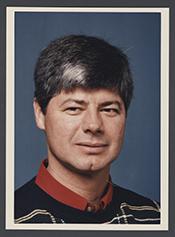
Historical · U.S. House · Michigan · District 1
Bart Stupak
Former U.S. Representative · Michigan District 1 · 1993–2011 · Democratic
Bart Stupak represented Michigan's District 1 in the United States House of Representatives (1993–2011) for the Democratic party. The page below collects sourced biographical facts, term history, committee roles, and provenance for Stupak.
Bioguide ID: S001045
Key facts
- Full name
- Bart Stupak
- State
- Michigan
- District
- District 1
- Party
- Democratic
- House service
- 1993–2011
- First House term
- 1993
- Status
- Left office
- Current term ends
- —
- Born
- 1952
- Bioguide ID
- S001045
- Committee assignments
- —
- Dataset version
- 1.20260605
Biographical narrative
903 words · sourced from the Wikipedia REST extract
Bartholomew Thomas Stupak is a former American politician and lobbyist who served as a U.S. Representative for Michigan's 1st congressional district from 1993 until 2011. A member of the Democratic Party, Stupak was notable for his role in various legislative efforts, particularly in health care reform and environmental protection. After leaving Congress, he transitioned to a career in lobbying.
Early life and career
Bart Stupak was born on February 29, 1952, in Milwaukee, Wisconsin. He completed his secondary education at Gladstone High School in Gladstone, Michigan, graduating in 1970. Stupak's early involvement in community service is highlighted by his achievement as an Eagle Scout. Following high school, he pursued higher education, earning an Associate's degree from Northwestern Michigan College in Traverse City in 1972. He continued his studies at Saginaw Valley State University, where he obtained a bachelor's degree in criminal justice in 1977, graduating magna cum laude. Stupak furthered his education by earning a Juris Doctor degree from Thomas M. Cooley Law School in Lansing, Michigan, in 1981.
Stupak began his professional career as a police officer in Escanaba, Michigan, in 1972. He later served as a Michigan State Police Trooper from 1973 to 1984. In addition to his law enforcement career, he practiced law, which contributed to his understanding of legal and legislative processes. His political career began in earnest when he was elected to the Michigan House of Representatives in 1988, representing Menominee, Delta, and Dickinson counties. In this role, he defeated the incumbent Republican representative, Jim Connors. Stupak's attempt to advance to the Michigan State Senate in 1990 was unsuccessful, as he lost a primary election to Don Koivisto.
House tenure
In 1992, Stupak launched a campaign for the U.S. House of Representatives, seeking to represent Michigan's 1st congressional district, which encompasses the Upper Peninsula and parts of the northern Lower Peninsula. This district had previously been held by Republican Robert William Davis, who retired after serving seven terms. Stupak's victory in the Democratic primary was significant, as he became the first Democrat to represent the district since 1967 and only the third Democrat to win it in the 20th century. He subsequently defeated Republican Philip Ruppe in the general election.
Stupak was re-elected in 1994, marking a historic moment as he became the first Democrat in 56 years to secure more than one term in the Northern Michigan district. He continued to win re-election in subsequent years, defeating Republican challengers, including Don Hooper in 2002, 2004, and 2006, as well as Tom Casperson in 2008. His tenure in the House of Representatives spanned nine terms, concluding on January 3, 2011, when he chose not to seek re-election. He was succeeded by Republican Dan Benishek.
Legislative focus and committees
Throughout his congressional career, Stupak was active on several key issues, particularly those affecting his constituents in Michigan. He served on the Committee on Energy and Commerce, where he held positions on various subcommittees, including Commerce, Trade and Consumer Protection, Communications, Technology and the Internet, and as Chair of the Subcommittee on Oversight and Investigation. His committee work allowed him to engage deeply with issues related to energy policy, telecommunications, and consumer protection.
Stupak was also a founder and co-chair of the Law Enforcement Caucus and co-chaired the Congressional Northern Border Caucus. He was a member of the Congressional Motorcycle Safety Caucus, reflecting his interest in transportation safety issues. His legislative efforts included sponsoring 36 bills during his time in Congress, although none were enacted into law. He did, however, co-sponsor 157 bills, with five of those ultimately becoming law.
Stupak's voting record indicated a strong alignment with his party, as he voted with Democratic members approximately 96% of the time and abstained from voting about 5% of the time. He was particularly focused on environmental issues, given the 1st District's extensive shoreline along the Great Lakes, which spans over 1,600 miles. Stupak was an advocate for the protection of the Great Lakes, opposing any initiatives that would allow for the sale or diversion of Great Lakes water or permit drilling for oil and gas beneath the lakes.
In the realm of health care, Stupak was a prominent figure during the discussions surrounding health care reform in 2009. He expressed support for the reform bill proposed by President Barack Obama but sought to include restrictions on abortion coverage. This led to the introduction of the Stupak–Pitts Amendment, which aimed to prohibit federal funding for abortion services. The amendment was adopted by the House of Representatives, but a similar provision was not included in the Senate version of the legislation. Stupak's stance on this issue garnered significant attention and controversy, leading to public protests and a notable rally against him organized by abortion-rights advocates.
In March 2010, after extensive negotiations, Stupak reached an agreement with President Obama, resulting in an Executive Order that would prevent federal funding for abortion through the health care reform law. This compromise allowed Stupak and several of his colleagues to support the final version of the legislation, although it also led to criticism from both anti-abortion advocates and those who supported abortion rights.
After leaving Congress in 2011, Stupak transitioned to a lobbying career with Venable LLP, where he continues to engage in advocacy and policy work. His extensive experience in law enforcement, state politics, and federal legislation has shaped his approach to lobbying, focusing on issues relevant to his background and expertise.
Notable legislation
Sponsored and co-sponsored legislation for Bart Stupak is pending operator curation. The biographical narrative above carries the same provenance trail until per-bill rows are written.
Sources
- [1]https://en.wikipedia.org/wiki/Bart_StupakWikipedia · retrieved 2026-06-05
Notable quotes
Sourced quotes for Bart Stupak are pending operator curation. Narrative-scope provenance remains attached below.
Sources
- [1]https://en.wikipedia.org/wiki/Bart_StupakWikipedia · retrieved 2026-06-05
Key positions
Curated policy positions for Bart Stupak are pending operator review. The biographical narrative above carries the same provenance trail until per-topic positions are written.
Sources
- [1]https://en.wikipedia.org/wiki/Bart_StupakWikipedia · retrieved 2026-06-05
Terms served
- 1993–1995U.S. House · Term 1 · Democratic
- 1995–1997U.S. House · Term 2 · Democratic
- 1997–1999U.S. House · Term 3 · Democratic
- 1999–2001U.S. House · Term 4 · Democratic
- 2001–2003U.S. House · Term 5 · Democratic
- 2003–2005U.S. House · Term 6 · Democratic
- 2005–2007U.S. House · Term 7 · Democratic
- 2007–2009U.S. House · Term 8 · Democratic
- 2009–2011U.S. House · Term 9 · Democratic
Sources & provenance
Every attributable claim above carries a per-section [N] marker that resolves to the corresponding URL below. Each entry records the upstream provider, the canonical URL, and the timestamp at which the source was retrieved by the ingest pipeline.
Key facts
- https://bioguide.congress.gov/search/bio/S001045bioguide · retrieved 2026-06-05
- http://www.house.gov/stupakhouse.gov · retrieved 2026-06-05
Biographical narrative
- https://en.wikipedia.org/wiki/Bart_Stupakwikipedia · retrieved 2026-06-05
Find your representative
Every U.S. state elects representatives by district. Browse Michigan’s delegation, the full former-representative roster, or explore the role and term length.
Related on The Candidate
- Preceded by Thaddeus MachrowiczEarlier holder of the Michigan District 1 House seat · Democratic.Open
- Succeeded by Dan BenishekLater holder of the Michigan District 1 House seat · Republican.Open
- Alexander BuelFormer U.S. Representative · Michigan District 1 · DemocraticOpen
- Alfred LuckingFormer U.S. Representative · Michigan District 1 · DemocraticOpen
- Alpheus WilliamsFormer U.S. Representative · Michigan District 1 · DemocraticOpen
- Bradley GrangerFormer U.S. Representative · Michigan District 1 · RepublicanOpen