
Historical · U.S. House · Minnesota · District 1
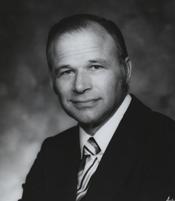
Albert Quie
Former U.S. Representative · Minnesota District 1 · 1957–1979 · Republican
Albert Quie represented Minnesota's District 1 in the United States House of Representatives (1957–1979) for the Republican party. The page below collects sourced biographical facts, term history, committee roles, and provenance for Quie.
Bioguide ID: Q000010
Key facts
- Full name
- Albert Quie
- State
- Minnesota
- District
- District 1
- Party
- Republican
- House service
- 1957–1979
- First House term
- 1957
- Status
- Left office
- Current term ends
- —
- Born
- 1923
- Bioguide ID
- Q000010
- Committee assignments
- —
- Dataset version
- 1.20260605
Biographical narrative
934 words · sourced from the Wikipedia REST extract
Albert H. Quie was an American politician and farmer who served as a U.S. Representative for Minnesota's 1st congressional district from 1958 until 1979. A member of the Republican Party, Quie was known for his moderate political stance and was later elected as the 35th governor of Minnesota, serving from 1979 to 1983. His political career spanned over two decades, during which he was involved in significant legislative actions and was considered for high-profile positions, including Vice President of the United States.
Early life and career
Albert Harold Quie was born on September 18, 1923, in Wheeling Township, Rice County, Minnesota, where he grew up on his family’s farm. He was the third of four children in a family with deep agricultural roots, as his grandfather had purchased the farm after returning from service in the American Civil War. Quie's heritage included Norwegian immigrants among his grandparents, which contributed to his strong ties to the local community and agricultural lifestyle. Growing up, he learned essential farming skills, including riding horses and milking cows, which shaped his understanding of rural life.
Quie completed his high school education at Northfield High School in Northfield, Minnesota, graduating in 1942. Shortly thereafter, he enlisted in the United States Navy during World War II, where he trained as a fighter pilot. Although he completed flight school, the war ended before he saw active combat. After his military service, Quie pursued higher education at St. Olaf College, graduating in 1950 with a degree in political science. It was during his college years that he met his future wife, Gretchen Hansen.
Following his graduation, Quie returned to farming, continuing the family tradition as a dairy farmer. His political career began in earnest when he ran as a write-in candidate for the Minnesota House of Representatives in 1952, although he was unsuccessful in that bid. He then served in the Minnesota State Senate from 1955 to 1958, representing the old 18th District, where he began to establish his reputation in state politics.
House tenure
Quie's entry into the U.S. House of Representatives came after the death of incumbent August H. Andresen in January 1958. Quie successfully ran in the special election to fill the vacancy for Minnesota's 1st congressional district. He secured the Republican nomination at a party convention and subsequently won the special election against Democratic-Farmer-Labor Party nominee Eugene Foley by a narrow margin. Following this victory, Quie was re-elected in the November 1958 general election, marking the beginning of his long tenure in Congress.
Throughout his time in the House, Quie served across eleven terms, spanning from the 85th to the 95th United States Congress. He was a member of the House Committee on Agriculture and the House Committee on Education and Workforce, where he contributed to various legislative initiatives. Quie was known for his bipartisan approach and voted in favor of several key civil rights measures, including the Civil Rights Acts of 1960, 1964, and 1968, as well as the Voting Rights Act of 1965 and the Twenty-fourth Amendment to the U.S. Constitution.
His moderate Republican stance positioned him as a pragmatic legislator who often sought common ground on contentious issues. Quie's reputation extended beyond his legislative actions; he was briefly considered for the position of Vice President of the United States in 1974 following Gerald Ford's ascension to the presidency after Richard Nixon's resignation. Although he was on the shortlist for potential vice presidential candidates, the position ultimately went to Nelson Rockefeller.
Legislative focus and committees
During his congressional career, Quie focused on a range of issues pertinent to his constituents and the nation. His work on the House Committee on Agriculture was particularly significant, given his background as a farmer. He advocated for policies that supported agricultural interests and rural development, reflecting the needs of his district, which was heavily reliant on farming.
In addition to agriculture, Quie's role on the House Committee on Education and Workforce allowed him to engage with issues related to education reform and workforce development. His legislative efforts in these areas were informed by his own educational background and his commitment to improving opportunities for Minnesotans.
Quie's voting record demonstrated a commitment to civil rights and social justice, aligning with the broader civil rights movement of the 1960s. His support for landmark legislation aimed at dismantling racial discrimination and expanding voting rights underscored his belief in equality and justice.
After serving in the House for over two decades, Quie's tenure ended when he chose not to seek re-election in 1978. He subsequently ran for governor of Minnesota, winning the election against incumbent Rudy Perpich. His gubernatorial term was marked by significant challenges, including a budget crisis that led to a state deficit for the first time since World War II. Quie's decision to raise taxes, despite earlier pledges not to do so, resulted in a loss of political support, and he did not run for re-election in 1982.
Following his departure from politics, Quie engaged in various activities, including involvement with a nonprofit prison ministry and traveling extensively. He sold the family farm and enjoyed horseback riding excursions, reflecting his lifelong connection to agriculture and rural life.
Quie passed away on August 18, 2023, at the age of 99, just a month shy of his 100th birthday. He was remembered as a significant figure in Minnesota politics, having served both in the U.S. House of Representatives and as governor. His legacy includes his contributions to civil rights, agriculture, and education, as well as his role in shaping the political landscape of Minnesota during a transformative period in American history.
Notable legislation
Sponsored and co-sponsored legislation for Albert Quie is pending operator curation. The biographical narrative above carries the same provenance trail until per-bill rows are written.
Sources
- [1]https://en.wikipedia.org/wiki/Al_QuieWikipedia · retrieved 2026-06-05
Notable quotes
Sourced quotes for Albert Quie are pending operator curation. Narrative-scope provenance remains attached below.
Sources
- [1]https://en.wikipedia.org/wiki/Al_QuieWikipedia · retrieved 2026-06-05
Key positions
Curated policy positions for Albert Quie are pending operator review. The biographical narrative above carries the same provenance trail until per-topic positions are written.
Sources
- [1]https://en.wikipedia.org/wiki/Al_QuieWikipedia · retrieved 2026-06-05
Terms served
- 1957–1959U.S. House · Term 1 · Republican
- 1959–1961U.S. House · Term 2 · Republican
- 1961–1963U.S. House · Term 3 · Republican
- 1963–1965U.S. House · Term 4 · Republican
- 1965–1967U.S. House · Term 5 · Republican
- 1967–1969U.S. House · Term 6 · Republican
- 1969–1971U.S. House · Term 7 · Republican
- 1971–1973U.S. House · Term 8 · Republican
- 1973–1975U.S. House · Term 9 · Republican
- 1975–1977U.S. House · Term 10 · Republican
- 1977–1979U.S. House · Term 11 · Republican
Sources & provenance
Every attributable claim above carries a per-section [N] marker that resolves to the corresponding URL below. Each entry records the upstream provider, the canonical URL, and the timestamp at which the source was retrieved by the ingest pipeline.
Key facts
- https://bioguide.congress.gov/search/bio/Q000010bioguide · retrieved 2026-06-05
- https://www.govtrack.us/congress/members/408973govtrack · retrieved 2026-06-05
Biographical narrative
- https://en.wikipedia.org/wiki/Al_Quiewikipedia · retrieved 2026-06-05
Find your representative
Every U.S. state elects representatives by district. Browse Minnesota’s delegation, the full former-representative roster, or explore the role and term length.
Related on The Candidate
- Preceded by Victor ChristgauEarlier holder of the Minnesota District 1 House seat · Republican.Open
- Succeeded by Arlen ErdahlLater holder of the Minnesota District 1 House seat · Republican.Open
- Allen FurlowFormer U.S. Representative · Minnesota District 1 · RepublicanOpen
- August AndresenFormer U.S. Representative · Minnesota District 1 · RepublicanOpen
- Gil GutknechtFormer U.S. Representative · Minnesota District 1 · RepublicanOpen
- Republican PartyFederal candidates and office holders on the Republican line.Open