
Historical · U.S. House · Mississippi · District 4
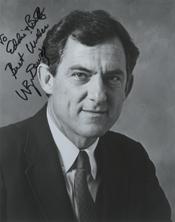
Charles Dowdy
Former U.S. Representative · Mississippi District 4 · 1981–1989 · Democratic
Charles Dowdy represented Mississippi's District 4 in the United States House of Representatives (1981–1989) for the Democratic party. The page below collects sourced biographical facts, term history, committee roles, and provenance for Dowdy.
Bioguide ID: D000466
Key facts
- Full name
- Charles Dowdy
- State
- Mississippi
- District
- District 4
- Party
- Democratic
- House service
- 1981–1989
- First House term
- 1981
- Status
- Left office
- Current term ends
- —
- Born
- 1943
- Bioguide ID
- D000466
- Committee assignments
- —
- Dataset version
- 1.20260605
Biographical narrative
887 words · sourced from the Wikipedia REST extract
Charles Wayne Dowdy is a former American politician, lawyer, and jurist who served as a U.S. Representative for Mississippi's 4th congressional district from 1981 to 1989. A member of the Democratic Party, Dowdy was elected during a period of significant political transition in the South, where he managed to secure a foothold for the Democratic Party in a region increasingly leaning Republican. His political career included serving as the mayor of McComb, Mississippi, and later as chairman of the Mississippi Democratic Party. After leaving Congress, he returned to his law practice and continued to engage in local politics.
Early life and career
Wayne Dowdy was born on July 27, 1943, in Fitzgerald, Georgia, located in Ben Hill County. He was raised in a Methodist household, which played a significant role in shaping his values and community involvement. Dowdy pursued higher education at Millsaps College in Jackson, Mississippi, where he earned his degree. Following his graduation, he established a law practice in Mississippi, where he focused on civil and trial law. In addition to his legal career, Dowdy ventured into the media industry by purchasing two local radio stations, further embedding himself in the community.
Before entering national politics, Dowdy served as the mayor of McComb, Mississippi, from 1978 until 1981. His tenure as mayor allowed him to gain valuable experience in governance and public service, as well as to build a network of support within the local Democratic Party. This experience laid the groundwork for his subsequent election to the U.S. House of Representatives.
House tenure
Dowdy's political career in the U.S. House of Representatives began with his election in a special election on July 7, 1981. He represented Mississippi's 4th congressional district, a region that was experiencing a shift in political allegiances, particularly among white voters who were increasingly leaning toward the Republican Party. Dowdy's election was notable as he successfully recaptured a Southern district for the Democrats during a time of significant political change.
Throughout his four terms in Congress, Dowdy faced various electoral challenges but managed to secure re-election in 1982 and 1984 with notable margins, receiving 53% and 55% of the vote, respectively. His popularity continued to grow, culminating in a re-election victory in 1986, where he garnered 72% of the vote. Dowdy's ability to build a strong base of support within the African-American community was a crucial factor in his electoral success, as his district had a significant African-American population.
In 1988, Dowdy sought to further his political career by running for the U.S. Senate after the retirement of long-serving Senator John Stennis. He won the Democratic nomination but faced a formidable opponent in Republican Trent Lott, who was the House Minority Whip at the time. Dowdy's campaign was hampered by the broader political climate, including the influence of President George H. W. Bush, who won Mississippi by a substantial margin. Ultimately, Dowdy lost the Senate race, receiving 46% of the vote compared to Lott's 54%.
Following his defeat in the Senate race, Dowdy attempted to return to politics by challenging Governor Ray Mabus in the 1991 Democratic gubernatorial primary. However, he was unsuccessful, receiving 41% of the vote. Dowdy later expressed regret over this challenge, acknowledging that it may have contributed to Mabus's loss in the general election.
Legislative focus and committees
During his time in the House, Dowdy was recognized as a progressive Democrat by Mississippi standards. He was particularly noted for his support of civil rights legislation, including his vote in favor of renewing the Voting Rights Act in 1982. His legislative focus often aligned with the interests of his constituents, particularly those in the African-American community, which constituted a significant portion of his district's population.
Dowdy's committee assignments during his tenure in Congress included involvement in various issues pertinent to his district and the state of Mississippi. His work often revolved around local concerns, including economic development, education, and civil rights. He was known for his ability to navigate the complexities of Southern politics during a time of transition, managing to maintain a Democratic presence in a region that was increasingly favoring Republican candidates.
After leaving Congress in 1989, Dowdy returned to his law practice in Magnolia, Mississippi, where he continued to represent local governmental entities, including Pike County and its Board of Supervisors, as well as the City of Magnolia and the Town of Summit. His legal career allowed him to remain engaged in community affairs and local governance.
In addition to his legal practice, Dowdy was elected as the chairman of the Mississippi Democratic Party, serving from 2004 to 2008. His leadership in the party during this period reflected his ongoing commitment to Democratic principles and the political landscape of Mississippi.
Dowdy also served as the City Attorney for McComb from 2009 to 2018, further solidifying his role in local governance. Throughout his post-political career, he remained active in the legal field and continued to contribute to his community.
In his personal life, Dowdy is a Methodist and resides in Mississippi with his wife, Susan, who hails from Grenada, Mississippi. Together, they have three children. His family maintains a presence in the media industry through ownership of several radio stations in Mississippi and Louisiana. Dowdy's diverse career and community involvement reflect a long-standing commitment to public service and the Democratic Party in Mississippi.
Notable legislation
Sponsored and co-sponsored legislation for Charles Dowdy is pending operator curation. The biographical narrative above carries the same provenance trail until per-bill rows are written.
Sources
- [1]https://en.wikipedia.org/wiki/Wayne_DowdyWikipedia · retrieved 2026-06-05
Notable quotes
Sourced quotes for Charles Dowdy are pending operator curation. Narrative-scope provenance remains attached below.
Sources
- [1]https://en.wikipedia.org/wiki/Wayne_DowdyWikipedia · retrieved 2026-06-05
Key positions
Curated policy positions for Charles Dowdy are pending operator review. The biographical narrative above carries the same provenance trail until per-topic positions are written.
Sources
- [1]https://en.wikipedia.org/wiki/Wayne_DowdyWikipedia · retrieved 2026-06-05
Terms served
- 1981–1983U.S. House · Term 1 · Democratic
- 1983–1985U.S. House · Term 2 · Democratic
- 1985–1987U.S. House · Term 3 · Democratic
- 1987–1989U.S. House · Term 4 · Democratic
Sources & provenance
Every attributable claim above carries a per-section [N] marker that resolves to the corresponding URL below. Each entry records the upstream provider, the canonical URL, and the timestamp at which the source was retrieved by the ingest pipeline.
Key facts
- https://bioguide.congress.gov/search/bio/D000466bioguide · retrieved 2026-06-05
- https://www.govtrack.us/congress/members/403576govtrack · retrieved 2026-06-05
Biographical narrative
- https://en.wikipedia.org/wiki/Wayne_Dowdywikipedia · retrieved 2026-06-05
Find your representative
Every U.S. state elects representatives by district. Browse Mississippi’s delegation, the full former-representative roster, or explore the role and term length.
Related on The Candidate
- Preceded by Prentiss WalkerEarlier holder of the Mississippi District 4 House seat · Republican.Open
- Succeeded by Gene TaylorLater holder of the Mississippi District 4 House seat · Democratic.Open
- Alan NunneleeFormer U.S. Representative · Mississippi District 1 · RepublicanOpen
- Benjamin NabersFormer U.S. Representative · Mississippi District 1 · UnionistOpen
- Christopher RankinFormer U.S. Representative · Mississippi District 1 · JacksonOpen
- Daniel WrightFormer U.S. Representative · Mississippi District 1 · DemocraticOpen