
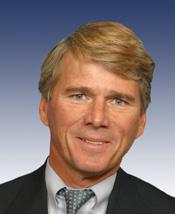
Historical · U.S. House · Mississippi · District 4
Gene Taylor
Former U.S. Representative · Mississippi District 4 · 1989–2011 · Democratic
Gene Taylor represented Mississippi's District 4 in the United States House of Representatives (1989–2011) for the Democratic party. The page below collects sourced biographical facts, term history, committee roles, and provenance for Taylor.
Bioguide ID: T000074
Key facts
- Full name
- Gene Taylor
- State
- Mississippi
- District
- District 4
- Party
- Democratic
- House service
- 1989–2011
- First House term
- 1989
- Status
- Left office
- Current term ends
- —
- Born
- 1953
- Bioguide ID
- T000074
- Committee assignments
- —
- Dataset version
- 1.20260605
Biographical narrative
1,209 words · sourced from the Wikipedia REST extract
Gene Taylor is a former American politician who served as a U.S. Representative for Mississippi's 4th congressional district from 1989 until 2011. A member of the Democratic Party during his tenure, Taylor was known for his conservative voting record and was affiliated with the Blue Dog Coalition, a group of moderate to conservative Democrats. His political career began in the Mississippi State Senate, where he served from 1983 to 1989 before transitioning to the U.S. House of Representatives. After losing his re-election bid in 2010, Taylor shifted his political affiliation to the Republican Party in 2014 and subsequently ran for his former congressional seat, although he was unsuccessful in that attempt. Following his time in Congress, he engaged in various roles, including consulting for the defense industry and serving as a director for a shipping company.
Early life and career
Gene Taylor was born on September 17, 1953, in New Orleans, Louisiana. He completed his secondary education at De La Salle High School, graduating in 1971. Taylor pursued higher education at Tulane University, where he earned a degree in political science and history in 1976. He furthered his academic credentials with post-graduate studies in business and economics at the University of Southern Mississippi from 1978 to 1980.
Before entering politics, Taylor worked as a sales representative for Stone Container Corporation, covering a territory that extended from New Orleans to the Florida panhandle. His career in this role spanned from 1977 until 1989. In addition to his professional endeavors, Taylor served in the United States Coast Guard Reserve from 1971 to 1984, achieving the rank of petty officer first class. During his service, he commanded a search and rescue boat and received several commendations for his contributions.
Taylor's political career began at the local level when he was elected to the Bay St. Louis City Council in 1981. His political trajectory continued upward when he won a seat in the Mississippi State Senate in 1983, filling a newly created vacancy. During his time in the state legislature, he gained attention for his political independence, notably when he and fellow Senator Steven Hale filed a lawsuit challenging the powers of the Democratic Lieutenant Governor, Brad Dye. Although the Mississippi Supreme Court ruled in favor of Dye, the case established Taylor's reputation as a politician willing to challenge the status quo.
House tenure
Taylor's tenure in the U.S. House of Representatives began in 1989 and lasted until 2011, during which he served a total of 11 terms. Throughout his time in Congress, he was recognized as a member of the Blue Dog Coalition, which is known for its centrist and fiscally conservative positions within the Democratic Party. Taylor's voting record was characterized as one of the most conservative among House Democrats, and he was noted for his alignment with more conservative principles, particularly in a district that had increasingly leaned Republican over the years.
Representing Mississippi's 4th congressional district, Taylor faced a challenging political landscape. The district had not supported a Democratic presidential candidate since 1956, and by the time of his last term, it was regarded as the most Republican district in the nation represented by a Democrat, with a significant partisan voting index. Despite the district's Republican leanings, Taylor managed to maintain his seat until his defeat in the 2010 elections by State Representative Steven Palazzo.
During his time in the House, Taylor was an active member of the Armed Services Committee, where he played a prominent role in advocating for military personnel and their families. He focused on issues such as improving medical benefits for military retirees and extending health insurance coverage to members of the National Guard and Reserves. Taylor was also involved in shaping U.S. policy in Latin America, sponsoring legislation that capped the number of U.S. troops deployed to Colombia without explicit Congressional approval. His tenure on the committee included critical oversight of military readiness and procurement processes, where he often challenged the Department of Defense on issues related to troop safety and equipment shortages.
Taylor's voting record included notable positions on various high-profile issues. He was one of the few Democrats to support the impeachment of President Bill Clinton in 1998, voting for all four articles of impeachment. His stance on fiscal policy was often at odds with the Bush Administration, as he opposed tax cuts that he believed would exacerbate the national debt and criticized the prescription drug plan for benefiting pharmaceutical companies. Taylor also expressed skepticism towards free trade agreements and was a vocal opponent of proposed reforms to Social Security.
Despite his conservative leanings, Taylor occasionally aligned with more progressive members of the Democratic Party on specific issues, such as campaign finance reform and policies regarding Cuba. His complex political identity allowed him to navigate a challenging electoral environment, where he often found himself at odds with both party leadership and constituents.
Legislative focus and committees
Throughout his congressional career, Gene Taylor's legislative focus was primarily centered on military and defense issues, as well as fiscal policy. As a member of the Armed Services Committee, he was involved in numerous discussions and debates regarding military readiness, troop safety, and the allocation of resources for defense initiatives. His leadership roles included serving as the Ranking Democrat on the Projection Forces Subcommittee and later as the chairman of the Subcommittee on Seapower and Expeditionary Forces. In these positions, he advocated for increased investment in nuclear-powered surface ships to enhance the Navy's operational capabilities and reduce reliance on foreign oil.
Taylor's commitment to military personnel extended beyond legislative advocacy; he actively sought to improve the quality of life for service members and their families. His efforts included pushing for enhancements to medical benefits and advocating for policies that would ensure adequate support for National Guard and Reserve members. His work on the Armed Services Committee positioned him as a key figure in discussions surrounding military policy and appropriations.
In addition to his defense-related initiatives, Taylor's legislative agenda included a focus on fiscal responsibility and accountability. He was critical of policies that he believed would lead to increased national debt and was particularly vocal about the implications of tax cuts and entitlement reforms proposed by the Bush Administration. His opposition to free trade agreements reflected his concern for the economic impact on American workers, and he often aligned with labor interests in advocating for policies that would protect domestic jobs.
Taylor's tenure in Congress was marked by a willingness to engage in bipartisan discussions, although he often found himself at odds with party leadership on key issues. His voting record and public statements reflected a complex interplay of conservative and moderate positions, which resonated with constituents in his district, even as national trends shifted toward Republican dominance.
After his congressional career, Taylor continued to engage in public service and industry roles. He served on the Hancock County Port and Harbor Commission until 2014 and later transitioned to consulting within the defense sector. In 2018, he took on a directorial role with Overseas Shipholding Group, furthering his involvement in maritime and shipping industries. Taylor's career trajectory reflects a blend of public service, industry engagement, and a commitment to the issues that shaped his legislative priorities during his time in the U.S. House of Representatives.
Notable legislation
Sponsored and co-sponsored legislation for Gene Taylor is pending operator curation. The biographical narrative above carries the same provenance trail until per-bill rows are written.
Sources
- [1]https://en.wikipedia.org/wiki/Gene_Taylor_(Mississippi_politician)Wikipedia · retrieved 2026-06-05
Notable quotes
Sourced quotes for Gene Taylor are pending operator curation. Narrative-scope provenance remains attached below.
Sources
- [1]https://en.wikipedia.org/wiki/Gene_Taylor_(Mississippi_politician)Wikipedia · retrieved 2026-06-05
Key positions
Curated policy positions for Gene Taylor are pending operator review. The biographical narrative above carries the same provenance trail until per-topic positions are written.
Sources
- [1]https://en.wikipedia.org/wiki/Gene_Taylor_(Mississippi_politician)Wikipedia · retrieved 2026-06-05
Terms served
- 1989–1991U.S. House · Term 1 · Democratic
- 1991–1993U.S. House · Term 2 · Democratic
- 1993–1995U.S. House · Term 3 · Democratic
- 1995–1997U.S. House · Term 4 · Democratic
- 1997–1999U.S. House · Term 5 · Democratic
- 1999–2001U.S. House · Term 6 · Democratic
- 2001–2003U.S. House · Term 7 · Democratic
- 2003–2005U.S. House · Term 8 · Democratic
- 2005–2007U.S. House · Term 9 · Democratic
- 2007–2009U.S. House · Term 10 · Democratic
- 2009–2011U.S. House · Term 11 · Democratic
Sources & provenance
Every attributable claim above carries a per-section [N] marker that resolves to the corresponding URL below. Each entry records the upstream provider, the canonical URL, and the timestamp at which the source was retrieved by the ingest pipeline.
Key facts
- https://bioguide.congress.gov/search/bio/T000074bioguide · retrieved 2026-06-05
- http://www.house.gov/genetaylorhouse.gov · retrieved 2026-06-05
Biographical narrative
- https://en.wikipedia.org/wiki/Gene_Taylor_(Mississippi_politician)wikipedia · retrieved 2026-06-05
Find your representative
Every U.S. state elects representatives by district. Browse Mississippi’s delegation, the full former-representative roster, or explore the role and term length.
Related on The Candidate
- Preceded by Charles DowdyEarlier holder of the Mississippi District 4 House seat · Democratic.Open
- Succeeded by Steven PalazzoLater holder of the Mississippi District 4 House seat · Republican.Open
- Alan NunneleeFormer U.S. Representative · Mississippi District 1 · RepublicanOpen
- Benjamin NabersFormer U.S. Representative · Mississippi District 1 · UnionistOpen
- Christopher RankinFormer U.S. Representative · Mississippi District 1 · JacksonOpen
- Daniel WrightFormer U.S. Representative · Mississippi District 1 · DemocraticOpen