
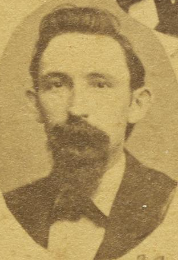
Historical · U.S. House · Mississippi · District 4
Frederick Barry
Former U.S. Representative · Mississippi District 4 · 1885–1889 · Democratic
Frederick Barry represented Mississippi's District 4 in the United States House of Representatives (1885–1889) for the Democratic party. The page below collects sourced biographical facts, term history, committee roles, and provenance for Barry.
Bioguide ID: B000188
Key facts
- Full name
- Frederick Barry
- State
- Mississippi
- District
- District 4
- Party
- Democratic
- House service
- 1885–1889
- First House term
- 1885
- Status
- Left office
- Current term ends
- —
- Born
- 1845
- Bioguide ID
- B000188
- Committee assignments
- —
- Dataset version
- 1.20260606
Biographical narrative
939 words · sourced from the Wikipedia REST extract
Frederick Barry was an American politician and lawyer who served as a U.S. Representative for Mississippi's 4th congressional district during the late 19th century. A member of the Democratic Party, Barry's congressional tenure spanned from 1885 to 1889, during which he participated in the Forty-ninth and Fiftieth Congresses. Prior to his political career, he was a private in the Confederate Army during the American Civil War and later practiced law in Mississippi. His life and career reflect the complexities of the post-Civil War South and the evolving political landscape of the United States during that era.
Early life and career
Frederick Barry was born on January 12, 1845, in Woodbury, Tennessee. His early education was limited, which was not uncommon for many individuals of his time and background. Despite these constraints, Barry pursued a career in law after the Civil War, demonstrating a commitment to furthering his education and professional skills. Following his service in the military, he studied law and successfully gained admission to the bar, marking the beginning of his legal career.
After establishing himself as a lawyer, Barry began practicing in Aberdeen, Mississippi. His legal career progressed as he became a prominent figure in the local legal community. In 1873, he relocated to West Point, Mississippi, where he continued his law practice. His move to West Point was significant, as it allowed him to expand his influence and engage more deeply with the local community. In addition to his legal work, Barry became involved in politics, serving as a member of the Mississippi State Senate from 1875 to 1879. This experience in the state legislature provided him with valuable insights into the political process and the needs of his constituents, laying the groundwork for his future congressional career.
House tenure
Frederick Barry's political career took a significant turn when he was elected to the U.S. House of Representatives as a Democrat. He served two consecutive terms, beginning with the Forty-ninth Congress, which commenced on March 4, 1885, and concluding with the Fiftieth Congress, which ended on March 3, 1889. During his time in Congress, Barry represented Mississippi's 4th congressional district, a role that required him to address a variety of issues pertinent to his constituents and the broader national landscape.
As a member of Congress, Barry participated in legislative discussions and debates that were critical to the nation during the post-Civil War period. His tenure coincided with a time of significant transformation in the United States, as the country was grappling with the consequences of the Civil War, Reconstruction, and the integration of formerly enslaved individuals into society. Barry's background as a Civil War veteran likely influenced his perspectives on these pressing issues, as well as his approach to governance.
Barry's congressional career was characterized by his commitment to the Democratic Party and its platform during this era. However, he chose not to seek renomination in 1888, concluding his time in Congress after his second term. The decision not to run for re-election may have been influenced by various factors, including personal considerations or shifts in the political landscape. After leaving Congress, Barry returned to West Point, where he resumed his law practice and continued to engage with the community.
Legislative focus and committees
While specific details regarding the committees Barry served on or the particular legislation he championed during his time in Congress are not extensively documented, his role as a U.S. Representative would have involved participation in various legislative activities that reflected the interests and needs of his constituents. As a member of the Democratic Party, Barry likely aligned with the party's priorities, which during the late 19th century often included issues related to economic development, civil rights for African Americans, and the rights of farmers and laborers.
The late 19th century was a period marked by significant economic change, including the rise of industrialization and urbanization. These developments brought about new challenges and opportunities for lawmakers, as they sought to address the needs of a rapidly changing society. Barry's legal background would have equipped him with the skills necessary to navigate these complex issues and advocate for policies that aligned with the interests of his district.
In addition to his legislative responsibilities, Barry's experience as a state senator would have informed his understanding of the political dynamics at play in both state and federal governance. His time in the Mississippi State Senate allowed him to build relationships and networks that could be beneficial during his congressional tenure. The interplay between state and federal issues was particularly relevant during this time, as states were often at the forefront of implementing policies related to Reconstruction and civil rights.
After concluding his congressional service, Barry returned to West Point, where he continued to practice law until his death. He passed away on May 7, 1909, at the age of 64. His contributions to his community and his service in Congress are remembered as part of the broader narrative of Mississippi's political history during a transformative period in American history. Barry was interred in Odd Fellows Rest Cemetery in Aberdeen, Mississippi, marking the final chapter of a life dedicated to public service and the legal profession.
Frederick Barry's life and career encapsulate the experiences of many individuals who navigated the complexities of the post-Civil War era in the United States. His journey from a limited educational background to serving in the U.S. Congress reflects the opportunities available to those who pursued education and public service during a time of significant change. His legacy is intertwined with the history of Mississippi and the broader American narrative of resilience and adaptation in the face of adversity.
Notable legislation
Sponsored and co-sponsored legislation for Frederick Barry is pending operator curation. The biographical narrative above carries the same provenance trail until per-bill rows are written.
Sources
- [1]https://en.wikipedia.org/wiki/Frederick_G._BarryWikipedia · retrieved 2026-06-06
Notable quotes
Sourced quotes for Frederick Barry are pending operator curation. Narrative-scope provenance remains attached below.
Sources
- [1]https://en.wikipedia.org/wiki/Frederick_G._BarryWikipedia · retrieved 2026-06-06
Key positions
Curated policy positions for Frederick Barry are pending operator review. The biographical narrative above carries the same provenance trail until per-topic positions are written.
Sources
- [1]https://en.wikipedia.org/wiki/Frederick_G._BarryWikipedia · retrieved 2026-06-06
Terms served
- 1885–1887U.S. House · Term 1 · Democratic
- 1887–1889U.S. House · Term 2 · Democratic
Sources & provenance
Every attributable claim above carries a per-section [N] marker that resolves to the corresponding URL below. Each entry records the upstream provider, the canonical URL, and the timestamp at which the source was retrieved by the ingest pipeline.
Key facts
- https://bioguide.congress.gov/search/bio/B000188bioguide · retrieved 2026-06-06
- https://www.govtrack.us/congress/members/401187govtrack · retrieved 2026-06-06
Biographical narrative
- https://en.wikipedia.org/wiki/Frederick_G._Barrywikipedia · retrieved 2026-06-06
Find your representative
Every U.S. state elects representatives by district. Browse Mississippi’s delegation, the full former-representative roster, or explore the role and term length.
Related on The Candidate
- Preceded by Jason NilesEarlier holder of the Mississippi District 4 House seat · Republican.Open
- Succeeded by Clarke LewisLater holder of the Mississippi District 4 House seat · Democratic.Open
- Alan NunneleeFormer U.S. Representative · Mississippi District 1 · RepublicanOpen
- Benjamin NabersFormer U.S. Representative · Mississippi District 1 · UnionistOpen
- Christopher RankinFormer U.S. Representative · Mississippi District 1 · JacksonOpen
- Daniel WrightFormer U.S. Representative · Mississippi District 1 · DemocraticOpen