
Historical · U.S. House · Mississippi · District 4
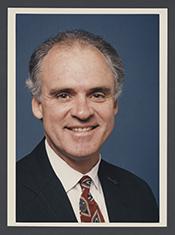
Mike Parker
Former U.S. Representative · Mississippi District 4 · 1989–1999 · Republican
Mike Parker represented Mississippi's District 4 in the United States House of Representatives (1989–1999) for the Republican party. The page below collects sourced biographical facts, term history, committee roles, and provenance for Parker.
Bioguide ID: P000066
Key facts
- Full name
- Mike Parker
- State
- Mississippi
- District
- District 4
- Party
- Republican
- House service
- 1989–1999
- First House term
- 1989
- Status
- Left office
- Current term ends
- —
- Born
- 1949
- Bioguide ID
- P000066
- Committee assignments
- —
- Dataset version
- 1.20260605
Biographical narrative
936 words · sourced from the Wikipedia REST extract
Paul Michael Parker is a former U.S. Representative from Mississippi, who served five terms in the House of Representatives from 1989 until 1999. Initially elected as a member of the Democratic Party, Parker later switched to the Republican Party during his tenure. Following his congressional career, he sought the governorship of Mississippi and held a position as Assistant Secretary of the Army under President George W. Bush. His political journey reflects a significant evolution in party affiliation and a focus on infrastructure issues in his post-political career.
Early life and career
Mike Parker was born on October 31, 1949, in Laurel, Mississippi. He pursued higher education at William Carey College, where he earned a Bachelor of Arts degree in English in 1970. Before entering the political arena, Parker built a diverse career in business. He owned and operated a funeral home, as well as several insurance companies. Additionally, he was involved in land and timber enterprises and managed a business focused on sand, clay, and gravel.
Parker's business background provided him with a solid foundation for his later political career. His experience in various industries likely contributed to his understanding of the economic and infrastructural needs of his constituents. This multifaceted career path set the stage for his entry into politics, where he would later represent a district that included significant urban and rural areas, such as Jackson, Vicksburg, Natchez, McComb, and Brookhaven.
In 1988, Parker entered the political fray by running for the U.S. House of Representatives. His campaign was marked by a competitive primary, where he faced a wide field of candidates. Despite the challenges, he emerged victorious and took office in January 1989. His election was indicative of his ability to connect with voters and address their concerns, which would be a hallmark of his political career.
House tenure
Parker's tenure in the U.S. House of Representatives spanned a decade, during which he served five consecutive terms. Initially elected as a Democrat, he maintained a conservative voting record that often aligned with the preferences of his constituents in Mississippi. His approach to governance was characterized by a pragmatic stance on various issues, which sometimes set him apart from the more liberal factions of his party.
Throughout his time in Congress, Parker's political alignment began to shift. He notably did not endorse Democratic Presidential candidate Bill Clinton during his successful re-election campaign in 1992, which signaled his growing distance from the Democratic Party. In 1995, after a contentious election for Speaker of the House, Parker voted 'Present' rather than supporting the Democratic leader, Richard Gephardt. This decision further illustrated his conservative leanings and foreshadowed his eventual party switch.
On November 10, 1995, Parker officially joined the Republican Party. His transition occurred in a district that had a significant African-American population, yet he was able to secure re-election in 1996 with relative ease. This ability to navigate party lines and maintain electoral support highlighted his political acumen and understanding of the local electorate's dynamics.
Parker chose not to seek re-election in 1998, opting instead to focus on his campaign for the governorship of Mississippi. His decision to leave Congress marked the end of a significant chapter in his political career, as he prepared to enter a new electoral contest.
Legislative focus and committees
During his time in the House, Parker was involved in various legislative initiatives and served on multiple committees that aligned with his interests and the needs of his constituents. His background in business and infrastructure likely influenced his focus on issues related to economic development, transportation, and public works. While specific details regarding his committee assignments and legislative accomplishments are not provided, it can be inferred that his experience would have informed his contributions to discussions on infrastructure and economic policy.
Parker's tenure in Congress coincided with significant national and regional challenges, including discussions surrounding economic growth and the management of federal resources. His role as a representative allowed him to advocate for the interests of Mississippi, particularly in areas that required federal attention and funding.
After leaving Congress, Parker continued to engage with issues related to infrastructure and public works. His appointment as Assistant Secretary of the Army (Civil Works) under President George W. Bush placed him in a position of influence over the U.S. Army Corps of Engineers, an agency responsible for numerous projects in Mississippi. This role underscored his ongoing commitment to addressing the infrastructural needs of his home state.
However, Parker's tenure in this position was relatively short-lived. He was one of the early casualties of the Bush administration's management style, which emphasized centralized control. His advocacy for the Corps of Engineers' priorities led to his departure from the role in the summer of 2002.
In the years following his government service, Parker transitioned to a career in lobbying, specializing in infrastructure issues. His experience and connections from his time in Congress likely facilitated this shift, allowing him to continue influencing policy discussions at the federal level.
In recent years, Parker's political affiliations have continued to evolve. In August 2020, he endorsed Democratic candidate Joe Biden for President, joining a group of former Republican members of Congress in this endorsement. Additionally, in 2023, he publicly supported Democrat Brandon Presley in the Mississippi gubernatorial election, appearing in a campaign advertisement that featured various Republicans endorsing Presley.
Parker's journey through the political landscape of Mississippi reflects a complex interplay of party affiliation, personal beliefs, and the evolving dynamics of the state's electorate. His career illustrates the challenges and opportunities faced by politicians navigating changing political environments and the importance of adapting to the needs of their constituents.
Notable legislation
Sponsored and co-sponsored legislation for Mike Parker is pending operator curation. The biographical narrative above carries the same provenance trail until per-bill rows are written.
Sources
- [1]https://en.wikipedia.org/wiki/Michael_Parker_(politician)Wikipedia · retrieved 2026-06-05
Notable quotes
Sourced quotes for Mike Parker are pending operator curation. Narrative-scope provenance remains attached below.
Sources
- [1]https://en.wikipedia.org/wiki/Michael_Parker_(politician)Wikipedia · retrieved 2026-06-05
Key positions
Curated policy positions for Mike Parker are pending operator review. The biographical narrative above carries the same provenance trail until per-topic positions are written.
Sources
- [1]https://en.wikipedia.org/wiki/Michael_Parker_(politician)Wikipedia · retrieved 2026-06-05
Terms served
- 1989–1991U.S. House · Term 1 · Democratic
- 1991–1993U.S. House · Term 2 · Democratic
- 1993–1995U.S. House · Term 3 · Democratic
- 1995–1997U.S. House · Term 4 · Republican
- 1997–1999U.S. House · Term 5 · Republican
Sources & provenance
Every attributable claim above carries a per-section [N] marker that resolves to the corresponding URL below. Each entry records the upstream provider, the canonical URL, and the timestamp at which the source was retrieved by the ingest pipeline.
Key facts
- https://bioguide.congress.gov/search/bio/P000066bioguide · retrieved 2026-06-05
- https://www.govtrack.us/congress/members/408476govtrack · retrieved 2026-06-05
Biographical narrative
- https://en.wikipedia.org/wiki/Michael_Parker_(politician)wikipedia · retrieved 2026-06-05
Find your representative
Every U.S. state elects representatives by district. Browse Mississippi’s delegation, the full former-representative roster, or explore the role and term length.
Related on The Candidate
- Preceded by Charles DowdyEarlier holder of the Mississippi District 4 House seat · Democratic.Open
- Succeeded by Ronnie ShowsLater holder of the Mississippi District 4 House seat · Democratic.Open
- Alan NunneleeFormer U.S. Representative · Mississippi District 1 · RepublicanOpen
- Benjamin NabersFormer U.S. Representative · Mississippi District 1 · UnionistOpen
- Christopher RankinFormer U.S. Representative · Mississippi District 1 · JacksonOpen
- Daniel WrightFormer U.S. Representative · Mississippi District 1 · DemocraticOpen