
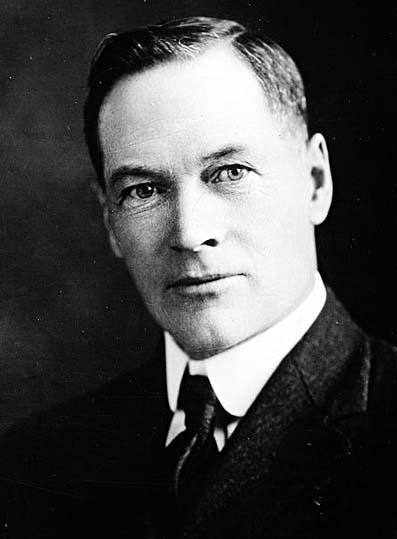
Historical · U.S. House · Montana · District 2
Carl Riddick
Former U.S. Representative · Montana District 2 · 1919–1923 · Republican
Carl Riddick represented Montana's District 2 in the United States House of Representatives (1919–1923) for the Republican party. The page below collects sourced biographical facts, term history, committee roles, and provenance for Riddick.
Bioguide ID: R000237
Key facts
- Full name
- Carl Riddick
- State
- Montana
- District
- District 2
- Party
- Republican
- House service
- 1919–1923
- First House term
- 1919
- Status
- Left office
- Current term ends
- —
- Born
- 1872
- Bioguide ID
- R000237
- Committee assignments
- —
- Dataset version
- 1.20260606
Biographical narrative
931 words · sourced from the Wikipedia REST extract
Carl Riddick was an American politician and businessman who served as a Republican member of the U.S. House of Representatives from Montana's 2nd congressional district. His congressional career spanned two terms, beginning in 1919 and concluding in 1923. Riddick's political journey was marked by his transition from local journalism and ranching to national politics, reflecting the diverse experiences that shaped his approach to governance.
Early life and career
Carl Riddick was born on February 25, 1872, in Wells, a small community in Faribault County, Minnesota. His early education took place in the public schools of Michigan, where he likely developed a foundational understanding of civic engagement and community affairs. Riddick furthered his education at Albion College in Albion, Michigan, and later attended Lawrence University in Appleton, Wisconsin. These academic experiences would have contributed to his skills in communication and critical thinking, which would later serve him well in his political career.
Riddick's professional life began in journalism when he became the editor of the Winamac Republican newspaper in Indiana, a position he held from 1899 to 1910. This role not only honed his writing and editorial skills but also immersed him in the political landscape of the time, providing him with insights into the issues and concerns of the electorate. Following his tenure in journalism, Riddick transitioned to a career in ranching, which brought him to Montana. He also served as the County Assessor of Fergus County, Montana, a role that would have deepened his understanding of local governance and the economic challenges facing rural communities.
In 1918, significant changes occurred in Montana's congressional representation. The state's at-large congressional district, which had previously elected two representatives, was abolished, leading to the creation of the 1st and 2nd congressional districts. This restructuring presented Riddick with an opportunity to enter the political arena at a higher level. He decided to run for the newly established 2nd district, where he faced Democratic nominee Harry B. Mitchell. Riddick's campaign was successful, and he was elected to the U.S. House of Representatives, marking the beginning of his federal political career.
House tenure
Riddick's first term in the U.S. House of Representatives commenced in 1919. During this period, he became part of a legislative body that was navigating the complexities of post-World War I America. His tenure was characterized by the political dynamics of the early 20th century, including issues related to economic recovery, veterans' affairs, and the social changes that were beginning to take shape in American society.
In the 1920 election, Riddick sought re-election and faced M. McCusker, the Democratic challenger. His campaign was notably successful, resulting in a landslide victory that underscored his growing support among constituents in Montana's 2nd district. This re-election solidified his position as a prominent figure in Montana politics.
However, rather than pursue a third term in the House, Riddick opted to run for the United States Senate in 1922. This decision was influenced by the retirement of Senator Henry L. Myers, creating an opportunity for new leadership in the Senate. Riddick won the Republican primary against State Attorney General Wellington D. Rankin, positioning himself as a serious contender for the Senate seat. Despite his efforts, Riddick was defeated in the general election by Democratic nominee Burton K. Wheeler, who won by a significant margin.
After his time in Congress, Riddick shifted his focus away from elected office. He took on the role of president of the National Republic, a magazine published in Washington, D.C. This position allowed him to remain engaged in political discourse and public affairs, albeit from a different vantage point. Additionally, he became involved in real estate, operating a home development at Sylvan Shores in South River, Maryland, which reflects his adaptability and entrepreneurial spirit.
Legislative focus and committees
During his time in the House of Representatives, Riddick's legislative focus aligned with the priorities of his constituents and the broader Republican agenda of the era. While specific details regarding the bills he sponsored or the committees he served on are not documented, it can be inferred that his background in journalism and local governance informed his approach to legislation. As a representative from a rural state, issues related to agriculture, land use, and economic development would have likely been central to his legislative priorities.
Riddick's experience as a rancher and County Assessor would have provided him with valuable insights into the challenges faced by farmers and rural communities, which were critical to Montana's economy. His role as a local official likely equipped him with a practical understanding of the needs of his constituents, allowing him to advocate effectively for policies that would benefit the agricultural sector and promote economic growth in the region.
Moreover, Riddick's involvement in the National Republic magazine after leaving Congress suggests that he maintained an interest in political issues and public policy discussions. This engagement indicates that he remained connected to the political landscape, even outside of elected office, and continued to contribute to the discourse surrounding governance and civic responsibility.
In summary, Carl Riddick's career as a U.S. Representative was shaped by his diverse background in journalism, ranching, and local governance. His two terms in the House of Representatives allowed him to engage with the pressing issues of his time, reflecting the complexities of representing a rural constituency in a rapidly changing America. After leaving Congress, he continued to influence public discourse through his work in media and real estate, demonstrating his enduring commitment to civic engagement. Riddick passed away on July 9, 1960, in Fort Lauderdale, Florida, leaving behind a legacy of public service and community involvement.
Notable legislation
Sponsored and co-sponsored legislation for Carl Riddick is pending operator curation. The biographical narrative above carries the same provenance trail until per-bill rows are written.
Sources
- [1]https://en.wikipedia.org/wiki/Carl_W._RiddickWikipedia · retrieved 2026-06-06
Notable quotes
Sourced quotes for Carl Riddick are pending operator curation. Narrative-scope provenance remains attached below.
Sources
- [1]https://en.wikipedia.org/wiki/Carl_W._RiddickWikipedia · retrieved 2026-06-06
Key positions
Curated policy positions for Carl Riddick are pending operator review. The biographical narrative above carries the same provenance trail until per-topic positions are written.
Sources
- [1]https://en.wikipedia.org/wiki/Carl_W._RiddickWikipedia · retrieved 2026-06-06
Terms served
- 1919–1921U.S. House · Term 1 · Republican
- 1921–1923U.S. House · Term 2 · Republican
Sources & provenance
Every attributable claim above carries a per-section [N] marker that resolves to the corresponding URL below. Each entry records the upstream provider, the canonical URL, and the timestamp at which the source was retrieved by the ingest pipeline.
Key facts
- https://bioguide.congress.gov/search/bio/R000237bioguide · retrieved 2026-06-06
- https://www.govtrack.us/congress/members/409213govtrack · retrieved 2026-06-06
Biographical narrative
- https://en.wikipedia.org/wiki/Carl_W._Riddickwikipedia · retrieved 2026-06-06
Find your representative
Every U.S. state elects representatives by district. Browse Montana’s delegation, the full former-representative roster, or explore the role and term length.
Related on The Candidate
- Succeeded by Scott LeavittLater holder of the Montana District 2 House seat · Republican.Open
- Albert CampbellFormer U.S. Representative · Montana District 1 · DemocraticOpen
- Arnold OlsenFormer U.S. Representative · Montana District 1 · DemocraticOpen
- Caldwell EdwardsFormer U.S. Representative · Montana District 1 · PopulistOpen
- Charles HartmanFormer U.S. Representative · Montana District 1 · Silver RepublicanOpen
- Republican PartyFederal candidates and office holders on the Republican line.Open