
Historical · U.S. House · Montana · District 2
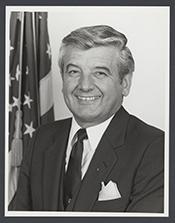
Ronald Marlenee
Former U.S. Representative · Montana District 2 · 1977–1993 · Republican
Ronald Marlenee represented Montana's District 2 in the United States House of Representatives (1977–1993) for the Republican party. The page below collects sourced biographical facts, term history, committee roles, and provenance for Marlenee.
Bioguide ID: M000139
Key facts
- Full name
- Ronald Marlenee
- State
- Montana
- District
- District 2
- Party
- Republican
- House service
- 1977–1993
- First House term
- 1977
- Status
- Left office
- Current term ends
- —
- Born
- 1935
- Bioguide ID
- M000139
- Committee assignments
- —
- Dataset version
- 1.20260605
Biographical narrative
880 words · sourced from the Wikipedia REST extract
Ron Marlenee was an American politician and member of the Republican Party who served as a U.S. Representative for Montana's 2nd congressional district from January 3, 1977, until January 3, 1993. Known for his strong conservative views, Marlenee was a prominent figure in Montana politics and was recognized for his commitment to limited government and support for small businesses. Over his eight terms in Congress, he became a notable advocate for agricultural issues and was involved in various legislative efforts related to land use and federal control.
Early life and career
Ron Marlenee was born on August 8, 1935, in Scobey, Montana, to Charles and Margaret Marlenee. He grew up in a family that valued education and community involvement, which influenced his later political career. Marlenee attended public schools in Daniels County and pursued higher education at several institutions, including Montana State University in Bozeman and the University of Montana in Missoula. Additionally, he studied at the Reisch School of Auctioneering in Mason City, Iowa, which equipped him with skills that would later benefit his career as an auctioneer.
Before entering politics, Marlenee worked as a farmer and rancher, engaging in the agricultural sector that would become a significant focus of his political agenda. His involvement in local politics began in earnest when he took on various roles within the Republican Party at the county level. From 1975 to 1976, he served on the executive board of the Montana Republican Committee for the Second Congressional District, which helped him build connections and gain visibility within the party.
Marlenee's political career took a decisive turn in 1976 when he was elected to the U.S. House of Representatives. His election marked the beginning of an extensive tenure in Congress, where he would advocate for conservative policies and represent the interests of his constituents in Montana.
House tenure
Ron Marlenee's congressional career spanned eight terms, beginning on January 3, 1977, and concluding on January 3, 1993. Throughout his time in office, he was known for his strong opposition to government expansion and regulation, earning him the nickname "Dr. No." This moniker reflected his frequent votes against various governmental bills, as he believed in reducing the federal government's role in public life.
During his tenure, Marlenee served on the House Interior and Agricultural committees, where he was involved in shaping legislation related to land use, agriculture, and natural resources. His focus on these areas was consistent with his background as a farmer and rancher, and he often championed the needs of family farms and small business owners. Marlenee was particularly vocal about issues concerning federal control over state lands, advocating for policies that allowed for multiple uses of these lands, including drilling, mining, and recreational activities.
Marlenee's voting record drew criticism from environmental groups, and in 1992, he was included in Environmental Action's list of Congress's "Dirty Dozen," a designation given to lawmakers deemed to have poor environmental records. This label highlighted the contentious relationship he had with environmentalists, particularly regarding land management and conservation policies.
The 1990 Census led to significant changes in Montana's congressional representation due to a decline in population, resulting in the loss of the 2nd congressional district. In the subsequent election, Marlenee ran for the at-large congressional seat but was defeated by the Democratic nominee, Pat Williams. This election was highly competitive, with Williams securing a narrow victory.
Legislative focus and committees
Throughout his time in Congress, Ron Marlenee focused on several key legislative issues that reflected his conservative principles. He was an advocate for small businesses and worked towards creating a favorable environment for entrepreneurship and economic growth. His commitment to limited government was evident in his opposition to various federal initiatives that he believed overstepped the boundaries of governmental authority.
Marlenee was particularly concerned with the rights of gun owners and was a staunch supporter of the Second Amendment. He believed in the importance of protecting individual liberties and often spoke out against measures that he perceived as threats to those rights. His legislative efforts included advocating for policies that supported the interests of hunters and outdoor enthusiasts, aligning with his personal interests and values.
In addition to his work on agricultural and land use issues, Marlenee was involved in broader discussions about fiscal responsibility. He championed efforts to achieve a balanced budget and reduce government spending, reflecting a core tenet of his political philosophy. His approach to governance emphasized the need for accountability and efficiency in federal programs.
After leaving Congress in 1993, Marlenee continued to engage in political activities in Montana. He became a lobbyist for various organizations and served as the director of legislative affairs for the Safari Club International, a prominent hunting organization. He also co-founded the Western Tradition Partnership, which focused on advocating for issues related to water, forest management, and energy development in Montana.
Marlenee's legacy in Montana politics includes his contributions to the establishment of a veteran's memorial in Miles City, Montana, demonstrating his commitment to honoring those who served in the military. He remained active in political circles, participating in fundraisers and supporting Republican candidates until his passing on April 26, 2020, in Bozeman, Montana. His long-standing involvement in public service and commitment to his constituents left a lasting impact on the political landscape of Montana.
Notable legislation
Sponsored and co-sponsored legislation for Ronald Marlenee is pending operator curation. The biographical narrative above carries the same provenance trail until per-bill rows are written.
Sources
- [1]https://en.wikipedia.org/wiki/Ron_MarleneeWikipedia · retrieved 2026-06-05
Notable quotes
Sourced quotes for Ronald Marlenee are pending operator curation. Narrative-scope provenance remains attached below.
Sources
- [1]https://en.wikipedia.org/wiki/Ron_MarleneeWikipedia · retrieved 2026-06-05
Key positions
Curated policy positions for Ronald Marlenee are pending operator review. The biographical narrative above carries the same provenance trail until per-topic positions are written.
Sources
- [1]https://en.wikipedia.org/wiki/Ron_MarleneeWikipedia · retrieved 2026-06-05
Terms served
- 1977–1979U.S. House · Term 1 · Republican
- 1979–1981U.S. House · Term 2 · Republican
- 1981–1983U.S. House · Term 3 · Republican
- 1983–1985U.S. House · Term 4 · Republican
- 1985–1987U.S. House · Term 5 · Republican
- 1987–1989U.S. House · Term 6 · Republican
- 1989–1991U.S. House · Term 7 · Republican
- 1991–1993U.S. House · Term 8 · Republican
Sources & provenance
Every attributable claim above carries a per-section [N] marker that resolves to the corresponding URL below. Each entry records the upstream provider, the canonical URL, and the timestamp at which the source was retrieved by the ingest pipeline.
Key facts
- https://bioguide.congress.gov/search/bio/M000139bioguide · retrieved 2026-06-05
- https://www.govtrack.us/congress/members/407162govtrack · retrieved 2026-06-05
Biographical narrative
- https://en.wikipedia.org/wiki/Ron_Marleneewikipedia · retrieved 2026-06-05
Find your representative
Every U.S. state elects representatives by district. Browse Montana’s delegation, the full former-representative roster, or explore the role and term length.
Related on The Candidate
- Preceded by James BattinEarlier holder of the Montana District 2 House seat · Republican.Open
- Succeeded by Matthew Rosendale Sr.Later holder of the Montana District 2 House seat · Republican.Open
- Albert CampbellFormer U.S. Representative · Montana District 1 · DemocraticOpen
- Arnold OlsenFormer U.S. Representative · Montana District 1 · DemocraticOpen
- Caldwell EdwardsFormer U.S. Representative · Montana District 1 · PopulistOpen
- Charles HartmanFormer U.S. Representative · Montana District 1 · Silver RepublicanOpen