
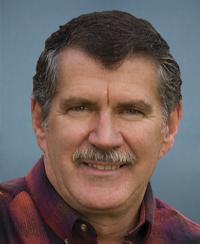
Historical · U.S. House · Montana · At-Large
Denny Rehberg
Former U.S. Representative · Montana At-Large · 2001–2013 · Republican
Denny Rehberg represented Montana's At-Large in the United States House of Representatives (2001–2013) for the Republican party. The page below collects sourced biographical facts, term history, committee roles, and provenance for Rehberg.
Bioguide ID: R000571
Key facts
- Full name
- Denny Rehberg
- State
- Montana
- District
- At-Large
- Party
- Republican
- House service
- 2001–2013
- First House term
- 2001
- Status
- Left office
- Current term ends
- —
- Born
- 1955
- Bioguide ID
- R000571
- Committee assignments
- —
- Dataset version
- 1.20260605
Biographical narrative
972 words · sourced from the Wikipedia REST extract
Denny Rehberg is a former American politician and rancher who served as the U.S. Representative for Montana's at-large congressional district from 2001 to 2013. A member of the Republican Party, Rehberg's political career includes notable positions such as lieutenant governor of Montana from 1991 to 1997. He has also been a candidate for the U.S. Senate on two occasions but was unsuccessful in both attempts. After his congressional tenure, he transitioned into the private sector, becoming a co-chairman at a lobbying firm in Washington, D.C. In 2024, he made another bid for political office, running for Congress in Montana's 2nd congressional district, but did not secure the nomination.
Early life and career
Denny Rehberg was born on October 5, 1955, in Billings, Montana, to Patricia Rae and Jack Dennis Rehberg. His family heritage includes German, Irish, and Scottish roots. He completed his early education at Billings West High School before pursuing higher education at Montana State University. He later transferred to Washington State University, where he earned a Bachelor of Arts degree in public administration.
Before entering politics, Rehberg was involved in ranching and farming. From 1996 to 2001, he managed the Rehberg Ranch near Billings, where he oversaw a herd of cattle and cashmere goats. His experience in agriculture provided him with a practical understanding of rural issues, which would later influence his political career. However, upon being elected to Congress, he relinquished his ranching responsibilities, citing the challenges of managing agricultural operations while fulfilling his congressional duties.
Rehberg's political career began in 1977 when he interned in the Montana State Senate. He subsequently worked as a legislative assistant for U.S. Congressman Ron Marlenee in Washington, D.C. After a brief return to farming, he entered the political arena by running for the Montana State House of Representatives in 1984. He successfully won a seat and served three terms from 1985 to 1991, representing the 88th district. During his time in the state legislature, he distinguished himself as a fiscal conservative, advocating for a balanced state budget without tax increases. Notably, he was the only freshman member to serve on the House Appropriations Committee.
In July 1991, Rehberg was appointed lieutenant governor of Montana by Governor Stan Stephens. He was later elected to a full term in 1992. As lieutenant governor, he focused on local governance, traveling to all 56 counties annually to engage with constituents. He chaired several committees, including the Drought Advisory Committee and the Task Force for Worker's Compensation reform, and was involved in various health care initiatives. After completing his term, he stepped down to run for a U.S. Senate seat.
House tenure
Rehberg entered the U.S. House of Representatives in 2001 after winning the Republican primary with a significant majority. He succeeded retiring Congressman Rick Hill and went on to defeat Democratic candidate Nancy Keenan in the general election. Over his six terms in Congress, Rehberg was re-elected multiple times, consistently securing a majority of the vote in each election. His tenure in the House was marked by a focus on a range of issues, including national security, economic policy, and environmental regulations.
During his time in Congress, Rehberg was involved in various legislative initiatives. He co-sponsored the National Security and Federal Lands Protection Act in 2012, which aimed to facilitate the construction of infrastructure by the Department of Homeland Security in national parks and wilderness areas. This legislation faced criticism from environmental advocates who argued it undermined existing environmental protections.
Rehberg's voting record reflected his conservative stance on fiscal matters. He was one of the few Republican members to oppose the Path to Prosperity budget proposal in 2011, indicating a willingness to diverge from party lines on certain issues. He also scrutinized federal programs such as Pell Grants and the free school lunch program, raising concerns about their efficiency and effectiveness.
His foreign policy decisions included supporting the Authorization for Use of Military Force Against Iraq in 2002. He served on the Military Quality of Life and Foreign Operations Subcommittees of the House Committee on Appropriations, where he participated in discussions regarding military funding and operations. Notably, he voted against measures aimed at establishing mandatory rest periods for troops deployed to Iraq and against efforts to reduce U.S. military presence in the region.
Legislative focus and committees
Throughout his congressional career, Rehberg was a member of several committees that shaped his legislative priorities. His involvement in the House Committee on Appropriations allowed him to influence funding decisions for various federal programs and initiatives. He served on subcommittees that dealt with military quality of life and foreign operations, which aligned with his interests in national security and defense.
Rehberg's environmental record was characterized by a commitment to land stewardship, although his voting patterns often reflected a preference for limited federal intervention in environmental regulations. He opposed several significant environmental bills, including the Renewable Energy and Energy Conservation Tax Act of 2007 and the Securing America's Future Energy Act of 2001, which aimed to promote renewable energy sources and reduce dependence on fossil fuels.
His legislative focus also extended to agricultural issues, reflecting his background in ranching and farming. Rehberg's understanding of rural concerns informed his approach to policies affecting farmers and ranchers in Montana. He advocated for measures that supported the agricultural community while also addressing broader economic issues facing the state.
Rehberg's tenure in the House concluded on January 3, 2013, after serving six consecutive terms. He remains a notable figure in Montana's political landscape, having contributed to various legislative efforts during his time in office. Following his congressional career, he transitioned to the private sector, taking on a role at a lobbying firm in Washington, D.C. In 2024, he attempted to return to public office by running for Congress in Montana's 2nd congressional district but did not advance past the Republican primary.
Notable legislation
Sponsored and co-sponsored legislation for Denny Rehberg is pending operator curation. The biographical narrative above carries the same provenance trail until per-bill rows are written.
Sources
- [1]https://en.wikipedia.org/wiki/Denny_RehbergWikipedia · retrieved 2026-06-05
Notable quotes
Sourced quotes for Denny Rehberg are pending operator curation. Narrative-scope provenance remains attached below.
Sources
- [1]https://en.wikipedia.org/wiki/Denny_RehbergWikipedia · retrieved 2026-06-05
Key positions
Curated policy positions for Denny Rehberg are pending operator review. The biographical narrative above carries the same provenance trail until per-topic positions are written.
Sources
- [1]https://en.wikipedia.org/wiki/Denny_RehbergWikipedia · retrieved 2026-06-05
Terms served
- 2001–2003U.S. House · Term 1 · Republican
- 2003–2005U.S. House · Term 2 · Republican
- 2005–2007U.S. House · Term 3 · Republican
- 2007–2009U.S. House · Term 4 · Republican
- 2009–2011U.S. House · Term 5 · Republican
- 2011–2013U.S. House · Term 6 · Republican
Sources & provenance
Every attributable claim above carries a per-section [N] marker that resolves to the corresponding URL below. Each entry records the upstream provider, the canonical URL, and the timestamp at which the source was retrieved by the ingest pipeline.
Key facts
- https://bioguide.congress.gov/search/bio/R000571bioguide · retrieved 2026-06-05
- http://www.house.gov/rehberghouse.gov · retrieved 2026-06-05
Biographical narrative
- https://en.wikipedia.org/wiki/Denny_Rehbergwikipedia · retrieved 2026-06-05
Find your representative
Every U.S. state elects representatives by district. Browse Montana’s delegation, the full former-representative roster, or explore the role and term length.
Related on The Candidate
- Preceded by Rick HillEarlier holder of the Montana At-Large House seat · Republican.Open
- Succeeded by Greg GianforteLater holder of the Montana At-Large House seat · Republican.Open
- Albert CampbellFormer U.S. Representative · Montana District 1 · DemocraticOpen
- Arnold OlsenFormer U.S. Representative · Montana District 1 · DemocraticOpen
- Caldwell EdwardsFormer U.S. Representative · Montana District 1 · PopulistOpen
- Charles HartmanFormer U.S. Representative · Montana District 1 · Silver RepublicanOpen