
Historical · U.S. House · North Carolina · District 1
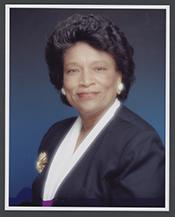
Eva Clayton
Former U.S. Representative · North Carolina District 1 · 1992–2003 · Democratic
Eva Clayton represented North Carolina's District 1 in the United States House of Representatives (1992–2003) for the Democratic party. The page below collects sourced biographical facts, term history, committee roles, and provenance for Clayton.
Bioguide ID: C000494
Key facts
- Full name
- Eva Clayton
- State
- North Carolina
- District
- District 1
- Party
- Democratic
- House service
- 1992–2003
- First House term
- 1992
- Status
- Left office
- Current term ends
- —
- Born
- 1934
- Bioguide ID
- C000494
- Committee assignments
- —
- Dataset version
- 1.20260605
Biographical narrative
984 words · sourced from the Wikipedia REST extract
Eva M. Clayton is a former U.S. Representative from North Carolina, serving the 1st congressional district as a member of the Democratic Party. She made history in 1992 by becoming the first African American woman to represent North Carolina in the U.S. House of Representatives since the late 19th century. Clayton's tenure in Congress lasted for over a decade, during which she was involved in significant legislative efforts, particularly in the areas of agriculture and nutrition. After leaving Congress in 2003, she took on a prominent role with the United Nations' Food and Agriculture Organization, focusing on global food security and agricultural development.
Early life and career
Eva McPherson was born on September 16, 1934, in Savannah, Georgia, to Thomas McPherson, an insurance agent, and Josephine Martin, a teacher. She completed her undergraduate education at Johnson C. Smith University in Charlotte, North Carolina, where she earned a Bachelor of Science degree in biology in 1955. Following her graduation, she married Theaoseus Clayton, who also attended Johnson C. Smith University. The couple pursued further education together at North Carolina Central University, where Eva earned a Master of Science degree in 1962.
After their marriage, the Claytons moved to Warrenton, North Carolina, where Theaoseus established a legal practice. Eva Clayton began her legal studies at the University of North Carolina at Chapel Hill, furthering her commitment to public service and community engagement. In 1968, she was encouraged by civil rights activist Vernon Jordan to enter politics, leading her to challenge the incumbent Congressman Lawrence H. Fountain in North Carolina's 2nd congressional district. Although her initial bid for Congress was unsuccessful, it marked the beginning of her political journey.
Clayton's career in public service included significant roles that contributed to her community and the state of North Carolina. She worked on the Soul City community development project in Warren County and was appointed Assistant Secretary for Community Development for the North Carolina State Department of Natural Resources and Community Development from 1977 to 1981. Her involvement in local governance continued as she served on the Warren County Board of Commissioners from 1982 until 1992, eventually becoming the chair of the board.
In 1992, following the retirement of Congressman Walter B. Jones Sr., Clayton entered the Democratic primary for North Carolina's 1st congressional district. This district had been recently reapportioned to include a significant African American population, making it one of the few majority-minority districts in the state. Clayton won both the primary and a special election to fill the remaining months of Jones's term, thus marking her entry into the U.S. House of Representatives.
House tenure
Eva Clayton's congressional career began in 1992 when she took office in the U.S. House of Representatives. Her election was historic, as she became the first African American to represent North Carolina in Congress since George Henry White's term ended in 1898. Clayton was re-elected multiple times, serving a total of six terms until her departure from Congress in January 2003.
During her time in the House, Clayton gained recognition as the president of her Democratic freshman class, which highlighted her leadership abilities and commitment to her constituents. She was actively involved in various committees, including the House Agriculture Committee, where she served as the ranking member of the Operations Oversight, Nutrition, and Forestry Subcommittees. Additionally, she was a member of the House Budget and Small Business Committees.
Clayton's legislative work was particularly focused on agricultural policy and nutrition programs. She played a significant role in the development of the Department of Agriculture's operational policies and was a conferee on the 2002 Farm Bill. Her efforts in this area were acknowledged by national organizations, which recognized her leadership in securing support for nutritional programs and advocating for civil rights and assistance for African American farmers.
In a notable political moment, Clayton was among the House members who objected to the counting of Florida's electoral votes during the contentious 2000 presidential election. This objection was dismissed due to the lack of a Senate co-sponsor, but it underscored her active engagement in critical national issues.
Legislative focus and committees
Throughout her congressional tenure, Eva Clayton focused on a range of issues, with a particular emphasis on agriculture, nutrition, and civil rights. Her leadership on the House Agriculture Committee allowed her to influence policies that affected farmers and food security, particularly for marginalized communities. As the ranking member of the Operations Oversight, Nutrition, and Forestry Subcommittees, she worked to ensure that agricultural policies were equitable and responsive to the needs of diverse populations.
Clayton's involvement in the 2002 Farm Bill was a significant aspect of her legislative legacy. She was instrumental in advocating for programs that addressed nutritional needs and supported African American farmers, contributing to the broader goals of equity and justice in agricultural policy. Her bipartisan approach was evident in her role as co-chair of the Rural Caucus, which aimed to address the unique challenges faced by rural communities.
In addition to her work on agriculture, Clayton served on the House Budget and Small Business Committees, where she addressed issues related to economic development and fiscal responsibility. Her commitment to small businesses and rural economies reflected her understanding of the interconnectedness of these sectors with the overall health of her district and the nation.
After concluding her congressional service in 2003, Clayton was appointed as the Assistant Director-General and Special Adviser to the Director-General of the Food and Agriculture Organization (FAO) of the United Nations in Rome. In this role, she focused on global food security initiatives and the establishment of partnerships to combat hunger and poverty in various countries.
Eva Clayton's career has been characterized by her dedication to public service, advocacy for marginalized communities, and commitment to sustainable agricultural practices. Her contributions to both local and international efforts continue to impact the fields of nutrition and agriculture, reflecting her lifelong commitment to social equity and community development.
Notable legislation
Sponsored and co-sponsored legislation for Eva Clayton is pending operator curation. The biographical narrative above carries the same provenance trail until per-bill rows are written.
Sources
- [1]https://en.wikipedia.org/wiki/Eva_ClaytonWikipedia · retrieved 2026-06-05
Notable quotes
Sourced quotes for Eva Clayton are pending operator curation. Narrative-scope provenance remains attached below.
Sources
- [1]https://en.wikipedia.org/wiki/Eva_ClaytonWikipedia · retrieved 2026-06-05
Key positions
Curated policy positions for Eva Clayton are pending operator review. The biographical narrative above carries the same provenance trail until per-topic positions are written.
Sources
- [1]https://en.wikipedia.org/wiki/Eva_ClaytonWikipedia · retrieved 2026-06-05
Terms served
- 1992–1993U.S. House · Term 1 · Democratic
- 1993–1995U.S. House · Term 2 · Democratic
- 1995–1997U.S. House · Term 3 · Democratic
- 1997–1999U.S. House · Term 4 · Democratic
- 1999–2001U.S. House · Term 5 · Democratic
- 2001–2003U.S. House · Term 6 · Democratic
Sources & provenance
Every attributable claim above carries a per-section [N] marker that resolves to the corresponding URL below. Each entry records the upstream provider, the canonical URL, and the timestamp at which the source was retrieved by the ingest pipeline.
Key facts
- https://bioguide.congress.gov/search/bio/C000494bioguide · retrieved 2026-06-05
- https://www.govtrack.us/congress/members/400532govtrack · retrieved 2026-06-05
Biographical narrative
- https://en.wikipedia.org/wiki/Eva_Claytonwikipedia · retrieved 2026-06-05
Find your representative
Every U.S. state elects representatives by district. Browse North Carolina’s delegation, the full former-representative roster, or explore the role and term length.
Related on The Candidate
- Preceded by Walter Jones Sr.Earlier holder of the North Carolina District 1 House seat · Democratic.Open
- Succeeded by Frank Ballance Jr.Later holder of the North Carolina District 1 House seat · Democratic.Open
- Alfred GatlinFormer U.S. Representative · North Carolina District 1 · Crawford RepublicanOpen
- Clinton CobbFormer U.S. Representative · North Carolina District 1 · RepublicanOpen
- G.k. Butterfield Jr.Former U.S. Representative · North Carolina District 1 · DemocraticOpen
- Democratic PartyFederal candidates and office holders on the Democratic line.Open