
Historical · U.S. House · North Carolina · District 1
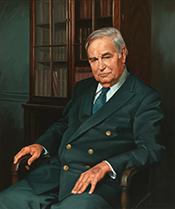
Walter Jones Sr.
Former U.S. Representative · North Carolina District 1 · 1965–1992 · Democratic
Walter Jones Sr. represented North Carolina's District 1 in the United States House of Representatives (1965–1992) for the Democratic party. The page below collects sourced biographical facts, term history, committee roles, and provenance for Sr..
Bioguide ID: J000256
Key facts
- Full name
- Walter Jones Sr.
- State
- North Carolina
- District
- District 1
- Party
- Democratic
- House service
- 1965–1992
- First House term
- 1965
- Status
- Left office
- Current term ends
- —
- Born
- 1913
- Bioguide ID
- J000256
- Committee assignments
- —
- Dataset version
- 1.20260605
Biographical narrative
976 words · sourced from the Wikipedia REST extract
Walter B. Jones was a prominent American politician who served as a Democratic member of the United States House of Representatives for North Carolina's 1st congressional district. His tenure in Congress spanned from 1966 until his death in 1992, marking a significant period in which he participated in various legislative initiatives and held key leadership roles. Jones's career in public service was characterized by his deep roots in North Carolina, where he began his journey in local governance before ascending to national politics.
Early life and career
Walter Beaman Jones was born on August 19, 1913, in Fayetteville, North Carolina. He received his early education at Elise Academy, located in Hemp, North Carolina. After completing his secondary education, Jones pursued higher education at North Carolina State University in Raleigh, where he earned a Bachelor of Science degree in 1934. This educational background laid the foundation for his future endeavors in both business and politics.
Following his graduation, Jones entered the business world and established himself in local commerce. He married and started a family, becoming an active member of his community. His initial foray into public service began when he was elected as the mayor of Farmville, North Carolina, a position he held from 1949 to 1953. This role allowed him to gain valuable experience in governance and community leadership.
Jones's political career continued to evolve as he was elected to the North Carolina General Assembly, where he served from 1955 to 1959. His legislative experience expanded further when he was elected to the North Carolina State Senate in 1965. This combination of local and state-level political experience positioned him well for a future in national politics.
In 1966, Jones was elected to the United States House of Representatives by special election. He filled the vacancy left by the death of Representative Herbert C. Bonner, marking the beginning of his long congressional career. His election to the 89th United States Congress was the first of many, as he would go on to serve a total of 14 consecutive terms in the House.
House tenure
Walter B. Jones's tenure in the U.S. House of Representatives began on February 5, 1966, and continued until his death on September 15, 1992. Throughout this period, he was a member of the Democratic Party and represented North Carolina's 1st congressional district. His service in the House spanned over two decades, during which he was reelected multiple times, reflecting his sustained support from constituents.
During his time in Congress, Jones was involved in a wide range of legislative activities and initiatives. He was a member of several committees, which allowed him to influence various aspects of national policy. Notably, he served as the chairman of the Committee on Merchant Marine and Fisheries from the 97th to the 102nd Congresses. This position gave him significant authority over issues related to maritime commerce, fisheries, and related industries, and he played a key role in shaping legislation in these areas.
Jones's congressional career was marked by his commitment to representing the interests of his constituents in North Carolina. He was known for his focus on local issues, which often included economic development, infrastructure, and support for the agricultural sector. His long service in the House allowed him to build relationships with fellow lawmakers and to gain a deeper understanding of the legislative process.
In addition to his committee work, Jones participated in various caucuses and coalitions within Congress, further enhancing his ability to advocate for the needs of his district. His ability to navigate the complexities of federal legislation contributed to his effectiveness as a representative.
Legislative focus and committees
Throughout his congressional career, Walter B. Jones focused on a variety of legislative issues that were important to his constituents and the broader interests of North Carolina. His work on the Committee on Merchant Marine and Fisheries was particularly significant, as it encompassed a range of topics related to maritime policy, fisheries management, and the economic implications of these sectors for coastal communities.
Jones was known for his advocacy on behalf of the fishing industry, which was a vital part of the economy in his district. He worked to promote policies that supported sustainable fishing practices and the economic viability of fishing communities. His efforts in this area reflected his understanding of the local economy and the importance of preserving natural resources.
In addition to his work on maritime issues, Jones was involved in broader economic development initiatives. He recognized the challenges faced by rural communities in North Carolina and sought to address these through various legislative measures. His focus on infrastructure improvements, including transportation and access to services, was aimed at enhancing the quality of life for residents in his district.
Jones's legislative priorities also included education and healthcare, areas that were critical to the well-being of his constituents. He supported initiatives aimed at improving access to quality education and healthcare services, recognizing their importance in fostering a healthy and educated populace.
Throughout his long career in the House, Jones maintained a reputation for being accessible to his constituents. He often engaged with local leaders and community members to understand their concerns and priorities. This approach allowed him to effectively represent the interests of his district and to advocate for policies that aligned with the needs of the people he served.
Walter B. Jones's legacy in Congress is marked by his dedication to public service and his commitment to the people of North Carolina. His extensive tenure and active involvement in legislative matters reflect a career devoted to addressing the challenges and opportunities faced by his constituents. After his passing in 1992, he was laid to rest in Forest Hills Cemetery in Farmville, North Carolina. His son, Walter B. Jones Jr., would later continue the family's political legacy by serving as a Republican congressman in North Carolina from 1995 to 2019.
Notable legislation
Sponsored and co-sponsored legislation for Walter Jones Sr. is pending operator curation. The biographical narrative above carries the same provenance trail until per-bill rows are written.
Sources
- [1]https://en.wikipedia.org/wiki/Walter_B._Jones_Sr.Wikipedia · retrieved 2026-06-05
Notable quotes
Sourced quotes for Walter Jones Sr. are pending operator curation. Narrative-scope provenance remains attached below.
Sources
- [1]https://en.wikipedia.org/wiki/Walter_B._Jones_Sr.Wikipedia · retrieved 2026-06-05
Key positions
Curated policy positions for Walter Jones Sr. are pending operator review. The biographical narrative above carries the same provenance trail until per-topic positions are written.
Sources
- [1]https://en.wikipedia.org/wiki/Walter_B._Jones_Sr.Wikipedia · retrieved 2026-06-05
Terms served
- 1965–1967U.S. House · Term 1 · Democratic
- 1967–1969U.S. House · Term 2 · Democratic
- 1969–1971U.S. House · Term 3 · Democratic
- 1971–1973U.S. House · Term 4 · Democratic
- 1973–1975U.S. House · Term 5 · Democratic
- 1975–1977U.S. House · Term 6 · Democratic
- 1977–1979U.S. House · Term 7 · Democratic
- 1979–1981U.S. House · Term 8 · Democratic
- 1981–1983U.S. House · Term 9 · Democratic
- 1983–1985U.S. House · Term 10 · Democratic
- 1985–1987U.S. House · Term 11 · Democratic
- 1987–1989U.S. House · Term 12 · Democratic
- 1989–1991U.S. House · Term 13 · Democratic
- 1991–1992U.S. House · Term 14 · Democratic
Sources & provenance
Every attributable claim above carries a per-section [N] marker that resolves to the corresponding URL below. Each entry records the upstream provider, the canonical URL, and the timestamp at which the source was retrieved by the ingest pipeline.
Key facts
- https://bioguide.congress.gov/search/bio/J000256bioguide · retrieved 2026-06-05
- https://www.govtrack.us/congress/members/406148govtrack · retrieved 2026-06-05
Biographical narrative
- https://en.wikipedia.org/wiki/Walter_B._Jones_Sr.wikipedia · retrieved 2026-06-05
Find your representative
Every U.S. state elects representatives by district. Browse North Carolina’s delegation, the full former-representative roster, or explore the role and term length.
Related on The Candidate
- Preceded by Lindsay WarrenEarlier holder of the North Carolina District 1 House seat · Democratic.Open
- Succeeded by Eva ClaytonLater holder of the North Carolina District 1 House seat · Democratic.Open
- Alfred GatlinFormer U.S. Representative · North Carolina District 1 · Crawford RepublicanOpen
- Clinton CobbFormer U.S. Representative · North Carolina District 1 · RepublicanOpen
- Frank Ballance Jr.Former U.S. Representative · North Carolina District 1 · DemocraticOpen
- Democratic PartyFederal candidates and office holders on the Democratic line.Open