
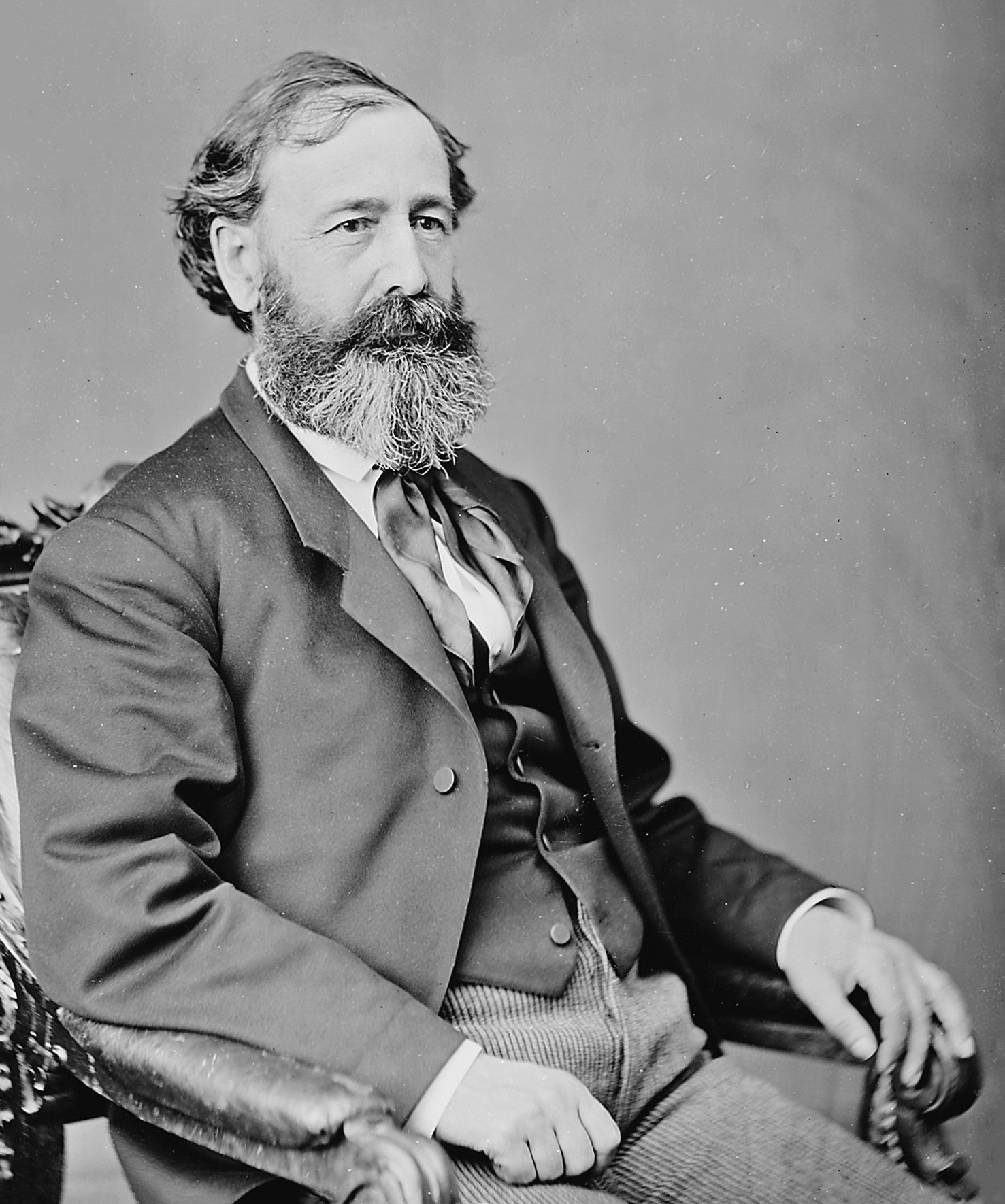
Historical · U.S. House · North Carolina · District 1
John French
Former U.S. Representative · North Carolina District 1 · 1867–1869 · Republican
John French represented North Carolina's District 1 in the United States House of Representatives (1867–1869) for the Republican party. The page below collects sourced biographical facts, term history, committee roles, and provenance for French.
Bioguide ID: F000378
Key facts
- Full name
- John French
- State
- North Carolina
- District
- District 1
- Party
- Republican
- House service
- 1867–1869
- First House term
- 1867
- Status
- Left office
- Current term ends
- —
- Born
- 1819
- Bioguide ID
- F000378
- Committee assignments
- —
- Dataset version
- 1.20260606
Biographical narrative
911 words · sourced from the Wikipedia REST extract
John French was an American politician and publisher who served as a U.S. Representative for North Carolina's 1st congressional district during the late 1860s. A member of the Republican Party, he played a significant role in the political landscape of North Carolina during the Reconstruction era. Prior to his congressional service, French had a diverse career in publishing and held various political positions, including serving in the Ohio House of Representatives and as Sergeant at Arms of the United States Senate.
Early life and career
John French was born on May 28, 1819, in Gilmanton, New Hampshire. He received his education in Gilmanton and Concord, New Hampshire, where he developed a foundation in academics that would serve him throughout his career. French learned the trade of printing, which led him to work in the publishing industry. He spent five years as the publisher and associate editor of the New Hampshire Statesman in Concord, a position that allowed him to hone his editorial skills and engage with the political issues of the time.
In 1847, while still at the New Hampshire Statesman, French published a collection of writings by Nathaniel Peabody Rogers, titled "A Collection from the Newspaper Writings of Nathaniel Peabody Rogers." This work highlighted his commitment to the anti-slavery movement, as he later became the publisher and associate editor of the Herald of Freedom in Concord, one of the earliest anti-slavery newspapers in the region. His editorial work during this period reflected a strong dedication to social justice and civil rights.
Following his time in New Hampshire, French worked as the editor of the Eastern Journal in Biddeford, Maine, for two years. In 1854, he relocated to Lake County, Ohio, where he continued his editorial career by taking on roles at several publications, including the Telegraph and the Press. By 1856, he was the editor of the Cleveland Morning Leader, further establishing his reputation in the field of journalism.
French's political career began to take shape when he served as a member of the Ohio House of Representatives in 1858 and 1859. His involvement in state politics provided him with valuable experience that would later inform his work in Congress. In 1861, he was appointed to a clerkship in the Treasury Department by Secretary Salmon P. Chase, which brought him to Washington, D.C. This position allowed him to gain insight into federal government operations.
After the Civil War, French was appointed by President Abraham Lincoln to serve on the board of direct-tax commissioners for North Carolina. Following this appointment, he settled in Edenton, North Carolina, where he became more deeply involved in the state's political landscape. In 1867, he participated as a delegate in the state constitutional convention, contributing to the rebuilding of North Carolina's governance after the war.
House tenure
John French's congressional career began when he was elected to the Fortieth Congress, representing North Carolina's 1st congressional district. His term commenced on July 6, 1868, and concluded on March 3, 1869. French's election occurred during a critical period of Reconstruction, as the Southern states were being reintegrated into the Union following the Civil War. As a member of the Republican Party, he aligned with the party's efforts to promote civil rights and support the newly freed African American population.
During his time in Congress, French was part of a larger effort to address the challenges facing the South in the aftermath of the war. His tenure was marked by the complexities of rebuilding the region's political and social structures. However, he did not seek renomination for the 1868 election, concluding his congressional service after a single term.
After leaving Congress, French continued his public service by being elected as the Sergeant at Arms of the United States Senate on March 22, 1869. He held this position until March 24, 1879, overseeing the Senate's operations and maintaining order within the chamber. His role as Sergeant at Arms was significant, as it involved managing the Senate's security and administrative functions during a time of political transition in the country.
Legislative focus and committees
While specific details regarding John French's legislative focus and committee assignments during his time in the House of Representatives are not provided, it can be inferred that his background in journalism and his commitment to social justice likely influenced his priorities as a legislator. Given the historical context of his service during Reconstruction, it is reasonable to assume that he was involved in discussions and initiatives related to civil rights, economic recovery, and the reintegration of Southern states into the Union.
French's experience as a publisher and editor may have equipped him with a unique perspective on the importance of communication and public discourse in shaping policy. His involvement in the anti-slavery movement and his editorial work in various publications suggest that he was attuned to the pressing social issues of his time, which would have informed his legislative priorities.
After his congressional career, French continued to engage in public service and journalism. In July 1880, he was appointed as the secretary and disbursing officer of the Ute Commission, a role that brought him back to Washington, D.C. His later years saw him move to Omaha, Nebraska, and subsequently to Boise City, Idaho, where he served as the editor of the Boise City Sun until his passing on October 2, 1890. French's contributions to journalism and politics left a lasting impact on the communities he served, and he is interred in Boise City Cemetery.
Notable legislation
Sponsored and co-sponsored legislation for John French is pending operator curation. The biographical narrative above carries the same provenance trail until per-bill rows are written.
Sources
- [1]https://en.wikipedia.org/wiki/John_R._FrenchWikipedia · retrieved 2026-06-06
Notable quotes
Sourced quotes for John French are pending operator curation. Narrative-scope provenance remains attached below.
Sources
- [1]https://en.wikipedia.org/wiki/John_R._FrenchWikipedia · retrieved 2026-06-06
Key positions
Curated policy positions for John French are pending operator review. The biographical narrative above carries the same provenance trail until per-topic positions are written.
Sources
- [1]https://en.wikipedia.org/wiki/John_R._FrenchWikipedia · retrieved 2026-06-06
Terms served
- 1867–1869U.S. House · Term 1 · Republican
Sources & provenance
Every attributable claim above carries a per-section [N] marker that resolves to the corresponding URL below. Each entry records the upstream provider, the canonical URL, and the timestamp at which the source was retrieved by the ingest pipeline.
Key facts
- https://bioguide.congress.gov/search/bio/F000378bioguide · retrieved 2026-06-06
- https://www.govtrack.us/congress/members/404323govtrack · retrieved 2026-06-06
Biographical narrative
- https://en.wikipedia.org/wiki/John_R._Frenchwikipedia · retrieved 2026-06-06
Find your representative
Every U.S. state elects representatives by district. Browse North Carolina’s delegation, the full former-representative roster, or explore the role and term length.
Related on The Candidate
- Preceded by William SmithEarlier holder of the North Carolina District 1 House seat · Ind. Republican-Democrat.Open
- Succeeded by Clinton CobbLater holder of the North Carolina District 1 House seat · Republican.Open
- Alfred GatlinFormer U.S. Representative · North Carolina District 1 · Crawford RepublicanOpen
- Eva ClaytonFormer U.S. Representative · North Carolina District 1 · DemocraticOpen
- Frank Ballance Jr.Former U.S. Representative · North Carolina District 1 · DemocraticOpen
- Republican PartyFederal candidates and office holders on the Republican line.Open