
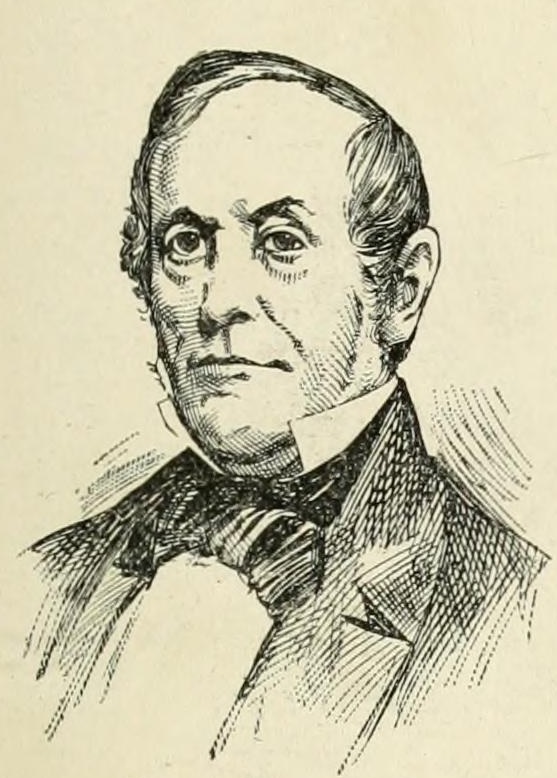
Historical · U.S. House · North Carolina · District 10
Abraham Rencher
Former U.S. Representative · North Carolina District 10 · 1829–1843 · Whig
Abraham Rencher represented North Carolina's District 10 in the United States House of Representatives (1829–1843) for the Whig party. The page below collects sourced biographical facts, term history, committee roles, and provenance for Rencher.
Bioguide ID: R000162
Key facts
- Full name
- Abraham Rencher
- State
- North Carolina
- District
- District 10
- Party
- Whig
- House service
- 1829–1843
- First House term
- 1829
- Status
- Left office
- Current term ends
- —
- Born
- 1798
- Bioguide ID
- R000162
- Committee assignments
- —
- Dataset version
- 1.20260606
Biographical narrative
1,071 words · sourced from the Wikipedia REST extract
Abraham Rencher was a prominent American politician from North Carolina who served as a U.S. Representative for the state’s 10th congressional district during the early to mid-19th century. A member of the Whig Party, Rencher's political career spanned several significant terms in the House of Representatives, where he was involved in various legislative matters. In addition to his congressional service, he held notable diplomatic and gubernatorial positions, including serving as the Chargé d'affaires to Portugal and as the Governor of the New Mexico Territory. His life and career reflect the complexities of American politics during a transformative period in the nation’s history.
Early life and career
Abraham Rencher was born on August 12, 1798, in the vicinity of Raleigh, North Carolina. He was the son of John Grant Rencher, who served as the county sheriff, and Ann Nelson Rencher. Growing up in a family that valued education, Rencher received his early education through home tutoring and attended local common schools. He furthered his studies at Pittsboro Academy, which provided him with a foundational education that would serve him well in his future endeavors.
In 1822, Rencher graduated from the University of North Carolina at Chapel Hill, a significant achievement that marked the beginning of his professional journey. Following his graduation, he pursued a career in law, studying under the guidance of Frederick Nash, a respected attorney. Rencher was admitted to the bar in 1825, and he began practicing law in Pittsboro, North Carolina. His legal career laid the groundwork for his entry into politics, as he became well-acquainted with the political landscape of North Carolina and developed a network of influential contacts.
Rencher's political career began in earnest when he was elected to the U.S. House of Representatives. He initially aligned himself with the Jacksonian faction, serving in the Twenty-first and Twenty-second Congresses. His political affiliations evolved over time, as he later identified as an Anti-Jacksonian for the Twenty-third and Twenty-fourth Congresses, and ultimately as a member of the Whig Party during his final term in the House. This evolution in party affiliation reflects the shifting political dynamics of the era, as various factions vied for power and influence in the rapidly changing landscape of American politics.
House tenure
Abraham Rencher's tenure in the U.S. House of Representatives began on March 4, 1829, and lasted until March 3, 1839. Over the course of six terms, he participated in significant legislative discussions and decisions that shaped the direction of the nation. His initial election as a Jacksonian representative marked a period of political turbulence, as the Jacksonian movement sought to expand democratic participation and challenge established elites.
During his time in Congress, Rencher was involved in various legislative initiatives and debates, reflecting the interests and concerns of his constituents in North Carolina. He was elected to serve in the Twenty-first Congress, where he began to establish himself as a capable legislator. His subsequent terms in the Twenty-second, Twenty-third, and Twenty-fourth Congresses further solidified his reputation as a dedicated public servant. However, in 1838, he chose not to seek renomination, a decision influenced by a combination of personal and political factors.
After a brief hiatus from Congress, Rencher returned to the House as a Whig representative for the Twenty-seventh Congress, serving from March 4, 1841, to March 3, 1843. His decision to re-enter politics during this period reflected his continued commitment to public service, even as he faced challenges related to his health. Ultimately, he declined to seek renomination in 1842, citing ill health as a significant factor in his decision.
Rencher's congressional career was marked by his ability to navigate the complexities of partisan politics, aligning himself with different factions as the political landscape evolved. His experience in the House provided him with valuable insights into the workings of the federal government and the challenges facing the nation during a time of significant change.
Legislative focus and committees
Throughout his congressional tenure, Abraham Rencher engaged in a variety of legislative matters that reflected the interests of his constituents and the broader national context. While specific details regarding the bills he sponsored or supported are not extensively documented, his involvement in Congress during a period marked by debates over issues such as states' rights, economic development, and territorial expansion is noteworthy. His alignment with the Whig Party, which advocated for a strong federal government and internal improvements, suggests that he may have supported initiatives aimed at advancing infrastructure and economic growth.
In addition to his legislative work, Rencher's political career extended beyond the House of Representatives. After concluding his service in Congress, he was appointed by President John Tyler as the U.S. Chargé d'affaires to Portugal, a diplomatic role that allowed him to represent American interests abroad from 1843 to 1847. This position further expanded his experience in governance and international relations, enhancing his understanding of the complexities of diplomacy.
Rencher's most significant executive role came when he was appointed Governor of the New Mexico Territory by President Buchanan in 1857. During his tenure as governor, which lasted until 1861, he faced various challenges, including conflicts with military authorities and issues related to indigenous populations. Rencher was noted for his efforts to pass legislation aimed at promoting education, including a requirement for compulsory school attendance for children in the territory. Additionally, he worked to reduce the territory's debt, demonstrating a commitment to fiscal responsibility.
Despite his role as a slaveholder, Rencher's governance was marked by a complex relationship with the prevailing political and social issues of his time. He signed legislation that defined and protected the status of slaves as property, reflecting the entrenched institution of slavery in the region. However, as the Civil War approached, he remained loyal to the Union and took steps to raise regiments to defend the territory, indicating a nuanced position during a tumultuous period in American history.
After his departure from the governorship in 1861, Rencher returned to his home in Pittsboro, North Carolina, where he lived in relative retirement. He maintained a supportive stance toward the Union during the Civil War but did not take an active role in the conflict. Rencher passed away on July 6, 1883, in Chapel Hill, North Carolina, leaving behind a legacy as a public servant who navigated the complexities of 19th-century American politics. His burial took place at St. Bartholomew's Protestant Episcopal Churchyard in Pittsboro, marking the end of a life dedicated to public service and governance.
Notable legislation
Sponsored and co-sponsored legislation for Abraham Rencher is pending operator curation. The biographical narrative above carries the same provenance trail until per-bill rows are written.
Sources
- [1]https://en.wikipedia.org/wiki/Abraham_RencherWikipedia · retrieved 2026-06-06
Notable quotes
Sourced quotes for Abraham Rencher are pending operator curation. Narrative-scope provenance remains attached below.
Sources
- [1]https://en.wikipedia.org/wiki/Abraham_RencherWikipedia · retrieved 2026-06-06
Key positions
Curated policy positions for Abraham Rencher are pending operator review. The biographical narrative above carries the same provenance trail until per-topic positions are written.
Sources
- [1]https://en.wikipedia.org/wiki/Abraham_RencherWikipedia · retrieved 2026-06-06
Terms served
- 1829–1831U.S. House · Term 1 · Jackson
- 1831–1833U.S. House · Term 2 · Jackson
- 1833–1835U.S. House · Term 3 · Whig
- 1835–1837U.S. House · Term 4 · Whig
- 1837–1839U.S. House · Term 5 · Whig
- 1841–1843U.S. House · Term 6 · Whig
Sources & provenance
Every attributable claim above carries a per-section [N] marker that resolves to the corresponding URL below. Each entry records the upstream provider, the canonical URL, and the timestamp at which the source was retrieved by the ingest pipeline.
Key facts
- https://bioguide.congress.gov/search/bio/R000162bioguide · retrieved 2026-06-06
- https://www.govtrack.us/congress/members/409139govtrack · retrieved 2026-06-06
Biographical narrative
- https://en.wikipedia.org/wiki/Abraham_Rencherwikipedia · retrieved 2026-06-06
Find your representative
Every U.S. state elects representatives by district. Browse North Carolina’s delegation, the full former-representative roster, or explore the role and term length.
Related on The Candidate
- Preceded by John LongEarlier holder of the North Carolina District 10 House seat · Adams.Open
- Succeeded by William CrawfordLater holder of the North Carolina District 10 House seat · Democratic.Open
- Alfred GatlinFormer U.S. Representative · North Carolina District 1 · Crawford RepublicanOpen
- Clinton CobbFormer U.S. Representative · North Carolina District 1 · RepublicanOpen
- Eva ClaytonFormer U.S. Representative · North Carolina District 1 · DemocraticOpen
- Frank Ballance Jr.Former U.S. Representative · North Carolina District 1 · DemocraticOpen