
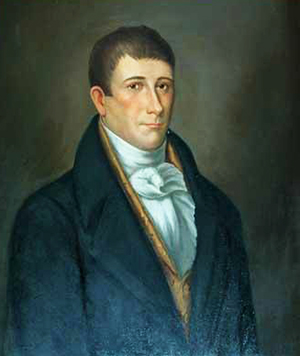
Historical · U.S. House · North Carolina · District 10
Benjamin Williams
Former U.S. Representative · North Carolina District 10 · 1793–1795
Benjamin Williams represented North Carolina's District 10 in the United States House of Representatives (1793–1795). The page below collects sourced biographical facts, term history, committee roles, and provenance for Williams.
Bioguide ID: W000491
Key facts
- Full name
- Benjamin Williams
- State
- North Carolina
- District
- District 10
- Party
- —
- House service
- 1793–1795
- First House term
- 1793
- Status
- Left office
- Current term ends
- —
- Born
- 1751
- Bioguide ID
- W000491
- Committee assignments
- —
- Dataset version
- 1.20260606
Biographical narrative
959 words · sourced from the Wikipedia REST extract
Benjamin Williams was a notable figure in early American politics, serving as a U.S. Representative for North Carolina's 10th congressional district from 1793 to 1795. His political career was marked by significant contributions to the governance of North Carolina, including two nonconsecutive terms as the state's governor. Williams was born in 1751 in Johnston County, North Carolina, and his life spanned a period of considerable change in the United States, from the colonial era through the early years of the republic. His legacy includes not only his legislative work but also his military service during the American Revolutionary War, which reflected his commitment to the founding principles of the nation.
Early life and career
Benjamin Williams was born on January 1, 1751, in Johnston County, North Carolina. He grew up in a region that was heavily influenced by the agricultural economy, which shaped his future as a farmer. Williams married Elizabeth Jones on August 10, 1781, and the couple had one son, also named Benjamin. His familial ties and local roots would later play a significant role in his political career.
Williams's early involvement in public service began with his participation in the revolutionary convention in Johnston County in 1774, where he engaged with the growing sentiments for independence from British rule. His political activities continued as he served in the North Carolina Provincial Congress, where he was involved in the discussions and decisions that would shape the future of the colony. Additionally, he held two terms in the Provincial Council, contributing to the governance of North Carolina during a tumultuous period.
In 1775, Williams was appointed to the Second North Carolina Regiment, marking the beginning of his military career. He served in various capacities throughout the Revolutionary War, ultimately attaining the rank of colonel. His military service included participation in significant battles, such as the Battle of Guilford Courthouse, which was a pivotal engagement in the Southern campaign of the war. His leadership and bravery during this time solidified his reputation as a dedicated public servant.
Williams's military career included several ranks within the Second North Carolina Regiment, starting as a lieutenant and later becoming a captain. He also served as a lieutenant colonel or colonel in the Johnston County Regiment of the North Carolina militia and held a similar rank in the North Carolina State Regiment. His military experience not only contributed to his leadership skills but also provided him with a platform to engage in political life after the war.
House tenure
Williams's political career transitioned into the legislative arena when he was elected to the United States House of Representatives, where he served from 1793 to 1795. His tenure in the House was part of a broader movement of individuals who sought to shape the new federal government established by the Constitution. Although he served only one term, Williams's role in the House was significant during a formative period in American history.
His election to Congress came at a time when the United States was still defining its political identity and establishing its legislative processes. Williams's experience as a military officer and his previous political roles provided him with a unique perspective on the challenges facing the young nation. During his time in the House, he was involved in discussions and decisions that would influence the direction of federal policies and the relationship between the states and the federal government.
Following his term in the House, Williams continued to be active in North Carolina politics. His political career included multiple terms in the North Carolina General Assembly, where he contributed to the state's legislative framework. His involvement in both state and federal government demonstrated his commitment to public service and the governance of North Carolina.
Legislative focus and committees
While specific details regarding Williams's legislative focus during his time in the House are not extensively documented, it is known that he was part of a generation of lawmakers who were deeply engaged in the foundational issues of the United States. These included debates over federalism, the balance of power between state and national governments, and the establishment of a functioning legislative body.
Williams's experience in the military and his previous political roles likely influenced his perspectives on issues such as national defense, state sovereignty, and the rights of citizens. As a representative from North Carolina, he would have been particularly attuned to the needs and concerns of his constituents, advocating for policies that reflected the interests of the state.
After his congressional tenure, Williams's political career continued to evolve. He was elected as the governor of North Carolina, serving from 1799 to 1802 and again from 1807 to 1808. His governorship was marked by significant events, including his decision to pardon Congressman John Stanly, who had been involved in a fatal duel with former Governor Richard Dobbs Spaight. This incident highlighted the complexities of political life in North Carolina during this period.
Williams's political career was characterized by a commitment to public service, as he navigated the challenges of governance in a rapidly changing political landscape. His involvement in both the state legislature and the U.S. Congress demonstrated his dedication to the principles of democracy and representation. After his final term as governor, Williams continued to serve in the North Carolina Senate before retiring from politics.
Benjamin Williams passed away on July 20, 1814, leaving behind a legacy of public service and leadership in North Carolina. He is buried in Moore County, and his former home, known as House in the Horseshoe, has been preserved as a tourist attraction, reflecting his historical significance in the region. His life and career exemplify the contributions of early American leaders who helped shape the foundations of the United States and the state of North Carolina.
Notable legislation
Sponsored and co-sponsored legislation for Benjamin Williams is pending operator curation. The biographical narrative above carries the same provenance trail until per-bill rows are written.
Sources
- [1]https://en.wikipedia.org/wiki/Benjamin_WilliamsWikipedia · retrieved 2026-06-06
Notable quotes
Sourced quotes for Benjamin Williams are pending operator curation. Narrative-scope provenance remains attached below.
Sources
- [1]https://en.wikipedia.org/wiki/Benjamin_WilliamsWikipedia · retrieved 2026-06-06
Key positions
Curated policy positions for Benjamin Williams are pending operator review. The biographical narrative above carries the same provenance trail until per-topic positions are written.
Sources
- [1]https://en.wikipedia.org/wiki/Benjamin_WilliamsWikipedia · retrieved 2026-06-06
Terms served
- 1793–1795U.S. House · Term 1
Sources & provenance
Every attributable claim above carries a per-section [N] marker that resolves to the corresponding URL below. Each entry records the upstream provider, the canonical URL, and the timestamp at which the source was retrieved by the ingest pipeline.
Key facts
- https://bioguide.congress.gov/search/bio/W000491bioguide · retrieved 2026-06-06
- https://www.govtrack.us/congress/members/411648govtrack · retrieved 2026-06-06
Biographical narrative
- https://en.wikipedia.org/wiki/Benjamin_Williamswikipedia · retrieved 2026-06-06
Find your representative
Every U.S. state elects representatives by district. Browse North Carolina’s delegation, the full former-representative roster, or explore the role and term length.
Related on The Candidate
- Succeeded by Nathan BryanLater holder of the North Carolina District 10 House seat · Republican.Open
- Alfred GatlinFormer U.S. Representative · North Carolina District 1 · Crawford RepublicanOpen
- Clinton CobbFormer U.S. Representative · North Carolina District 1 · RepublicanOpen
- Eva ClaytonFormer U.S. Representative · North Carolina District 1 · DemocraticOpen
- Frank Ballance Jr.Former U.S. Representative · North Carolina District 1 · DemocraticOpen
- Representatives from North CarolinaEvery former U.S. Representative who has represented North Carolina.Open