
Historical · U.S. House · North Carolina · District 13
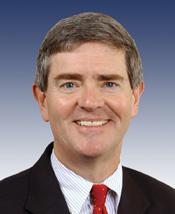
Brad Miller
Former U.S. Representative · North Carolina District 13 · 2003–2013 · Democratic
Brad Miller represented North Carolina's District 13 in the United States House of Representatives (2003–2013) for the Democratic party. The page below collects sourced biographical facts, term history, committee roles, and provenance for Miller.
Bioguide ID: M001154
Key facts
- Full name
- Brad Miller
- State
- North Carolina
- District
- District 13
- Party
- Democratic
- House service
- 2003–2013
- First House term
- 2003
- Status
- Left office
- Current term ends
- —
- Born
- 1953
- Bioguide ID
- M001154
- Committee assignments
- —
- Dataset version
- 1.20260605
Biographical narrative
896 words · sourced from the Wikipedia REST extract
Ralph Bradley Miller is a former U.S. Representative who served North Carolina's 13th congressional district from 2003 until 2013. A member of the Democratic Party, Miller's tenure in Congress was marked by his involvement in various legislative initiatives, particularly in the areas of education, healthcare, and financial reform. His political career was preceded by a background in law and state politics, where he held positions in both the North Carolina House of Representatives and the North Carolina Senate.
Early life and career
Brad Miller was born on May 19, 1953, in Fayetteville, North Carolina, to parents Margaret Hale Miller and Nathan David Miller. He pursued higher education at the University of North Carolina at Chapel Hill, where he earned a Bachelor of Arts degree in 1975. Following this, he attended the London School of Economics, obtaining a Master’s degree in 1978. Miller then completed his legal education at Columbia Law School, receiving his Juris Doctor in 1979. After graduating, he served as a law clerk for Judge J. Dickson Phillips Jr. on the United States Court of Appeals for the Fourth Circuit, gaining valuable experience in the judicial system.
Miller began his legal career practicing law in Raleigh, North Carolina, where he developed a foundation in legal matters that would later inform his political career. His entry into politics began at the state level, where he was elected to the North Carolina House of Representatives in 1992, serving until 1994. He then moved to the North Carolina Senate, where he served from 1996 until 2002. During his time in the state legislature, Miller gained experience in legislative processes and developed a network that would be beneficial in his future congressional career.
House tenure
In 2002, Miller was elected to the United States House of Representatives to represent North Carolina's 13th congressional district. This district included all of Caswell and Person counties, as well as portions of Alamance, Granville, Guilford, Rockingham, and Wake counties. His election followed the redistricting process that occurred after the 2000 Census, in which he played a role in shaping the new district boundaries. Miller won a competitive Democratic primary and subsequently defeated his Republican opponent, Carolyn Grant, in the general election, securing approximately 55% of the vote.
Miller successfully ran for re-election in 2004, receiving about 59% of the votes against Republican challenger Virginia Johnson. His 2006 campaign saw him face Vernon Robinson, a conservative candidate who attracted national attention with his controversial statements. Despite the heated nature of the campaign, Miller won decisively, garnering approximately 63.71% of the vote.
In 2007, Miller contemplated a run for the U.S. Senate against incumbent Elizabeth Dole but ultimately decided against it. He also ruled out a challenge to Senator Richard Burr in 2010. Following the 2010 Census, the state’s Republican-controlled legislature redrew the congressional districts, placing Miller in a newly configured 13th District that leaned heavily Republican. This new district would have favored Republican candidates in previous elections, complicating Miller's prospects for re-election. On January 26, 2012, he announced that he would not seek another term in Congress, concluding his service on January 3, 2013.
Legislative focus and committees
During his time in the U.S. House of Representatives, Miller was actively involved in several key legislative areas. He co-founded and co-chaired the bipartisan Community College Caucus, which aimed to raise awareness among members of Congress about the importance of community colleges in the education system. His contributions to this initiative earned him recognition from the Council for Resource Development.
Miller's legislative efforts also extended to healthcare reform. He voted in favor of the Patient Protection and Affordable Care Act, a significant piece of legislation aimed at expanding healthcare coverage and reforming the healthcare system in the United States.
In the realm of financial reform, Miller served on the House Financial Services Committee, where he focused on consumer protection, particularly in relation to predatory lending practices. He was instrumental in advancing several pieces of legislation aimed at reforming mortgage lending. Notably, he authored comprehensive federal mortgage lending reform legislation in both 2007 and 2009, although neither bill was taken up by the Senate.
In 2009, Miller introduced the Financial Product Safety Commission Act, which sought to establish a commission to oversee financial products and protect consumers. This proposal was influenced by concepts put forth by legal scholar Elizabeth Warren and was later included in a broader financial regulatory reform package.
Miller also introduced the Emergency Homeownership and Mortgage Equity Protection Act in 2007, advocating for the ability of bankruptcy courts to modify mortgage debts for individuals facing foreclosure. His efforts in this area highlighted his commitment to addressing the challenges faced by homeowners during economic downturns.
One of the notable moments during his tenure occurred on March 18, 2009, when Miller questioned AIG Chairman Edward Liddy during a hearing related to the company's financial practices following its receipt of federal assistance. His pointed inquiries addressed the allocation of taxpayer resources and underscored his focus on accountability in financial institutions.
In addition to his work on financial reform, Miller expressed support for the repeal of the Defense of Marriage Act in September 2011, aligning with his party's stance on LGBTQ+ rights.
Throughout his five terms in Congress, Miller's legislative focus reflected a commitment to education, consumer protection, and healthcare reform, marking his tenure as one characterized by active participation in significant national issues.
Notable legislation
Sponsored and co-sponsored legislation for Brad Miller is pending operator curation. The biographical narrative above carries the same provenance trail until per-bill rows are written.
Sources
- [1]https://en.wikipedia.org/wiki/Brad_Miller_(politician)Wikipedia · retrieved 2026-06-05
Notable quotes
Sourced quotes for Brad Miller are pending operator curation. Narrative-scope provenance remains attached below.
Sources
- [1]https://en.wikipedia.org/wiki/Brad_Miller_(politician)Wikipedia · retrieved 2026-06-05
Key positions
Curated policy positions for Brad Miller are pending operator review. The biographical narrative above carries the same provenance trail until per-topic positions are written.
Sources
- [1]https://en.wikipedia.org/wiki/Brad_Miller_(politician)Wikipedia · retrieved 2026-06-05
Terms served
- 2003–2005U.S. House · Term 1 · Democratic
- 2005–2007U.S. House · Term 2 · Democratic
- 2007–2009U.S. House · Term 3 · Democratic
- 2009–2011U.S. House · Term 4 · Democratic
- 2011–2013U.S. House · Term 5 · Democratic
Sources & provenance
Every attributable claim above carries a per-section [N] marker that resolves to the corresponding URL below. Each entry records the upstream provider, the canonical URL, and the timestamp at which the source was retrieved by the ingest pipeline.
Key facts
- https://bioguide.congress.gov/search/bio/M001154bioguide · retrieved 2026-06-05
- http://www.house.gov/bradmillerhouse.gov · retrieved 2026-06-05
Biographical narrative
- https://en.wikipedia.org/wiki/Brad_Miller_(politician)wikipedia · retrieved 2026-06-05
Find your representative
Every U.S. state elects representatives by district. Browse North Carolina’s delegation, the full former-representative roster, or explore the role and term length.
Related on The Candidate
- Preceded by Anderson MitchellEarlier holder of the North Carolina District 13 House seat · Whig.Open
- Succeeded by Wiley Nickel IIILater holder of the North Carolina District 13 House seat · Democratic.Open
- Alfred GatlinFormer U.S. Representative · North Carolina District 1 · Crawford RepublicanOpen
- Clinton CobbFormer U.S. Representative · North Carolina District 1 · RepublicanOpen
- Eva ClaytonFormer U.S. Representative · North Carolina District 1 · DemocraticOpen
- Frank Ballance Jr.Former U.S. Representative · North Carolina District 1 · DemocraticOpen