
Historical · U.S. House · North Carolina · District 2
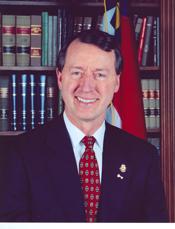
Bob Etheridge
Former U.S. Representative · North Carolina District 2 · 1997–2011 · Democratic
Bob Etheridge represented North Carolina's District 2 in the United States House of Representatives (1997–2011) for the Democratic party. The page below collects sourced biographical facts, term history, committee roles, and provenance for Etheridge.
Bioguide ID: E000226
Key facts
- Full name
- Bob Etheridge
- State
- North Carolina
- District
- District 2
- Party
- Democratic
- House service
- 1997–2011
- First House term
- 1997
- Status
- Left office
- Current term ends
- —
- Born
- 1941
- Bioguide ID
- E000226
- Committee assignments
- —
- Dataset version
- 1.20260605
Biographical narrative
981 words · sourced from the Wikipedia REST extract
Bobby Ray "Bob" Etheridge is a former American politician who served as the U.S. Representative for North Carolina's 2nd congressional district from 1997 until 2011. A member of the Democratic Party, Etheridge's political career spans several decades, during which he held various positions, including county commissioner, state representative, and state superintendent of public instruction. Following his tenure in Congress, he continued to engage in public service and political activities, including a candidacy for the governorship of North Carolina.
Early life and career
Bob Etheridge was born on August 7, 1941, in Sampson County, North Carolina, to John P. Etheridge and Beatrice Coats Etheridge. He grew up in a rural environment and attended the Cleveland School, where he distinguished himself as a talented basketball player. After completing high school in 1959, Etheridge pursued higher education at Campbell University, where he received an athletic scholarship. He became the first member of his family to graduate from college, earning a degree in business in 1965.
Following his graduation, Etheridge served in the United States Army from 1965 to 1967, an experience that contributed to his understanding of public service and civic responsibility. After his military service, he engaged in graduate studies in economics, further broadening his educational background. In addition to his academic pursuits, Etheridge has worked as a part-time tobacco farmer and operated a hardware store, reflecting his connection to the local economy and community.
Etheridge's political career began at the local level when he was elected as a Harnett County commissioner, serving from 1973 to 1976. He chaired the commission from 1974 to 1976, gaining valuable experience in governance and public administration. In 1978, he was elected to the North Carolina House of Representatives, where he served five terms from 1979 to 1988. During his time in the state legislature, Etheridge rose to prominence as the chair of the House Appropriations Committee, earning a reputation for his advocacy on educational issues.
In 1988, Etheridge was elected as the North Carolina Superintendent of Public Instruction, a role in which he served for two terms until 1996. His tenure in this position solidified his commitment to education and established him as a prominent figure in North Carolina politics.
House tenure
Bob Etheridge entered the U.S. House of Representatives after winning the election for North Carolina's 2nd congressional district in 1996. He defeated the incumbent Republican Congressman David Funderburk by securing a majority of the votes. Etheridge's initial success in Congress was followed by a series of re-elections, where he consistently garnered significant support from his constituents. In subsequent elections, Etheridge maintained a strong electoral presence, achieving over 57% of the vote in his second term and over 65% in several subsequent elections until 2008.
His final election campaign in 2010 was marked by a close contest against Republican nominee Renee Ellmers and Libertarian nominee Tom Rose. Etheridge lost this election by a narrow margin, prompting him to request a recount. However, the State Board of Elections confirmed Ellmers' victory, leading Etheridge to concede the race.
During his time in the House, Etheridge served on several important committees, including the Agriculture Committee and the Homeland Security Committee. His legislative focus encompassed a variety of issues, particularly those related to agriculture, education, and fiscal responsibility. Etheridge was known for advocating for farm issues, emphasizing the importance of agricultural policy to the economy of North Carolina and the nation.
Legislative focus and committees
Throughout his congressional career, Bob Etheridge prioritized several key areas of legislation. His work on agricultural issues was particularly notable, as he sought to address the needs of farmers and rural communities in North Carolina. He was involved in discussions and initiatives aimed at enhancing agricultural productivity and sustainability, reflecting his background as a part-time farmer.
In addition to agriculture, Etheridge was an advocate for education, continuing the focus he had established during his time as state superintendent. He supported various educational initiatives and reforms, aiming to improve access to quality education for all students. His commitment to education was evident in his legislative actions and public statements.
Etheridge also played a role in health care reform, voting in favor of significant legislation aimed at expanding access to health care for Americans. He supported the Affordable Health Care for America Act and the Patient Protection and Affordable Care Act, reflecting his belief in the importance of health care accessibility.
In 2006, Etheridge collaborated with other lawmakers to promote research and development in biofuels, seeking to reduce the United States' dependence on foreign oil. This initiative highlighted his interest in alternative energy sources and sustainability, aligning with broader national discussions on energy policy.
During the 111th Congress, Etheridge served on the Committee on the Budget and the Committee on Ways and Means, where he was involved in discussions regarding fiscal policy and economic recovery. He was also a member of the New Democrat Coalition, a group focused on moderate, pro-growth policies.
Etheridge's tenure in Congress was not without controversy. In June 2010, he was involved in an incident that received media attention when he confronted two individuals who were recording him on the street. The incident raised questions about his behavior and was discussed in the context of his re-election campaign.
After leaving Congress in 2011, Etheridge continued to engage in public service. He was appointed by Governor Bev Perdue to lead the North Carolina Office of Economic Recovery and Investment, overseeing funds from the American Recovery and Reinvestment Act. In 2012, he ran for the Democratic nomination for Governor of North Carolina but was not successful. He later took on the role of executive director of the North Carolina office of the Farm Service Agency, a position he held until the change in administration in 2017.
Bob Etheridge's career reflects a long-standing commitment to public service, education, and agricultural policy, marking him as a notable figure in North Carolina's political landscape.
Notable legislation
Sponsored and co-sponsored legislation for Bob Etheridge is pending operator curation. The biographical narrative above carries the same provenance trail until per-bill rows are written.
Sources
- [1]https://en.wikipedia.org/wiki/Bob_EtheridgeWikipedia · retrieved 2026-06-05
Notable quotes
Sourced quotes for Bob Etheridge are pending operator curation. Narrative-scope provenance remains attached below.
Sources
- [1]https://en.wikipedia.org/wiki/Bob_EtheridgeWikipedia · retrieved 2026-06-05
Key positions
Curated policy positions for Bob Etheridge are pending operator review. The biographical narrative above carries the same provenance trail until per-topic positions are written.
Sources
- [1]https://en.wikipedia.org/wiki/Bob_EtheridgeWikipedia · retrieved 2026-06-05
Terms served
- 1997–1999U.S. House · Term 1 · Democratic
- 1999–2001U.S. House · Term 2 · Democratic
- 2001–2003U.S. House · Term 3 · Democratic
- 2003–2005U.S. House · Term 4 · Democratic
- 2005–2007U.S. House · Term 5 · Democratic
- 2007–2009U.S. House · Term 6 · Democratic
- 2009–2011U.S. House · Term 7 · Democratic
Sources & provenance
Every attributable claim above carries a per-section [N] marker that resolves to the corresponding URL below. Each entry records the upstream provider, the canonical URL, and the timestamp at which the source was retrieved by the ingest pipeline.
Key facts
- https://bioguide.congress.gov/search/bio/E000226bioguide · retrieved 2026-06-05
- http://www.house.gov/etheridgehouse.gov · retrieved 2026-06-05
Biographical narrative
- https://en.wikipedia.org/wiki/Bob_Etheridgewikipedia · retrieved 2026-06-05
Find your representative
Every U.S. state elects representatives by district. Browse North Carolina’s delegation, the full former-representative roster, or explore the role and term length.
Related on The Candidate
- Preceded by David FunderburkEarlier holder of the North Carolina District 2 House seat · Republican.Open
- Succeeded by Renee EllmersLater holder of the North Carolina District 2 House seat · Republican.Open
- Alfred GatlinFormer U.S. Representative · North Carolina District 1 · Crawford RepublicanOpen
- Clinton CobbFormer U.S. Representative · North Carolina District 1 · RepublicanOpen
- Eva ClaytonFormer U.S. Representative · North Carolina District 1 · DemocraticOpen
- Frank Ballance Jr.Former U.S. Representative · North Carolina District 1 · DemocraticOpen