
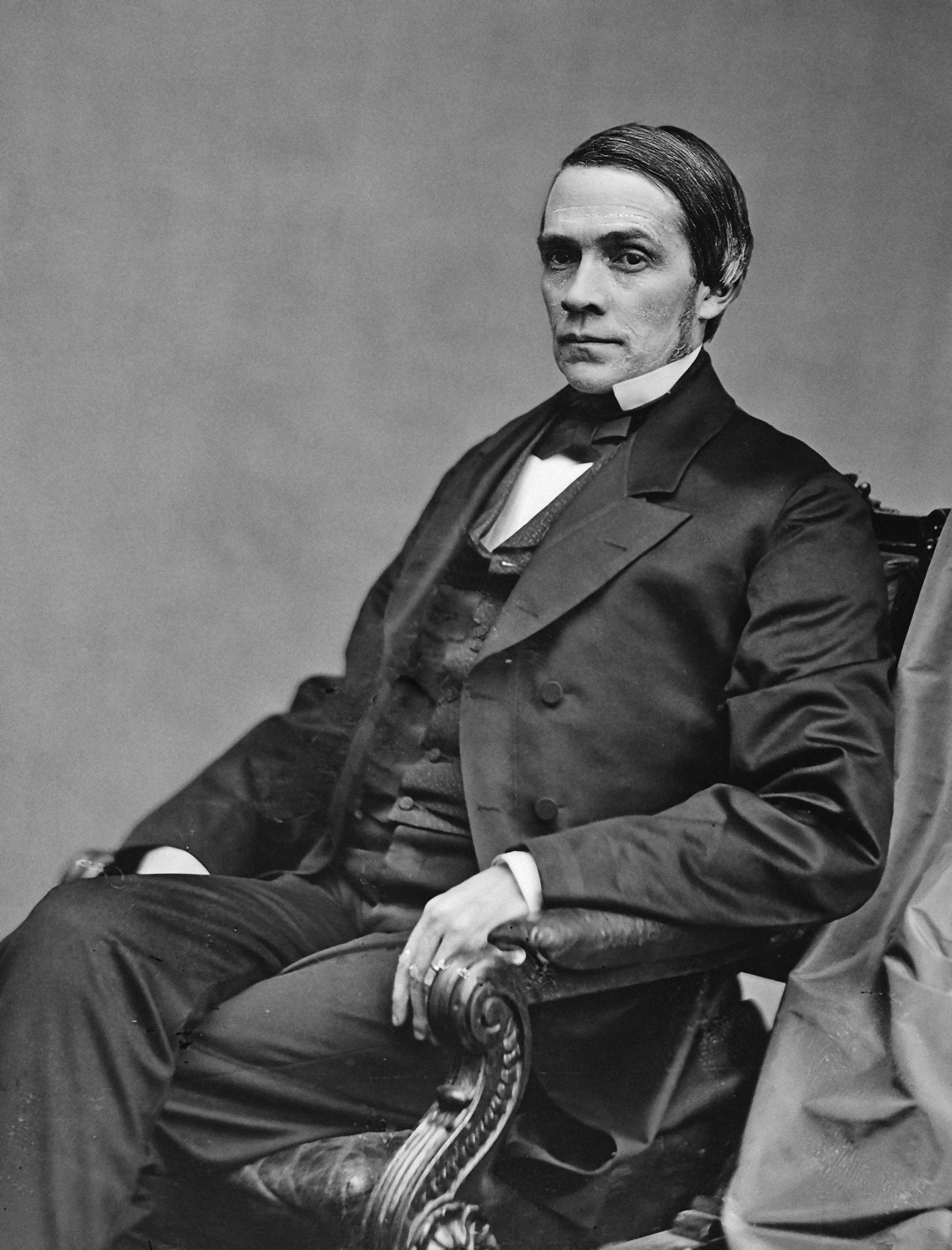
Historical · U.S. House · North Carolina · District 2
David Heaton
Former U.S. Representative · North Carolina District 2 · 1867–1871 · Republican
David Heaton represented North Carolina's District 2 in the United States House of Representatives (1867–1871) for the Republican party. The page below collects sourced biographical facts, term history, committee roles, and provenance for Heaton.
Bioguide ID: H000432
Key facts
- Full name
- David Heaton
- State
- North Carolina
- District
- District 2
- Party
- Republican
- House service
- 1867–1871
- First House term
- 1867
- Status
- Left office
- Current term ends
- —
- Born
- 1823
- Bioguide ID
- H000432
- Committee assignments
- —
- Dataset version
- 1.20260606
Biographical narrative
1,029 words · sourced from the Wikipedia REST extract
David Heaton was an American attorney and politician who served as a U.S. Representative for North Carolina's 2nd congressional district during the Reconstruction era. A member of the Republican Party, Heaton's political career spanned various roles, including state legislator in Ohio and Minnesota, before he was elected to the U.S. House of Representatives. His tenure in Congress was marked by his involvement in the legislative processes of the post-Civil War period until his untimely death in 1870.
Early life and career
David Heaton was born on March 10, 1823, in Hamilton, Butler County, Ohio. He was the son of James Heaton and Mary Morrell, who were migrants from the Eastern United States. Growing up in Ohio, Heaton pursued his education through preparatory studies and later engaged in legal training as a law apprentice. His dedication to his studies culminated in his admission to the bar, allowing him to practice law.
Heaton's political career began in Ohio, where he was elected to the Ohio Senate in 1855. His tenure in the state legislature marked the beginning of his active involvement in politics. In 1857, he relocated to St. Anthony Falls, Minnesota, where he continued his political pursuits. He was elected to the Minnesota Senate, serving from 1858 until 1863. During this time, Heaton contributed to the legislative processes of Minnesota, gaining valuable experience that would later inform his work at the federal level.
With the onset of the American Civil War, Heaton's career took a new direction. In 1863, he was appointed as a special agent of the United States Treasury Department, a role that involved overseeing financial matters in areas affected by the war. He was stationed in New Bern, North Carolina, which had been occupied by Union troops. During his time there, Heaton was involved in efforts to establish a contraband camp aimed at educating former slaves, reflecting the changing social landscape of the time. In 1864, he was offered the position of Third Auditor of the Treasury but chose to decline the appointment, opting instead to remain in North Carolina.
In 1867, Heaton played a significant role in North Carolina's constitutional convention, which was part of the Reconstruction efforts following the Civil War. His involvement in the convention was pivotal as the state sought to redefine its governance and reintegrate into the Union. Following the completion of the convention, North Carolina was readmitted to representation in Congress, setting the stage for Heaton's election to the U.S. House of Representatives.
House tenure
David Heaton's congressional career began when he was elected as a Republican to the Fortieth Congress, which convened in 1867. He was among the representatives who were instrumental in shaping legislation during a critical period of American history, characterized by efforts to rebuild and redefine the nation after the Civil War. Heaton served in the House from July 15, 1868, until his death in 1870, completing two terms in office.
During his time in Congress, Heaton was actively involved in various legislative initiatives and discussions that addressed the needs and challenges of a nation in transition. His role as a member of the House allowed him to contribute to the broader national dialogue on issues such as civil rights, economic recovery, and the integration of Southern states back into the Union.
Heaton's leadership was recognized through his appointment as the chairman of the Committee on Coinage, Weights, and Measures during the Forty-first Congress. In this capacity, he oversaw matters related to the nation's currency and measurement standards, which were essential for facilitating trade and economic stability in the post-war era. His work on this committee highlighted his commitment to addressing the practical needs of the country as it sought to recover from the war's devastation.
Despite his contributions, Heaton's congressional career was cut short by his sudden death. He was nominated for reelection to the Forty-second Congress, but he passed away on June 25, 1870, while in Washington, D.C. His death occurred during a time of significant political activity, and he was unable to fulfill his aspirations for continued service in Congress.
Legislative focus and committees
Throughout his time in the U.S. House of Representatives, David Heaton's legislative focus was informed by the pressing issues of his era. As a member of the Republican Party during Reconstruction, he was involved in discussions surrounding civil rights, economic recovery, and the reintegration of Southern states into the Union. His background as an attorney and his experiences in state legislatures provided him with a unique perspective on the legal and social challenges facing the nation.
Heaton's role as chairman of the Committee on Coinage, Weights, and Measures was particularly significant. In this position, he was responsible for overseeing legislation related to the nation's currency and standards of measurement. This committee played a crucial role in ensuring the stability and integrity of the U.S. monetary system, which was vital for economic growth and recovery following the Civil War. His leadership in this area demonstrated his commitment to addressing the practical needs of the country and facilitating trade.
In addition to his work on the committee, Heaton's contributions to the legislative process included participation in debates and discussions on various bills and resolutions that sought to address the needs of a nation undergoing significant transformation. His involvement in these legislative efforts reflected the broader goals of the Reconstruction era, which aimed to promote equality and rebuild the Southern economy.
Heaton's tenure in Congress was marked by a dedication to public service and a commitment to the principles of the Republican Party during a tumultuous period in American history. His work in the House of Representatives contributed to the ongoing efforts to shape a more equitable and unified nation, even as he faced the challenges of his time.
David Heaton's life and career were characterized by a commitment to public service and a dedication to the principles of democracy. His contributions to the legislative process and his involvement in the Reconstruction efforts left a lasting impact on the political landscape of the United States. Following his death, Heaton was interred in the National Cemetery in New Bern, North Carolina, where he is remembered for his service to the nation.
Notable legislation
Sponsored and co-sponsored legislation for David Heaton is pending operator curation. The biographical narrative above carries the same provenance trail until per-bill rows are written.
Sources
- [1]https://en.wikipedia.org/wiki/David_HeatonWikipedia · retrieved 2026-06-06
Notable quotes
Sourced quotes for David Heaton are pending operator curation. Narrative-scope provenance remains attached below.
Sources
- [1]https://en.wikipedia.org/wiki/David_HeatonWikipedia · retrieved 2026-06-06
Key positions
Curated policy positions for David Heaton are pending operator review. The biographical narrative above carries the same provenance trail until per-topic positions are written.
Sources
- [1]https://en.wikipedia.org/wiki/David_HeatonWikipedia · retrieved 2026-06-06
Terms served
- 1867–1869U.S. House · Term 1 · Republican
- 1869–1871U.S. House · Term 2 · Republican
Sources & provenance
Every attributable claim above carries a per-section [N] marker that resolves to the corresponding URL below. Each entry records the upstream provider, the canonical URL, and the timestamp at which the source was retrieved by the ingest pipeline.
Key facts
- https://bioguide.congress.gov/search/bio/H000432bioguide · retrieved 2026-06-06
- https://www.govtrack.us/congress/members/405298govtrack · retrieved 2026-06-06
Biographical narrative
- https://en.wikipedia.org/wiki/David_Heatonwikipedia · retrieved 2026-06-06
Find your representative
Every U.S. state elects representatives by district. Browse North Carolina’s delegation, the full former-representative roster, or explore the role and term length.
Related on The Candidate
- Preceded by Thomas RuffinEarlier holder of the North Carolina District 2 House seat · Democratic.Open
- Succeeded by Charles ThomasLater holder of the North Carolina District 2 House seat · Republican.Open
- Alfred GatlinFormer U.S. Representative · North Carolina District 1 · Crawford RepublicanOpen
- Clinton CobbFormer U.S. Representative · North Carolina District 1 · RepublicanOpen
- Eva ClaytonFormer U.S. Representative · North Carolina District 1 · DemocraticOpen
- Frank Ballance Jr.Former U.S. Representative · North Carolina District 1 · DemocraticOpen