
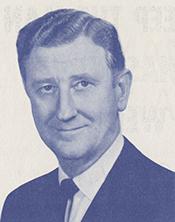
Historical · U.S. House · North Carolina · District 2
Lawrence Fountain
Former U.S. Representative · North Carolina District 2 · 1953–1983 · Democratic
Lawrence Fountain represented North Carolina's District 2 in the United States House of Representatives (1953–1983) for the Democratic party. The page below collects sourced biographical facts, term history, committee roles, and provenance for Fountain.
Bioguide ID: F000319
Key facts
- Full name
- Lawrence Fountain
- State
- North Carolina
- District
- District 2
- Party
- Democratic
- House service
- 1953–1983
- First House term
- 1953
- Status
- Left office
- Current term ends
- —
- Born
- 1913
- Bioguide ID
- F000319
- Committee assignments
- —
- Dataset version
- 1.20260605
Biographical narrative
893 words · sourced from the Wikipedia REST extract
L. H. Fountain was a prominent American lawyer and politician who served as a Democratic U.S. Representative for North Carolina's Second Congressional District from 1953 until 1983. With a career spanning three decades, Fountain was known for his extensive legislative work and his involvement in various committees, particularly those focusing on government operations and foreign affairs. His tenure in Congress was marked by significant contributions to federal oversight and advocacy for various social issues, reflecting the political landscape of his time.
Early life and career
Lawrence H. Fountain was born on April 23, 1913, in North Carolina. He received his early education in the public schools of Edgecombe County before attending the University of North Carolina at Chapel Hill. There, he earned his Bachelor of Arts degree in 1934, followed by a Juris Doctor degree, which he obtained in 1936. After completing his education, Fountain was admitted to the North Carolina Bar and began practicing law in Tarboro, North Carolina.
Fountain's early career was intertwined with his active participation in the Democratic Party at the state level. His political involvement was interrupted in March 1942 when he enlisted in the United States Army as a private. He served in World War II, rising through the ranks to achieve the rank of major in the Judge Advocate General's Office by the time of his discharge on March 4, 1946. Following his military service, he returned to his law practice in Tarboro and continued his engagement in public service, eventually retiring from the U.S. Army Reserve as a lieutenant colonel.
In 1947, Fountain transitioned into public office when he was elected to the North Carolina Senate, where he served until 1952. His experience in state politics laid the groundwork for his subsequent election to the U.S. House of Representatives.
House tenure
Fountain's congressional career began with his election to the 83rd Congress in 1952, representing North Carolina's Second Congressional District. Over the course of his political career, he was re-elected to 15 consecutive terms, serving until January 3, 1983. His long tenure in the House was characterized by a commitment to his constituents and a focus on various legislative initiatives.
During his time in Congress, Fountain was appointed by President Lyndon B. Johnson as a United States Delegate to the 22nd Session of the United Nations General Assembly in 1967. In this role, he assisted U.S. Ambassador Arthur J. Goldberg during critical discussions in the Security Council, particularly in the aftermath of the June 1967 Arab-Israeli Six-Day War. This experience highlighted Fountain's engagement with international affairs and his role in shaping U.S. foreign policy.
Fountain's legislative efforts included a notable push for the establishment of independent inspectors general within federal agencies. In 1978, he led the initiative to create the first Presidentially-appointed inspector general in the Department of Health, Education, and Welfare. His advocacy for oversight mechanisms aimed to reduce waste, fraud, and mismanagement in government operations. Throughout his congressional career, Fountain served on various subcommittees, including the Committee on Government Operations and the Committee on Foreign Affairs, where he held leadership positions that allowed him to influence significant policy discussions.
Legislative focus and committees
Fountain's legislative focus encompassed a wide range of issues, reflecting both his constituents' needs and broader national concerns. He was particularly active in matters related to government oversight and foreign affairs. For 14 years, he chaired the House Foreign Affairs Subcommittee on Near Eastern Affairs, where he conducted numerous investigations and discussions regarding U.S. relations with countries in that region. Additionally, he served as chairman of the House Government Operations Subcommittee on Intergovernmental Relations for 28 years, during which he oversaw investigations into various aspects of government efficiency and effectiveness.
Throughout his congressional career, Fountain introduced and supported numerous pieces of legislation. His efforts included sponsoring bills that addressed social issues, such as the State and Local Fiscal Assistance Act Amendments of 1980, and measures aimed at recognizing cultural heritage, such as resolutions designating specific weeks for Jewish and Italian-American heritage. He also played a role in legislation that provided benefits to individuals held hostage in Iran.
Fountain's political stances included opposition to significant civil rights legislation during the 1950s and 1960s. He was a signatory to the 1956 Southern Manifesto, which opposed the Supreme Court's decision in Brown v. Board of Education, and he voted against several key civil rights acts, including those in 1957, 1960, 1964, and 1968. His political actions during this period reflected the complex and often contentious nature of civil rights discussions in the United States.
In the later years of his career, Fountain became an advocate for reducing governmental encroachment, emphasizing the need for a more limited federal role in certain areas. He was involved in discussions regarding federalism and served on the Presidential Advisory Committee on Federalism from 1981 to 1982, where he contributed to dialogues about the balance of power between federal, state, and local governments.
Fountain's legislative legacy is marked by his extensive service and his involvement in shaping policies that addressed both domestic and international issues. His long-standing commitment to public service and his role in Congress left a lasting impact on the political landscape of North Carolina and the nation. After his retirement from Congress in 1983, Fountain continued to be recognized for his contributions to law and politics until his passing on October 10, 2002.
Notable legislation
Sponsored and co-sponsored legislation for Lawrence Fountain is pending operator curation. The biographical narrative above carries the same provenance trail until per-bill rows are written.
Sources
- [1]https://en.wikipedia.org/wiki/Lawrence_H._FountainWikipedia · retrieved 2026-06-05
Notable quotes
Sourced quotes for Lawrence Fountain are pending operator curation. Narrative-scope provenance remains attached below.
Sources
- [1]https://en.wikipedia.org/wiki/Lawrence_H._FountainWikipedia · retrieved 2026-06-05
Key positions
Curated policy positions for Lawrence Fountain are pending operator review. The biographical narrative above carries the same provenance trail until per-topic positions are written.
Sources
- [1]https://en.wikipedia.org/wiki/Lawrence_H._FountainWikipedia · retrieved 2026-06-05
Terms served
- 1953–1955U.S. House · Term 1 · Democratic
- 1955–1957U.S. House · Term 2 · Democratic
- 1957–1959U.S. House · Term 3 · Democratic
- 1959–1961U.S. House · Term 4 · Democratic
- 1961–1963U.S. House · Term 5 · Democratic
- 1963–1965U.S. House · Term 6 · Democratic
- 1965–1967U.S. House · Term 7 · Democratic
- 1967–1969U.S. House · Term 8 · Democratic
- 1969–1971U.S. House · Term 9 · Democratic
- 1971–1973U.S. House · Term 10 · Democratic
- 1973–1975U.S. House · Term 11 · Democratic
- 1975–1977U.S. House · Term 12 · Democratic
- 1977–1979U.S. House · Term 13 · Democratic
- 1979–1981U.S. House · Term 14 · Democratic
- 1981–1983U.S. House · Term 15 · Democratic
Sources & provenance
Every attributable claim above carries a per-section [N] marker that resolves to the corresponding URL below. Each entry records the upstream provider, the canonical URL, and the timestamp at which the source was retrieved by the ingest pipeline.
Key facts
- https://bioguide.congress.gov/search/bio/F000319bioguide · retrieved 2026-06-05
- https://www.govtrack.us/congress/members/404268govtrack · retrieved 2026-06-05
Biographical narrative
- https://en.wikipedia.org/wiki/Lawrence_H._Fountainwikipedia · retrieved 2026-06-05
Find your representative
Every U.S. state elects representatives by district. Browse North Carolina’s delegation, the full former-representative roster, or explore the role and term length.
Related on The Candidate
- Preceded by John KerrEarlier holder of the North Carolina District 2 House seat · Democratic.Open
- Succeeded by Tim ValentineLater holder of the North Carolina District 2 House seat · Democratic.Open
- Alfred GatlinFormer U.S. Representative · North Carolina District 1 · Crawford RepublicanOpen
- Clinton CobbFormer U.S. Representative · North Carolina District 1 · RepublicanOpen
- Eva ClaytonFormer U.S. Representative · North Carolina District 1 · DemocraticOpen
- Frank Ballance Jr.Former U.S. Representative · North Carolina District 1 · DemocraticOpen