
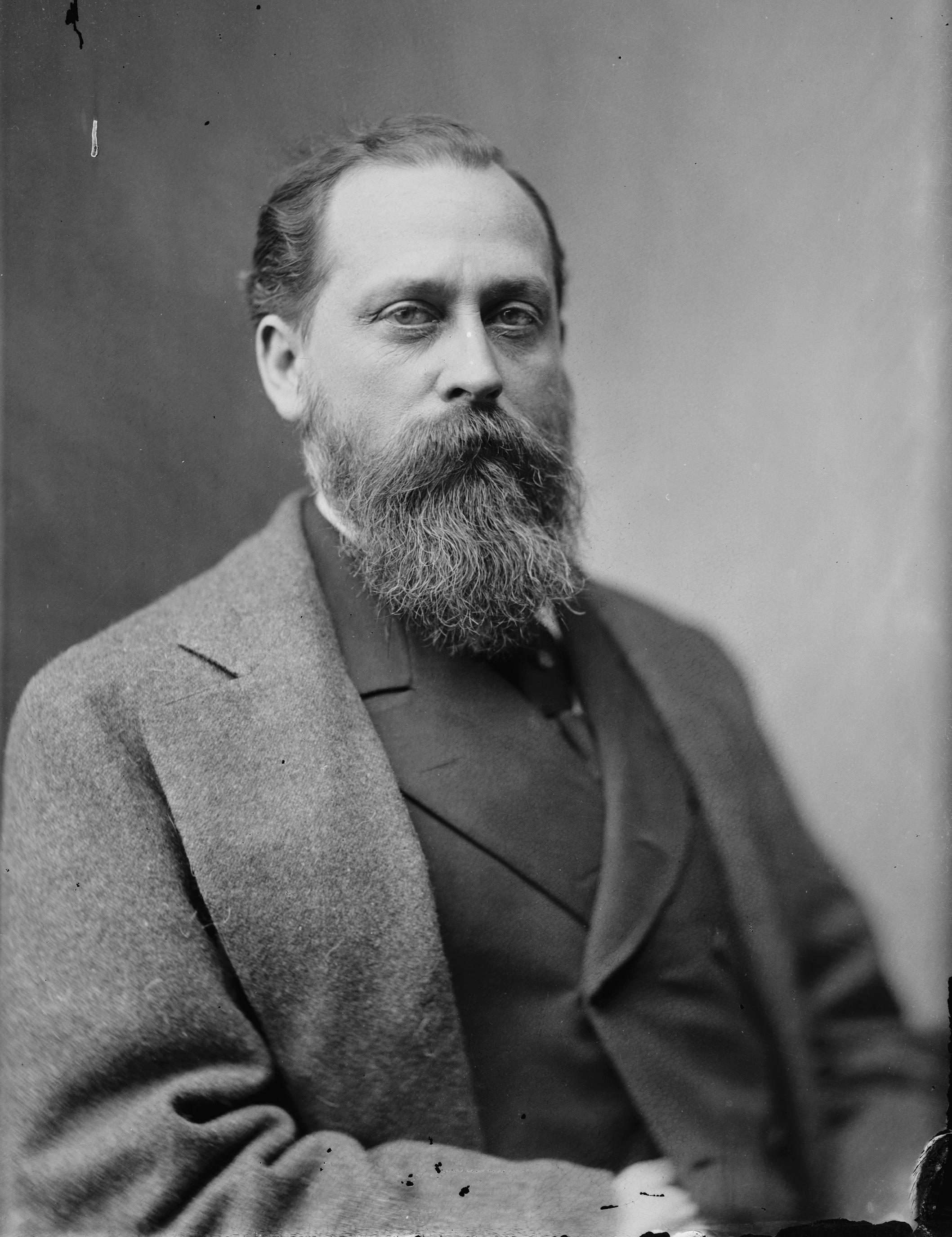
Historical · U.S. House · North Carolina · District 3
Alfred Waddell
Former U.S. Representative · North Carolina District 3 · 1871–1879 · Democratic
Alfred Waddell represented North Carolina's District 3 in the United States House of Representatives (1871–1879) for the Democratic party. The page below collects sourced biographical facts, term history, committee roles, and provenance for Waddell.
Bioguide ID: W000002
Key facts
- Full name
- Alfred Waddell
- State
- North Carolina
- District
- District 3
- Party
- Democratic
- House service
- 1871–1879
- First House term
- 1871
- Status
- Left office
- Current term ends
- —
- Born
- 1834
- Bioguide ID
- W000002
- Committee assignments
- —
- Dataset version
- 1.20260606
Biographical narrative
907 words · sourced from the Wikipedia REST extract
Alfred Waddell was a prominent American politician and lawyer who served as a U.S. Representative from North Carolina's 3rd congressional district from 1871 to 1879. A member of the Democratic Party, Waddell's political career was marked by his involvement in significant events during the Reconstruction era and his later role in the Wilmington insurrection of 1898, which had lasting implications for race relations in the South. In addition to his congressional service, he held the office of mayor of Wilmington from 1898 to 1906, further shaping the political landscape of North Carolina during a tumultuous period in American history.
Early life and career
Alfred Waddell was born on September 16, 1834, in Hillsboro, North Carolina, into a family with a notable political lineage. His father, Hugh Waddell, was a prominent lawyer and served as the president of the North Carolina Senate in 1836. Alfred was the great-great-great-grandson of General Hugh Waddell and the great-grandson of Brigadier General Francis Nash and U.S. Supreme Court Justice Alfred Moore. This background likely influenced his early interest in law and politics.
Waddell received his education at Bingham's School and Caldwell Institute before enrolling at the University of North Carolina at Chapel Hill, where he graduated in 1853. After completing his education, he was admitted to the bar and began practicing law in Wilmington in 1855. Although he was recognized as a competent lawyer, he reportedly did not enjoy the profession. In 1857, he married Julia Savage, with whom he had two children, Elizabeth and Alfred Jr. Following Julia's death, he married her sister, Ellen Savage, and later wed Gabrielle de Rosset in 1896.
In July 1860, Waddell purchased the Wilmington Daily Herald, a significant Whig newspaper in the Cape Fear region. He used the publication to express his opposition to secession during the lead-up to the Civil War. After a year, he left the newspaper business but returned to publishing in 1881 and 1882 as the editor of the Charlotte Journal. Ultimately, he returned to practicing law in 1883 and authored several works, including a biography of his great-great-grandfather, a historical account of the Cape Fear region, and an autobiography published in 1908.
During the Civil War, Waddell joined the Confederate Army in 1861, serving as an adjutant and rising to the rank of lieutenant colonel in the Third Cavalry, which later became known as the Forty-First North Carolina Regiment. His regiment was involved in various military operations, but Waddell resigned in 1864 due to health issues.
House tenure
Waddell's political career began to take shape after the Civil War. In 1856, he initially supported the American Party and opposed secession. By 1860, he was a delegate to the Constitutional Union National Convention. In 1870, he ran for Congress as a Conservative Democrat and was elected to the 42nd United States Congress. He served a total of four terms in the House of Representatives, being re-elected three times. During his tenure, he was recognized for his abilities as a legislator and served on the Ku Klux Klan committee, reflecting the contentious racial dynamics of the time. He also chaired the Committee on Post Offices and Post Roads during his final term.
Waddell's congressional career came to an end when he was defeated for re-election in 1878 by Daniel L. Russell. Following his defeat, he remained active in the Democratic Party, becoming a sought-after speaker and campaigner. He participated in several Democratic National Conventions, supporting various candidates, including Union General Winfield Scott Hancock in 1880 and Grover Cleveland in 1888. His involvement in the party continued into the 1890s, culminating in his participation in the 1896 Democratic National Convention.
Legislative focus and committees
Throughout his time in Congress, Waddell's legislative focus was shaped by the political climate of the Reconstruction era and the subsequent rise of white supremacist movements in the South. His service on the Ku Klux Klan committee indicated his engagement with the issues of racial violence and civil rights during a period when African Americans were struggling to assert their rights in the face of growing opposition from white supremacist groups.
Waddell's leadership within the Democratic Party was further solidified through his involvement in the statewide White Supremacy campaign that emerged in 1898. This campaign aimed to undermine the political gains made by African Americans and their allies during Reconstruction. Waddell's role in this movement culminated in his leadership of the Wilmington insurrection, a violent coup that resulted in the overthrow of the elected Fusion government in Wilmington. This event is considered a pivotal moment in American history, marking the beginning of a period characterized by severe racial segregation and disenfranchisement of African Americans in the South.
After the insurrection, Waddell became the mayor of Wilmington, a position he held from 1898 to 1906. His tenure as mayor was marked by efforts to consolidate white power and suppress African American political participation. The events surrounding the Wilmington insurrection and Waddell's subsequent political activities contributed to the establishment of a racially stratified society in North Carolina and beyond.
In summary, Alfred Waddell's political career was defined by his service in the U.S. House of Representatives and his later role as mayor of Wilmington. His involvement in significant historical events, particularly the Wilmington insurrection, underscores the complexities of race relations and political power in the post-Civil War South. Waddell's legacy is intertwined with the broader narrative of American history during a time of profound social and political change.
Notable legislation
Sponsored and co-sponsored legislation for Alfred Waddell is pending operator curation. The biographical narrative above carries the same provenance trail until per-bill rows are written.
Sources
- [1]https://en.wikipedia.org/wiki/Alfred_Moore_WaddellWikipedia · retrieved 2026-06-06
Notable quotes
Sourced quotes for Alfred Waddell are pending operator curation. Narrative-scope provenance remains attached below.
Sources
- [1]https://en.wikipedia.org/wiki/Alfred_Moore_WaddellWikipedia · retrieved 2026-06-06
Key positions
Curated policy positions for Alfred Waddell are pending operator review. The biographical narrative above carries the same provenance trail until per-topic positions are written.
Sources
- [1]https://en.wikipedia.org/wiki/Alfred_Moore_WaddellWikipedia · retrieved 2026-06-06
Terms served
- 1871–1873U.S. House · Term 1 · Democratic
- 1873–1875U.S. House · Term 2 · Democratic
- 1875–1877U.S. House · Term 3 · Democratic
- 1877–1879U.S. House · Term 4 · Democratic
Sources & provenance
Every attributable claim above carries a per-section [N] marker that resolves to the corresponding URL below. Each entry records the upstream provider, the canonical URL, and the timestamp at which the source was retrieved by the ingest pipeline.
Key facts
- https://bioguide.congress.gov/search/bio/W000002bioguide · retrieved 2026-06-06
- https://www.govtrack.us/congress/members/411181govtrack · retrieved 2026-06-06
Biographical narrative
- https://en.wikipedia.org/wiki/Alfred_Moore_Waddellwikipedia · retrieved 2026-06-06
Find your representative
Every U.S. state elects representatives by district. Browse North Carolina’s delegation, the full former-representative roster, or explore the role and term length.
Related on The Candidate
- Preceded by Oliver DockeryEarlier holder of the North Carolina District 3 House seat · Republican.Open
- Succeeded by Daniel RussellLater holder of the North Carolina District 3 House seat · National Greenbacker.Open
- Alfred GatlinFormer U.S. Representative · North Carolina District 1 · Crawford RepublicanOpen
- Clinton CobbFormer U.S. Representative · North Carolina District 1 · RepublicanOpen
- Eva ClaytonFormer U.S. Representative · North Carolina District 1 · DemocraticOpen
- Frank Ballance Jr.Former U.S. Representative · North Carolina District 1 · DemocraticOpen