
Historical · U.S. House · North Carolina · District 4
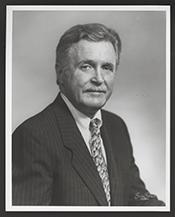
Fred Heineman
Former U.S. Representative · North Carolina District 4 · 1995–1997 · Republican
Fred Heineman represented North Carolina's District 4 in the United States House of Representatives (1995–1997) for the Republican party. The page below collects sourced biographical facts, term history, committee roles, and provenance for Heineman.
Bioguide ID: H000452
Key facts
- Full name
- Fred Heineman
- State
- North Carolina
- District
- District 4
- Party
- Republican
- House service
- 1995–1997
- First House term
- 1995
- Status
- Left office
- Current term ends
- —
- Born
- 1929
- Bioguide ID
- H000452
- Committee assignments
- —
- Dataset version
- 1.20260605
Biographical narrative
921 words · sourced from the Wikipedia REST extract
Frederick K. Heineman, commonly known as Fred Heineman, was an American law enforcement officer and politician who served as a Republican U.S. Congressman representing North Carolina's 4th congressional district. His tenure in the U.S. House of Representatives lasted from January 3, 1995, to January 3, 1997, during which he was a member of the 104th Congress. Heineman's career spanned various roles in law enforcement and politics, reflecting a commitment to public service that began in his early years and continued through his time in Congress.
Early life and career
Fred Heineman was born on December 28, 1929, in New York City. He grew up in the Bronx, where he attended Mt. St. Michael High School, an institution known for its focus on academic and moral education. After completing high school, Heineman pursued higher education at several institutions, including Concordia Junior College, Westchester Community College, the University of Bridgeport, St. Francis College, and John Jay College. His educational background laid the groundwork for his future career in law enforcement and public service.
In 1951, Heineman enlisted in the United States Marine Corps, serving until 1954. His military service contributed to his leadership skills and sense of discipline, which would later influence his career as a police officer. Following his time in the Marines, Heineman joined the New York City Police Department (NYPD), where he worked from 1955 until 1979. During his tenure with the NYPD, he gained valuable experience in law enforcement, which would inform his later roles in public service.
In 1979, Heineman relocated to Raleigh, North Carolina, where he was appointed as the chief of police. His leadership in this role spanned 15 years, a period marked by significant growth and development in Raleigh. Under his guidance, the police department saw advancements in diversity and inclusion, as Heineman promoted women and minorities to senior positions for the first time. His tenure as chief of police was characterized by a commitment to community policing and public safety, as well as a distinctive presence marked by his New York accent.
House tenure
In 1994, Fred Heineman transitioned from law enforcement to politics, stepping down from his position as chief of police to run for a seat in the U.S. House of Representatives. He entered the race as a Republican candidate against the incumbent Democrat David Price during a time known as the "Republican Revolution." This political wave was characterized by a significant shift in power dynamics within Congress, as many Republican candidates successfully unseated Democratic incumbents.
Heineman's campaign was successful, and he won a seat in the 104th Congress, beginning his term on January 3, 1995. During his time in office, Heineman was known for his conservative stance on various issues and actively participated in legislative processes. He cast a total of 1,287 votes, demonstrating a high level of engagement, with a voting record that reflected his conservative principles. Heineman did not vote on 56 occasions during his term, which accounted for a small percentage of the total votes.
His legislative contributions included the introduction of two significant bills that were passed by the House of Representatives. The first, H.R. 1499, known as The Consumer Fraud Prevention Act of 1995, aimed to enhance consumer protection against fraudulent practices. The second, H.R. 3852, titled The Comprehensive Methamphetamine Control Act of 1996, sought to address the growing concerns surrounding methamphetamine abuse and trafficking. In addition to these bills, Heineman co-sponsored a total of 174 pieces of legislation during his time in Congress, reflecting his active participation in the legislative process.
Despite his initial success, Heineman's congressional career was relatively short-lived. He sought re-election in 1996 but was defeated by David Price, the same incumbent he had unseated two years earlier. This loss marked the end of his tenure in the House of Representatives, concluding his time in federal office on January 3, 1997.
Legislative focus and committees
Throughout his time in Congress, Fred Heineman maintained a strong conservative voting record, which was recognized by the American Conservative Union, awarding him a lifetime score of 92. His legislative focus often aligned with the priorities of the Republican Party during the 1990s, emphasizing issues such as law enforcement, public safety, and consumer protection. Heineman's background in law enforcement likely influenced his approach to legislation, particularly in areas related to crime and public safety.
In addition to his legislative initiatives, Heineman's participation in various committees would have further shaped his contributions to Congress. While specific committee assignments during his tenure are not detailed in the available information, it is common for members of Congress to serve on committees that align with their expertise and interests. Given his extensive experience in law enforcement, it is plausible that he would have been involved in committees addressing issues related to crime, justice, and public safety.
Heineman's political career was not without controversy. He faced scrutiny for comments regarding his financial situation, claiming that despite earning a combined income from his pensions and congressional salary, he considered himself part of the "lower middle class." This statement drew criticism and highlighted the disconnect that can sometimes exist between the experiences of politicians and the constituents they represent.
Fred Heineman passed away on March 20, 2010, at his home in Raleigh, North Carolina. His life and career reflect a journey from law enforcement to public service, marked by a commitment to conservative principles and community engagement. His tenure in Congress, though brief, was characterized by active participation in legislative processes and a focus on issues that resonated with his constituents.
Notable legislation
Sponsored and co-sponsored legislation for Fred Heineman is pending operator curation. The biographical narrative above carries the same provenance trail until per-bill rows are written.
Sources
- [1]https://en.wikipedia.org/wiki/Fred_HeinemanWikipedia · retrieved 2026-06-05
Notable quotes
Sourced quotes for Fred Heineman are pending operator curation. Narrative-scope provenance remains attached below.
Sources
- [1]https://en.wikipedia.org/wiki/Fred_HeinemanWikipedia · retrieved 2026-06-05
Key positions
Curated policy positions for Fred Heineman are pending operator review. The biographical narrative above carries the same provenance trail until per-topic positions are written.
Sources
- [1]https://en.wikipedia.org/wiki/Fred_HeinemanWikipedia · retrieved 2026-06-05
Terms served
- 1995–1997U.S. House · Term 1 · Republican
Sources & provenance
Every attributable claim above carries a per-section [N] marker that resolves to the corresponding URL below. Each entry records the upstream provider, the canonical URL, and the timestamp at which the source was retrieved by the ingest pipeline.
Key facts
- https://bioguide.congress.gov/search/bio/H000452bioguide · retrieved 2026-06-05
- https://www.govtrack.us/congress/members/405317govtrack · retrieved 2026-06-05
Biographical narrative
- https://en.wikipedia.org/wiki/Fred_Heinemanwikipedia · retrieved 2026-06-05
Find your representative
Every U.S. state elects representatives by district. Browse North Carolina’s delegation, the full former-representative roster, or explore the role and term length.
Related on The Candidate
- Preceded by William Cobey Jr.Earlier holder of the North Carolina District 4 House seat · Republican.Open
- Alfred GatlinFormer U.S. Representative · North Carolina District 1 · Crawford RepublicanOpen
- Clinton CobbFormer U.S. Representative · North Carolina District 1 · RepublicanOpen
- Eva ClaytonFormer U.S. Representative · North Carolina District 1 · DemocraticOpen
- Frank Ballance Jr.Former U.S. Representative · North Carolina District 1 · DemocraticOpen
- Republican PartyFederal candidates and office holders on the Republican line.Open