
Historical · U.S. House · North Carolina · District 4
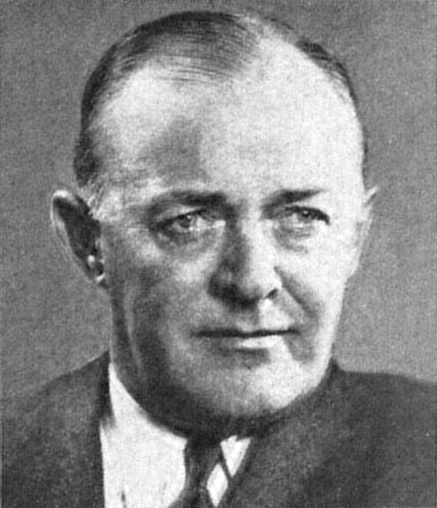
Harold Cooley
Former U.S. Representative · North Carolina District 4 · 1933–1967 · Democratic
Harold Cooley represented North Carolina's District 4 in the United States House of Representatives (1933–1967) for the Democratic party. The page below collects sourced biographical facts, term history, committee roles, and provenance for Cooley.
Bioguide ID: C000736
Key facts
- Full name
- Harold Cooley
- State
- North Carolina
- District
- District 4
- Party
- Democratic
- House service
- 1933–1967
- First House term
- 1933
- Status
- Left office
- Current term ends
- —
- Born
- 1897
- Bioguide ID
- C000736
- Committee assignments
- —
- Dataset version
- 1.20260605
Biographical narrative
820 words · sourced from the Wikipedia REST extract
Harold Dunbar Cooley was a prominent American politician who served as a Democratic U.S. Representative for North Carolina's Fourth Congressional District from 1934 until 1966. Known for his long tenure in Congress, Cooley was a significant figure in agricultural policy and played a key role in various legislative initiatives throughout his career. His contributions to the House of Representatives and his involvement in national politics reflect a complex legacy shaped by the evolving social and political landscape of the United States during the mid-20th century.
Early life and career
Harold Cooley was born on July 26, 1897, in Nashville, North Carolina. He pursued higher education at the University of North Carolina at Chapel Hill, where he completed his undergraduate studies. Following this, he attended Yale University Law School, earning a law degree that would enable him to practice law professionally. After completing his education, Cooley entered private legal practice, establishing himself as a lawyer in North Carolina.
In addition to his legal career, Cooley served in the United States Naval Aviation Flying Corps during World War I. His military service contributed to his leadership skills and public service ethos, which would later inform his political career. Cooley's entry into politics was marked by his election to the U.S. House of Representatives in 1934, following a special election to fill the vacancy left by the death of Representative Edward W. Pou.
House tenure
Cooley's congressional career began on July 7, 1934, when he was elected as a Democrat to the Seventy-third Congress. He was subsequently re-elected 16 times, demonstrating significant electoral support from his constituents over the years. His tenure in the House of Representatives lasted until his resignation on December 30, 1966, making him one of the longest-serving members in the history of Congress. During this time, Cooley became known for his leadership role as the Chairman of the House Committee on Agriculture, a position he held for an extended period and which solidified his influence in agricultural policy.
Throughout his time in Congress, Cooley was involved in various legislative initiatives and national discussions. He participated in the Interparliamentary Conferences held in Cairo, Egypt, in 1947 and in Rome, Italy, in 1948, where he served as president of the American group for two four-year terms. These experiences contributed to his understanding of international relations and the importance of global cooperation.
Cooley's political career was not without challenges. In the 1964 election, he faced a close race against Republican challenger James Carson Gardner, which highlighted the shifting political landscape in the South during the Civil Rights Movement. Despite his long-standing incumbency, Cooley lost to Gardner in the 1966 election, marking a significant upset in his political career.
Legislative focus and committees
Throughout his time in Congress, Cooley's legislative focus encompassed a range of issues, particularly those related to agriculture, social welfare, and civil rights. As Chairman of the House Committee on Agriculture, he played a crucial role in shaping policies that affected farmers and the agricultural industry. His leadership in this committee made him a key figure in discussions surrounding agricultural legislation and rural development.
Cooley's voting record reflects a complex stance on civil rights. He was one of the few Southern Congressmen who did not sign the 1956 Southern Manifesto, which opposed the desegregation of public schools following the Supreme Court's decision in Brown v. Board of Education. However, his voting behavior on civil rights legislation was mixed. He opposed the Civil Rights Act of 1957 and the original version of the Civil Rights Act of 1960, while abstaining on the final version. He also voted against the Civil Rights Act of 1964, the 24th Amendment to the U.S. Constitution, and the Voting Rights Act of 1965. Despite these positions, Cooley supported various progressive measures during his congressional career, including initiatives related to social security, the minimum wage, food stamps, and healthcare.
Cooley's legislative contributions and committee work reflect the complexities of his political ideology, which evolved in response to the changing dynamics of American society. His long tenure in Congress allowed him to navigate the shifting political landscape of the mid-20th century, balancing the interests of his constituents with broader national issues.
After his resignation in 1966, Cooley continued to be involved in public life until his death on January 15, 1974, in Wilson, North Carolina. He is buried in Forest Hill Cemetery in Nashville, North Carolina. His legacy includes the Bissette-Cooley House in Nashville, which was listed on the National Register of Historic Places in 1985, preserving a piece of his history and contributions to the community.
Harold Cooley's life and career illustrate the complexities of American politics during a transformative period in the nation's history. His long service in the House of Representatives and his involvement in various legislative initiatives reflect the challenges and responsibilities faced by elected officials in addressing the needs of their constituents while navigating the broader currents of national policy.
Notable legislation
Sponsored and co-sponsored legislation for Harold Cooley is pending operator curation. The biographical narrative above carries the same provenance trail until per-bill rows are written.
Sources
- [1]https://en.wikipedia.org/wiki/Harold_D._CooleyWikipedia · retrieved 2026-06-05
Notable quotes
Sourced quotes for Harold Cooley are pending operator curation. Narrative-scope provenance remains attached below.
Sources
- [1]https://en.wikipedia.org/wiki/Harold_D._CooleyWikipedia · retrieved 2026-06-05
Key positions
Curated policy positions for Harold Cooley are pending operator review. The biographical narrative above carries the same provenance trail until per-topic positions are written.
Sources
- [1]https://en.wikipedia.org/wiki/Harold_D._CooleyWikipedia · retrieved 2026-06-05
Terms served
- 1933–1935U.S. House · Term 1 · Democratic
- 1935–1937U.S. House · Term 2 · Democratic
- 1937–1939U.S. House · Term 3 · Democratic
- 1939–1941U.S. House · Term 4 · Democratic
- 1941–1943U.S. House · Term 5 · Democratic
- 1943–1945U.S. House · Term 6 · Democratic
- 1945–1947U.S. House · Term 7 · Democratic
- 1947–1949U.S. House · Term 8 · Democratic
- 1949–1951U.S. House · Term 9 · Democratic
- 1951–1953U.S. House · Term 10 · Democratic
- 1953–1955U.S. House · Term 11 · Democratic
- 1955–1957U.S. House · Term 12 · Democratic
- 1957–1959U.S. House · Term 13 · Democratic
- 1959–1961U.S. House · Term 14 · Democratic
- 1961–1963U.S. House · Term 15 · Democratic
- 1963–1965U.S. House · Term 16 · Democratic
- 1965–1967U.S. House · Term 17 · Democratic
Sources & provenance
Every attributable claim above carries a per-section [N] marker that resolves to the corresponding URL below. Each entry records the upstream provider, the canonical URL, and the timestamp at which the source was retrieved by the ingest pipeline.
Key facts
- https://bioguide.congress.gov/search/bio/C000736bioguide · retrieved 2026-06-05
- https://www.govtrack.us/congress/members/402857govtrack · retrieved 2026-06-05
Biographical narrative
- https://en.wikipedia.org/wiki/Harold_D._Cooleywikipedia · retrieved 2026-06-05
Find your representative
Every U.S. state elects representatives by district. Browse North Carolina’s delegation, the full former-representative roster, or explore the role and term length.
Related on The Candidate
- Preceded by John AtwaterEarlier holder of the North Carolina District 4 House seat · Populist.Open
- Succeeded by James GardnerLater holder of the North Carolina District 4 House seat · Republican.Open
- Alfred GatlinFormer U.S. Representative · North Carolina District 1 · Crawford RepublicanOpen
- Clinton CobbFormer U.S. Representative · North Carolina District 1 · RepublicanOpen
- Eva ClaytonFormer U.S. Representative · North Carolina District 1 · DemocraticOpen
- Frank Ballance Jr.Former U.S. Representative · North Carolina District 1 · DemocraticOpen