
Historical · U.S. House · North Carolina · District 4
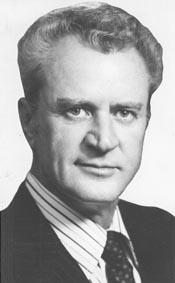
Ike Andrews
Former U.S. Representative · North Carolina District 4 · 1973–1985 · Democratic
Ike Andrews represented North Carolina's District 4 in the United States House of Representatives (1973–1985) for the Democratic party. The page below collects sourced biographical facts, term history, committee roles, and provenance for Andrews.
Bioguide ID: A000207
Key facts
- Full name
- Ike Andrews
- State
- North Carolina
- District
- District 4
- Party
- Democratic
- House service
- 1973–1985
- First House term
- 1973
- Status
- Left office
- Current term ends
- —
- Born
- 1925
- Bioguide ID
- A000207
- Committee assignments
- —
- Dataset version
- 1.20260605
Biographical narrative
947 words · sourced from the Wikipedia REST extract
Ike Andrews was an American politician who served as a Democratic member of the U.S. House of Representatives, representing North Carolina's Fourth Congressional District from 1973 until 1985. His political career spanned over a decade, during which he was involved in various legislative efforts and community initiatives. Andrews was born on September 2, 1925, in Bonlee, North Carolina, and his early life experiences, military service, and legal career contributed to his political trajectory.
Early life and career
Ike Andrews was born in Bonlee, a small community in North Carolina. His formative years were spent in the local public school system, where he laid the foundation for his future educational pursuits. Following his graduation from high school in 1942, Andrews enlisted in the United States Army during World War II. His military service lasted from 1943 to 1945, during which he served as a field artillery forward observer. This role was critical in coordinating artillery fire and providing support to ground troops. Throughout his service, Andrews achieved the rank of Master Sergeant and was recognized for his bravery and dedication with several honors, including the Bronze Star and the Purple Heart.
After returning from military service, Andrews pursued higher education at the University of North Carolina at Chapel Hill. He completed his undergraduate studies and earned a bachelor's degree in 1950. Following this, he continued his education at the same institution, obtaining a law degree in 1952. This legal background would later inform his work in public office, as he practiced law in Pittsboro, North Carolina, where he became a well-known figure in his community.
Andrews's entry into politics began at the state level. He was elected to the North Carolina State Senate in 1959, marking the start of his long-standing involvement in public service. His political career continued to develop as he was subsequently elected to the North Carolina House of Representatives multiple times throughout the 1960s and early 1970s, specifically in the years 1961, 1967, 1969, and 1971. These positions allowed him to gain valuable experience in legislative processes and to build a network of political connections, which would later aid him in his congressional career.
House tenure
In 1972, Andrews made the transition from state to federal politics when he was elected to the U.S. House of Representatives. His first term began on January 3, 1973, and he would go on to serve a total of six terms in the House. Throughout his tenure, Andrews represented North Carolina's Fourth Congressional District, a region that encompasses parts of the state known for its diverse communities and economic activities.
As a member of the House, Andrews was part of a larger Democratic majority during much of his time in office. His legislative work involved addressing various issues that were significant to his constituents and the nation. Andrews's tenure in Congress coincided with a period of considerable social and political change in the United States, including discussions around civil rights, economic policy, and foreign affairs. His experience in state politics likely provided him with insights into the needs and concerns of his district, which he sought to address through his legislative efforts.
Andrews's congressional career came to an end on January 3, 1985, when he was defeated in his bid for re-election by Republican candidate Bill Cobey. This marked the conclusion of a significant chapter in his political life, during which he had established himself as a dedicated public servant and advocate for his constituents.
Legislative focus and committees
During his time in the U.S. House of Representatives, Ike Andrews was involved in various legislative initiatives and served on multiple committees that reflected his interests and the needs of his district. While specific details about the committees on which he served are not provided, it is typical for members of Congress to participate in committees that align with their expertise or the interests of their constituents. These committees play a crucial role in shaping legislation, conducting oversight, and addressing specific policy areas.
Andrews's legislative focus likely included issues pertinent to North Carolina and the broader national landscape. As a member of the Democratic Party, he would have been involved in discussions and initiatives that aligned with the party's platform during the 1970s and early 1980s. This period was marked by significant developments in areas such as healthcare, education, labor rights, and environmental policy, all of which may have been relevant to his work.
Moreover, Andrews's legal background would have informed his approach to legislation, allowing him to analyze and contribute to complex legal and policy issues effectively. His experience in the North Carolina State Senate and the House of Representatives would have equipped him with the skills necessary to navigate the legislative process and advocate for the interests of his constituents.
In addition to his legislative work, Andrews's connections within the political landscape, including familial ties to other prominent political figures, may have influenced his work and approach to governance. Notably, North Carolina House Speaker Joe Hackney, who was at one time Andrews's son-in-law, served as his campaign manager during the 1974 election, indicating a network of support that extended beyond his immediate political career.
In summary, Ike Andrews's life and career were marked by a commitment to public service, beginning with his military service in World War II and continuing through his extensive political career at both the state and federal levels. His tenure in the U.S. House of Representatives was characterized by a focus on the needs of his constituents and active participation in the legislative process. After leaving Congress in 1985, Andrews's contributions to North Carolina and American politics remained a part of his legacy until his passing on May 10, 2010.
Notable legislation
Sponsored and co-sponsored legislation for Ike Andrews is pending operator curation. The biographical narrative above carries the same provenance trail until per-bill rows are written.
Sources
- [1]https://en.wikipedia.org/wiki/Ike_Franklin_AndrewsWikipedia · retrieved 2026-06-05
Notable quotes
Sourced quotes for Ike Andrews are pending operator curation. Narrative-scope provenance remains attached below.
Sources
- [1]https://en.wikipedia.org/wiki/Ike_Franklin_AndrewsWikipedia · retrieved 2026-06-05
Key positions
Curated policy positions for Ike Andrews are pending operator review. The biographical narrative above carries the same provenance trail until per-topic positions are written.
Sources
- [1]https://en.wikipedia.org/wiki/Ike_Franklin_AndrewsWikipedia · retrieved 2026-06-05
Terms served
- 1973–1975U.S. House · Term 1 · Democratic
- 1975–1977U.S. House · Term 2 · Democratic
- 1977–1979U.S. House · Term 3 · Democratic
- 1979–1981U.S. House · Term 4 · Democratic
- 1981–1983U.S. House · Term 5 · Democratic
- 1983–1985U.S. House · Term 6 · Democratic
Sources & provenance
Every attributable claim above carries a per-section [N] marker that resolves to the corresponding URL below. Each entry records the upstream provider, the canonical URL, and the timestamp at which the source was retrieved by the ingest pipeline.
Key facts
- https://bioguide.congress.gov/search/bio/A000207bioguide · retrieved 2026-06-05
- https://www.govtrack.us/congress/members/400878govtrack · retrieved 2026-06-05
Biographical narrative
- https://en.wikipedia.org/wiki/Ike_Franklin_Andrewswikipedia · retrieved 2026-06-05
Find your representative
Every U.S. state elects representatives by district. Browse North Carolina’s delegation, the full former-representative roster, or explore the role and term length.
Related on The Candidate
- Preceded by Nick GalifianakisEarlier holder of the North Carolina District 4 House seat · Democratic.Open
- Succeeded by William Cobey Jr.Later holder of the North Carolina District 4 House seat · Republican.Open
- Alfred GatlinFormer U.S. Representative · North Carolina District 1 · Crawford RepublicanOpen
- Clinton CobbFormer U.S. Representative · North Carolina District 1 · RepublicanOpen
- Eva ClaytonFormer U.S. Representative · North Carolina District 1 · DemocraticOpen
- Frank Ballance Jr.Former U.S. Representative · North Carolina District 1 · DemocraticOpen