
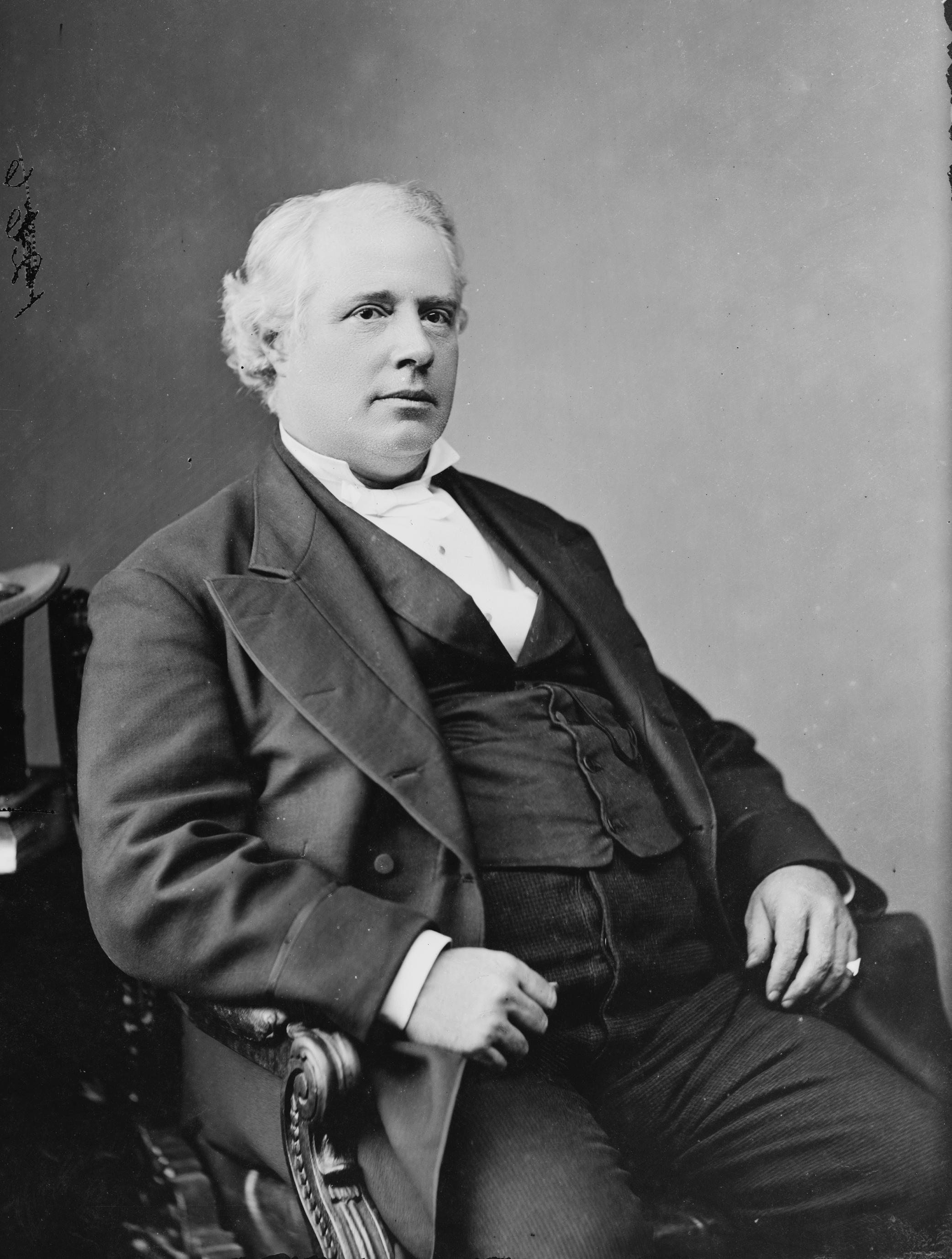
Historical · U.S. House · North Carolina · District 4
John Deweese
Former U.S. Representative · North Carolina District 4 · 1867–1871 · Republican
John Deweese represented North Carolina's District 4 in the United States House of Representatives (1867–1871) for the Republican party. The page below collects sourced biographical facts, term history, committee roles, and provenance for Deweese.
Bioguide ID: D000291
Key facts
- Full name
- John Deweese
- State
- North Carolina
- District
- District 4
- Party
- Republican
- House service
- 1867–1871
- First House term
- 1867
- Status
- Left office
- Current term ends
- —
- Born
- 1835
- Bioguide ID
- D000291
- Committee assignments
- —
- Dataset version
- 1.20260606
Biographical narrative
1,003 words · sourced from the Wikipedia REST extract
John Deweese was an American politician who served as a U.S. Representative from North Carolina during the late 19th century. A member of the Republican Party, Deweese's political career was marked by his involvement in the post-Civil War reconstruction era. He was elected to two terms in the House of Representatives, where he held significant roles on various committees. His tenure was ultimately overshadowed by controversy, leading to his censure by the House for unethical conduct related to the sale of a military appointment. Following his congressional career, he transitioned to the Democratic Party and continued to practice law until his death in 1906.
Early life and career
John Deweese was born on June 4, 1835, in Van Buren, Arkansas. His early education took place at home, where he focused on studying law. This self-directed education culminated in his admission to the bar in 1856, allowing him to begin his legal practice in Henderson, Kentucky. Deweese's early career was characterized by a commitment to law and public service, which would later inform his political endeavors.
In 1860, Deweese relocated to Pike County, Indiana, where he continued his legal practice. The onset of the Civil War prompted him to enlist in the Union Army. He joined the Twenty-fourth Regiment of Indiana Volunteer Infantry as a second lieutenant on July 6, 1861. His military service was marked by a series of promotions; he resigned from his initial regiment in February 1862 but quickly accepted a commission as captain of Company F in the Fourth Indiana Cavalry on August 8, 1862. His leadership and dedication led to his eventual promotion to colonel, and he was brevetted as a brigadier general of volunteers on March 13, 1865. Following the war, Deweese was appointed as a second lieutenant in the Eighth United States Infantry on July 24, 1866, reflecting his continued commitment to military service.
After his military service, Deweese moved to North Carolina, where he would eventually transition into a political career. His legal background and military experience positioned him well for public office, and he was appointed as the register in bankruptcy for North Carolina in 1868. This role further established his reputation in the state and paved the way for his election to Congress.
House tenure
Deweese's congressional career began when he was elected to the Fortieth Congress as a Republican representative for North Carolina's fourth congressional district. His term commenced on July 6, 1868. During his time in the House, he served on several important committees, including the Committee on Expenditures in the Department of the Interior and the Committee on Revolutionary Pensions. These roles allowed him to influence legislation and oversight related to government spending and veteran affairs, which were particularly relevant in the post-Civil War context.
His tenure in Congress was not without controversy. In February 1870, Deweese resigned from his congressional seat amid a congressional investigation into his conduct. The investigation centered around allegations that he had sold an appointment to the U.S. Naval Academy, a serious ethical violation. As a result of this investigation, he was formally censured by the House of Representatives on March 1, 1870. This censure marked a significant moment in his political career, as it highlighted the challenges and scrutiny faced by politicians during a tumultuous period in American history.
Following his censure, Deweese's political affiliations shifted. He transitioned from the Republican Party to the Democratic Party and became a delegate to the Democratic National Convention in 1876. This change in party allegiance reflected the evolving political landscape of the time and his personal political beliefs. After leaving Congress, he returned to the practice of law, where he continued to contribute to the legal profession and engage in public life.
Legislative focus and committees
During his time in the House of Representatives, Deweese was involved in legislative matters that were critical to the reconstruction efforts following the Civil War. His roles on the Committee on Expenditures in the Department of the Interior and the Committee on Revolutionary Pensions were particularly significant. The Committee on Expenditures in the Department of the Interior was responsible for overseeing the budget and expenditures related to various government departments, including those that managed public lands and resources. This committee's work was essential during a time when the federal government was re-evaluating its financial commitments and responsibilities in the wake of the war.
Similarly, Deweese's involvement with the Committee on Revolutionary Pensions underscored his commitment to veterans' affairs. This committee dealt with issues related to pensions for veterans of the American Revolutionary War, reflecting a broader concern for the welfare of those who had served the nation. His work in these committees demonstrated a focus on both fiscal responsibility and support for veterans, which were pressing issues during the reconstruction era.
Despite his contributions, Deweese's congressional career was ultimately marred by the ethical issues that led to his censure. The sale of an appointment to the Naval Academy not only tarnished his reputation but also highlighted the challenges of maintaining integrity in public office. This incident served as a reminder of the importance of ethical standards in governance, particularly during a time when the nation was grappling with the consequences of the Civil War and the need for a unified political approach.
After his congressional tenure, Deweese continued to engage in public life, albeit in a different capacity. His switch to the Democratic Party and participation in the 1876 Democratic National Convention indicated his ongoing interest in political affairs. He resumed his legal practice, contributing to the legal community until his death on July 4, 1906, in Washington, D.C. His burial in Arlington National Cemetery reflects his military service and the respect afforded to those who have served the nation.
John Deweese's life and career encapsulate a period of significant change in American politics, marked by the challenges of reconstruction and the evolving landscape of party politics. His experiences as a soldier, lawyer, and politician provide insight into the complexities of governance during a pivotal era in U.S. history.
Notable legislation
Sponsored and co-sponsored legislation for John Deweese is pending operator curation. The biographical narrative above carries the same provenance trail until per-bill rows are written.
Sources
- [1]https://en.wikipedia.org/wiki/John_T._DeweeseWikipedia · retrieved 2026-06-06
Notable quotes
Sourced quotes for John Deweese are pending operator curation. Narrative-scope provenance remains attached below.
Sources
- [1]https://en.wikipedia.org/wiki/John_T._DeweeseWikipedia · retrieved 2026-06-06
Key positions
Curated policy positions for John Deweese are pending operator review. The biographical narrative above carries the same provenance trail until per-topic positions are written.
Sources
- [1]https://en.wikipedia.org/wiki/John_T._DeweeseWikipedia · retrieved 2026-06-06
Terms served
- 1867–1869U.S. House · Term 1 · Republican
- 1869–1871U.S. House · Term 2 · Republican
Sources & provenance
Every attributable claim above carries a per-section [N] marker that resolves to the corresponding URL below. Each entry records the upstream provider, the canonical URL, and the timestamp at which the source was retrieved by the ingest pipeline.
Key facts
- https://bioguide.congress.gov/search/bio/D000291bioguide · retrieved 2026-06-06
- https://www.govtrack.us/congress/members/403416govtrack · retrieved 2026-06-06
Biographical narrative
- https://en.wikipedia.org/wiki/John_T._Deweesewikipedia · retrieved 2026-06-06
Find your representative
Every U.S. state elects representatives by district. Browse North Carolina’s delegation, the full former-representative roster, or explore the role and term length.
Related on The Candidate
- Preceded by Lawrence BranchEarlier holder of the North Carolina District 4 House seat · Democratic.Open
- Succeeded by William SmithLater holder of the North Carolina District 4 House seat · Republican.Open
- Alfred GatlinFormer U.S. Representative · North Carolina District 1 · Crawford RepublicanOpen
- Clinton CobbFormer U.S. Representative · North Carolina District 1 · RepublicanOpen
- Eva ClaytonFormer U.S. Representative · North Carolina District 1 · DemocraticOpen
- Frank Ballance Jr.Former U.S. Representative · North Carolina District 1 · DemocraticOpen