
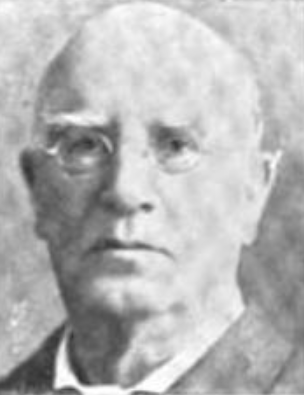
Historical · U.S. House · North Carolina · District 4
John Manning Jr.
Former U.S. Representative · North Carolina District 4 · 1869–1871 · Democratic
John Manning Jr. represented North Carolina's District 4 in the United States House of Representatives (1869–1871) for the Democratic party. The page below collects sourced biographical facts, term history, committee roles, and provenance for Jr..
Bioguide ID: M000109
Key facts
- Full name
- John Manning Jr.
- State
- North Carolina
- District
- District 4
- Party
- Democratic
- House service
- 1869–1871
- First House term
- 1869
- Status
- Left office
- Current term ends
- —
- Born
- 1830
- Bioguide ID
- M000109
- Committee assignments
- —
- Dataset version
- 1.20260606
Biographical narrative
939 words · sourced from the Wikipedia REST extract
John Manning Jr. was a notable figure in North Carolina's political landscape during the late 19th century. He served as a U.S. Representative for North Carolina's Fourth Congressional District, representing the Democratic Party during a tumultuous period in American history. His tenure in the House was brief, spanning only a few months, but it was marked by significant historical events and transitions in both the state and the nation. Manning's life and career were shaped by his educational background, military service, and subsequent political engagements, which included roles in state governance and academia.
Early life and career
John Manning Jr. was born on July 30, 1830, in Edenton, a town located in Chowan County, North Carolina. Growing up in a region with a rich colonial history, Manning was likely influenced by the political and social dynamics of the area. He pursued higher education at the University of North Carolina at Chapel Hill, where he graduated in 1850. This institution has a long-standing reputation for producing influential leaders and professionals in various fields, including law and politics.
Following his graduation, Manning studied law and was admitted to the bar in 1853. He began practicing law in Pittsboro, North Carolina, where he established himself in the legal community. His legal career provided him with a foundation in governance and public service, which would later inform his political endeavors.
Manning's political involvement began in earnest during a critical period in American history. In 1861, he was a delegate to the state convention that voted for North Carolina's secession from the Union, aligning himself with the Confederate cause during the American Civil War. His commitment to the Confederacy led him to serve in the North Carolina Volunteers, where he participated in military efforts throughout the conflict. This experience not only shaped his views on governance and state rights but also connected him with a network of individuals who would influence his political career in the years to come.
House tenure
Manning's entry into the U.S. House of Representatives occurred during a time of significant political upheaval in the United States. He was elected as a Democrat, which at the time was often referred to as the "Conservative" Party in North Carolina, to fill a vacancy in the Forty-first Congress. This vacancy arose following the resignation of John T. Deweese. Manning's election took place on November 26, 1870, where he defeated his opponent, Joseph W. Holden. Notably, this election was the second special election for the Fourth Congressional District seat within the same year. Earlier, Robert B. Gilliam had been elected to the position in August 1870 but passed away before he could assume office.
Manning's term in the House was relatively short, as he served from December 7, 1870, until March 3, 1871. During this brief period, he participated in the legislative processes of the Forty-first Congress, which was characterized by efforts to address the aftermath of the Civil War, including issues related to Reconstruction and the reintegration of Southern states into the Union. Although specific details about Manning's legislative contributions during this time are not extensively documented, his role as a representative would have involved engaging with the pressing matters of the day, including civil rights, economic recovery, and the political reorganization of Southern states.
After completing his term in Congress, Manning continued to be active in North Carolina's political and civic life. His brief tenure in the House did not mark the end of his public service; rather, it was a part of a broader career dedicated to governance and law.
Legislative focus and committees
While specific details regarding Manning's committee assignments and legislative focus during his time in the House are not provided, it is essential to understand the context in which he served. The Forty-first Congress was a pivotal moment in American history, as it was tasked with addressing the challenges of Reconstruction following the Civil War. Issues such as civil rights for freed slaves, the reintegration of Southern states, and the economic recovery of the South were at the forefront of national discussions. As a representative from North Carolina, Manning would have been involved in these critical debates, reflecting the complexities of representing a Southern state during this transformative period.
After his congressional service, Manning's political career continued to evolve. He was a member of the North Carolina state constitutional convention in 1875, which was significant in shaping the legal and political framework of the state during the Reconstruction era. Additionally, he served in the North Carolina House of Representatives in 1881, further contributing to state governance and legislative processes.
Manning's commitment to education and law was evident in his later career as well. He became a professor of law at the University of North Carolina, where he had previously studied. This role allowed him to influence future generations of lawyers and public servants, contributing to the legal profession in North Carolina. Furthermore, he served on the board of trustees for the university from 1881 until his death in 1899, demonstrating his long-term dedication to higher education and institutional governance.
John Manning Jr. passed away on February 12, 1899, in Chapel Hill, North Carolina. His legacy includes not only his brief tenure in the U.S. House of Representatives but also his broader contributions to state governance, education, and the legal profession. He was the father of James S. Manning, who would later become the Attorney General of North Carolina, and the grandfather of John H. Manning, who served as the Adjutant General of North Carolina. This familial connection to public service underscores the enduring impact of Manning's life and career on North Carolina's political landscape.
Notable legislation
Sponsored and co-sponsored legislation for John Manning Jr. is pending operator curation. The biographical narrative above carries the same provenance trail until per-bill rows are written.
Sources
- [1]https://en.wikipedia.org/wiki/John_Manning_Jr.Wikipedia · retrieved 2026-06-06
Notable quotes
Sourced quotes for John Manning Jr. are pending operator curation. Narrative-scope provenance remains attached below.
Sources
- [1]https://en.wikipedia.org/wiki/John_Manning_Jr.Wikipedia · retrieved 2026-06-06
Key positions
Curated policy positions for John Manning Jr. are pending operator review. The biographical narrative above carries the same provenance trail until per-topic positions are written.
Sources
- [1]https://en.wikipedia.org/wiki/John_Manning_Jr.Wikipedia · retrieved 2026-06-06
Terms served
- 1869–1871U.S. House · Term 1 · Democratic
Sources & provenance
Every attributable claim above carries a per-section [N] marker that resolves to the corresponding URL below. Each entry records the upstream provider, the canonical URL, and the timestamp at which the source was retrieved by the ingest pipeline.
Key facts
- https://bioguide.congress.gov/search/bio/M000109bioguide · retrieved 2026-06-06
- https://www.govtrack.us/congress/members/407133govtrack · retrieved 2026-06-06
Biographical narrative
- https://en.wikipedia.org/wiki/John_Manning_Jr.wikipedia · retrieved 2026-06-06
Find your representative
Every U.S. state elects representatives by district. Browse North Carolina’s delegation, the full former-representative roster, or explore the role and term length.
Related on The Candidate
- Preceded by Lawrence BranchEarlier holder of the North Carolina District 4 House seat · Democratic.Open
- Succeeded by William SmithLater holder of the North Carolina District 4 House seat · Republican.Open
- Alfred GatlinFormer U.S. Representative · North Carolina District 1 · Crawford RepublicanOpen
- Clinton CobbFormer U.S. Representative · North Carolina District 1 · RepublicanOpen
- Eva ClaytonFormer U.S. Representative · North Carolina District 1 · DemocraticOpen
- Frank Ballance Jr.Former U.S. Representative · North Carolina District 1 · DemocraticOpen