
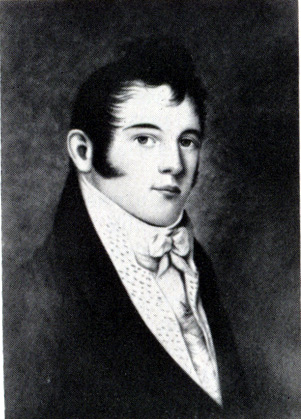
Historical · U.S. House · North Carolina · District 4
Richard Spaight Jr.
Former U.S. Representative · North Carolina District 4 · 1823–1825
Richard Spaight Jr. represented North Carolina's District 4 in the United States House of Representatives (1823–1825). The page below collects sourced biographical facts, term history, committee roles, and provenance for Jr..
Bioguide ID: S000694
Key facts
- Full name
- Richard Spaight Jr.
- State
- North Carolina
- District
- District 4
- Party
- —
- House service
- 1823–1825
- First House term
- 1823
- Status
- Left office
- Current term ends
- —
- Born
- —
- Bioguide ID
- S000694
- Committee assignments
- —
- Dataset version
- 1.20260606
Biographical narrative
854 words · sourced from the Wikipedia REST extract
Richard Spaight Jr. was an American politician who served as a U.S. Representative for North Carolina's 4th congressional district. His political career spanned several significant roles, including a term in the U.S. House of Representatives and a subsequent tenure as the 27th governor of North Carolina. Born into a politically active family, Spaight's life and career were marked by his involvement in state and national politics during a formative period in American history.
Early life and career
Richard Dobbs Spaight Jr. was born in New Bern, North Carolina, in 1796. He was the son of Richard Dobbs Spaight, who had served as the eighth governor of North Carolina from 1792 to 1795. This familial connection to politics likely influenced Spaight's future career. Tragically, Spaight Jr. was orphaned at a young age when his father was killed in a duel in 1802. This loss had a profound impact on his early life, but he persevered through his education.
Spaight attended the University of North Carolina, where he completed his studies and graduated in 1815. Following his graduation, he pursued a legal career, studying law and gaining admission to the bar in 1818. His entry into politics began shortly thereafter when he was elected to the North Carolina House of Commons in 1819. This position marked the beginning of his public service, as he engaged with the legislative process at the state level.
In 1820, Spaight's political career advanced when he was elected to the North Carolina Senate. His time in the Senate allowed him to gain valuable experience in governance and legislative affairs, setting the stage for his later election to the U.S. House of Representatives. His tenure in the state legislature provided him with insights into the political landscape of North Carolina, which would prove beneficial in his subsequent congressional career.
House tenure
Richard Spaight Jr. was elected to the U.S. House of Representatives in 1823, marking a significant milestone in his political journey. He represented North Carolina's 4th congressional district during a period characterized by political change and development in the United States. His first term in the House lasted until March 3, 1825, when he concluded his service.
Despite his efforts, Spaight was not re-elected to Congress, which led him to return to the North Carolina state legislature. His experience in the U.S. House would have provided him with a broader perspective on national issues and the workings of federal governance, which he could apply in his state-level roles.
After his time in Congress, Spaight made several attempts to secure the governorship of North Carolina. He faced multiple defeats in his bids for the office in 1827, 1828, 1830, 1831, and 1832. These unsuccessful campaigns did not deter him from continuing his political ambitions. Instead, they reflected his persistent commitment to public service and his desire to influence the direction of state policy.
In 1835, after several years of political activity and campaigning, Spaight was finally elected governor of North Carolina. This election was notable as he became the last governor to be chosen by the General Assembly under the North Carolina Constitution of 1776. His tenure as governor was marked by a focus on state governance and the challenges of managing public resources.
Legislative focus and committees
During his time in the U.S. House of Representatives, Richard Spaight Jr. engaged in various legislative activities, although specific details regarding his committee assignments or legislative initiatives are not documented in the available records. His background in law and experience in the North Carolina legislature likely informed his approach to national issues, as he would have been well-versed in the complexities of governance and public policy.
As governor, Spaight's political philosophy became more defined. He was known for opposing state-funded internal improvements, which reflected a cautious approach to government spending and investment in infrastructure. This stance was significant during a time when many states were grappling with the implications of economic development and the role of government in facilitating growth.
Following his governorship, Spaight sought to continue his political career by running in the first statewide popular election for governor under the new North Carolina Constitution of 1835. However, he was defeated by Edward B. Dudley, marking another setback in his political aspirations. Despite these challenges, Spaight's legacy as a public servant continued, particularly as he was part of a unique historical distinction: he and his father were the first father-son duo to serve as governors in North Carolina. This familial connection to the governorship would later be echoed by other political families in the state.
After his political career, Spaight retired to his farm near New Bern, where he continued to engage with his community. His life after public office allowed him to reflect on his contributions to North Carolina's political landscape and the evolution of governance in the state.
Richard Spaight Jr. passed away on November 17, 1850. His life and career were emblematic of the political dynamics of early 19th-century America, where individuals navigated the complexities of governance, public service, and personal ambition. His contributions to North Carolina's political history remain a part of the state's rich narrative.
Notable legislation
Sponsored and co-sponsored legislation for Richard Spaight Jr. is pending operator curation. The biographical narrative above carries the same provenance trail until per-bill rows are written.
Sources
- [1]https://en.wikipedia.org/wiki/Richard_Dobbs_Spaight_Jr.Wikipedia · retrieved 2026-06-06
Notable quotes
Sourced quotes for Richard Spaight Jr. are pending operator curation. Narrative-scope provenance remains attached below.
Sources
- [1]https://en.wikipedia.org/wiki/Richard_Dobbs_Spaight_Jr.Wikipedia · retrieved 2026-06-06
Key positions
Curated policy positions for Richard Spaight Jr. are pending operator review. The biographical narrative above carries the same provenance trail until per-topic positions are written.
Sources
- [1]https://en.wikipedia.org/wiki/Richard_Dobbs_Spaight_Jr.Wikipedia · retrieved 2026-06-06
Terms served
- 1823–1825U.S. House · Term 1
Sources & provenance
Every attributable claim above carries a per-section [N] marker that resolves to the corresponding URL below. Each entry records the upstream provider, the canonical URL, and the timestamp at which the source was retrieved by the ingest pipeline.
Key facts
- https://bioguide.congress.gov/search/bio/S000694bioguide · retrieved 2026-06-06
- https://www.govtrack.us/congress/members/410165govtrack · retrieved 2026-06-06
Biographical narrative
- https://en.wikipedia.org/wiki/Richard_Dobbs_Spaight_Jr.wikipedia · retrieved 2026-06-06
Find your representative
Every U.S. state elects representatives by district. Browse North Carolina’s delegation, the full former-representative roster, or explore the role and term length.
Related on The Candidate
- Preceded by William BlackledgeEarlier holder of the North Carolina District 4 House seat · Republican.Open
- Succeeded by John BryanLater holder of the North Carolina District 4 House seat · Adams.Open
- Alfred GatlinFormer U.S. Representative · North Carolina District 1 · Crawford RepublicanOpen
- Clinton CobbFormer U.S. Representative · North Carolina District 1 · RepublicanOpen
- Eva ClaytonFormer U.S. Representative · North Carolina District 1 · DemocraticOpen
- Frank Ballance Jr.Former U.S. Representative · North Carolina District 1 · DemocraticOpen