
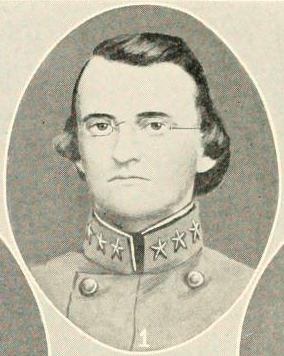
Historical · U.S. House · North Carolina · District 4
Sion Rogers
Former U.S. Representative · North Carolina District 4 · 1853–1873 · Democratic
Sion Rogers represented North Carolina's District 4 in the United States House of Representatives (1853–1873) for the Democratic party. The page below collects sourced biographical facts, term history, committee roles, and provenance for Rogers.
Bioguide ID: R000402
Key facts
- Full name
- Sion Rogers
- State
- North Carolina
- District
- District 4
- Party
- Democratic
- House service
- 1853–1873
- First House term
- 1853
- Status
- Left office
- Current term ends
- —
- Born
- 1825
- Bioguide ID
- R000402
- Committee assignments
- —
- Dataset version
- 1.20260606
Biographical narrative
830 words · sourced from the Wikipedia REST extract
Sion Rogers was a U.S. Representative from North Carolina, serving in the House of Representatives during the mid-19th century. A member of the Democratic Party, he had a notable career that included serving as a congressman and as the Attorney General of North Carolina. His political journey was marked by significant events, including his service in the Confederate Army during the American Civil War and his eventual election to Congress after the war. Rogers's tenure in the House spanned two non-consecutive terms, with his last term concluding in 1873.
Early life and career
Sion Hart Rogers was born on September 30, 1825, near Raleigh, North Carolina. He received his early education in common schools located in Wake County. Following his primary education, Rogers attended the University of North Carolina at Chapel Hill, where he graduated in 1846. After completing his studies, he pursued a career in law, gaining admission to the bar in 1848. He began practicing law in Raleigh, establishing himself in the legal community.
Initially aligned with the Whig Party, Rogers entered the political arena when he was elected to the 33rd United States Congress in 1852. His first term in Congress began on March 4, 1853, and lasted until March 3, 1855. During this period, he focused on various legislative matters but chose not to seek renomination in 1854, concluding his first congressional term without pursuing a second.
In addition to his congressional duties, Rogers served as the solicitor for the Raleigh district of the superior court, further enhancing his legal and political experience. His career took a significant turn during the American Civil War, when he enlisted in the Confederate States Army. He initially served as a lieutenant in the Fourteenth Regiment of North Carolina State Troops in 1861. His military service progressed, and he was later commissioned as a colonel of the Forty-seventh North Carolina Infantry on April 8, 1862. However, he resigned from military service on January 5, 1863, after being elected as the Attorney General of North Carolina.
Rogers held the position of Attorney General until 1866, during a tumultuous period in the state's history following the Civil War. His legal background and political experience positioned him as a significant figure in North Carolina's post-war governance.
House tenure
After a hiatus from Congress, Sion Rogers sought election again in 1868 but was unsuccessful in his bid. However, he returned to the political scene and was elected as a Democrat to the 42nd United States Congress, with his term commencing on March 4, 1871. His election was not without controversy, as it was contested by his Republican opponent. The contest was rooted in the political tensions of the era, particularly concerning the implications of the Fourteenth Amendment, which addressed issues related to citizenship and the rights of former Confederates.
Rogers faced disqualification to serve under Section 3 of the Fourteenth Amendment, which barred individuals who had engaged in insurrection against the United States from holding office. However, after the election contest was dropped and Congress voted to remove the disabilities imposed on him, Rogers was officially sworn in on May 23, 1872. His congressional career during this term was characterized by the challenges of navigating the political landscape of Reconstruction and the shifting dynamics of party power in the South.
Rogers served in the House until March 3, 1873, when his term ended. He was unable to secure re-election in 1872, marking the conclusion of his congressional service. His time in the House was significant, as it reflected the complexities of Southern politics in the aftermath of the Civil War and the ongoing struggles for political representation and civil rights.
Legislative focus and committees
During his time in Congress, Sion Rogers was involved in various legislative matters, although specific details about the bills he supported or the committees he served on are not extensively documented. His background as a lawyer and his experience as Attorney General likely influenced his legislative priorities, particularly in areas related to legal reform and governance in a post-war context.
Rogers's political career unfolded during a period marked by significant social and political upheaval, and his legislative focus would have been shaped by the pressing issues of Reconstruction, civil rights, and the reintegration of Southern states into the Union. The challenges faced by Congress during this time included addressing the needs of newly freed individuals, rebuilding the Southern economy, and redefining the relationship between state and federal governments.
After leaving Congress, Rogers returned to Raleigh, where he continued to be involved in local affairs until his death on August 14, 1874. He is buried in the City Cemetery in Raleigh, North Carolina. His contributions to the state and the nation during a pivotal time in American history remain part of the legacy of North Carolina's political landscape. Additionally, he was known for building the Rogers-Bagley-Daniels-Pegues House around 1855, which was later recognized for its historical significance and listed on the National Register of Historic Places in 1979.
Notable legislation
Sponsored and co-sponsored legislation for Sion Rogers is pending operator curation. The biographical narrative above carries the same provenance trail until per-bill rows are written.
Sources
- [1]https://en.wikipedia.org/wiki/Sion_H._RogersWikipedia · retrieved 2026-06-06
Notable quotes
Sourced quotes for Sion Rogers are pending operator curation. Narrative-scope provenance remains attached below.
Sources
- [1]https://en.wikipedia.org/wiki/Sion_H._RogersWikipedia · retrieved 2026-06-06
Key positions
Curated policy positions for Sion Rogers are pending operator review. The biographical narrative above carries the same provenance trail until per-topic positions are written.
Sources
- [1]https://en.wikipedia.org/wiki/Sion_H._RogersWikipedia · retrieved 2026-06-06
Terms served
- 1853–1855U.S. House · Term 1 · Whig
- 1871–1873U.S. House · Term 2 · Democratic
Sources & provenance
Every attributable claim above carries a per-section [N] marker that resolves to the corresponding URL below. Each entry records the upstream provider, the canonical URL, and the timestamp at which the source was retrieved by the ingest pipeline.
Key facts
- https://bioguide.congress.gov/search/bio/R000402bioguide · retrieved 2026-06-06
- https://www.govtrack.us/congress/members/409369govtrack · retrieved 2026-06-06
Biographical narrative
- https://en.wikipedia.org/wiki/Sion_H._Rogerswikipedia · retrieved 2026-06-06
Find your representative
Every U.S. state elects representatives by district. Browse North Carolina’s delegation, the full former-representative roster, or explore the role and term length.
Related on The Candidate
- Preceded by James MoreheadEarlier holder of the North Carolina District 4 House seat · Whig.Open
- Succeeded by William SmithLater holder of the North Carolina District 4 House seat · Republican.Open
- Alfred GatlinFormer U.S. Representative · North Carolina District 1 · Crawford RepublicanOpen
- Clinton CobbFormer U.S. Representative · North Carolina District 1 · RepublicanOpen
- Eva ClaytonFormer U.S. Representative · North Carolina District 1 · DemocraticOpen
- Frank Ballance Jr.Former U.S. Representative · North Carolina District 1 · DemocraticOpen