
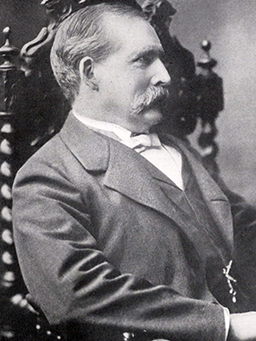
Historical · U.S. House · North Carolina · District 4
William Cox
Former U.S. Representative · North Carolina District 4 · 1881–1887 · Democratic
William Cox represented North Carolina's District 4 in the United States House of Representatives (1881–1887) for the Democratic party. The page below collects sourced biographical facts, term history, committee roles, and provenance for Cox.
Bioguide ID: C000841
Key facts
- Full name
- William Cox
- State
- North Carolina
- District
- District 4
- Party
- Democratic
- House service
- 1881–1887
- First House term
- 1881
- Status
- Left office
- Current term ends
- —
- Born
- 1831
- Bioguide ID
- C000841
- Committee assignments
- —
- Dataset version
- 1.20260606
Biographical narrative
995 words · sourced from the Wikipedia REST extract
William Cox was a prominent American soldier and politician from North Carolina, serving as a U.S. Representative for the state's fourth congressional district from 1881 to 1887. A member of the Democratic Party, Cox's political career followed a distinguished military service during the American Civil War, where he rose to the rank of brigadier general in the Confederate Army. His post-war career included significant roles in both legal and political spheres, culminating in his appointment as Secretary of the U.S. Senate from 1893 until 1900. Cox's life reflects the complexities of American history during a transformative period, marked by the Civil War, Reconstruction, and the shifting political landscape of the late 19th century.
Early life and career
William Ruffin Cox was born on March 11, 1831, in Scotland Neck, Halifax County, North Carolina, into a family with deep roots in the region, tracing back to colonial times. His upbringing was influenced by the aristocratic background of his family, which provided him with a solid educational foundation. He began his formal education at Vine Hill Academy in Halifax County and later moved to Nashville, Tennessee, with his mother following the death of his father. In Nashville, he continued his education and graduated from Tolbert Fanning's Franklin College.
Cox pursued a legal career by studying law at Cumberland University, where he successfully passed the bar exam. He initially established a legal practice in Nashville, partnering with a well-known attorney, which allowed him to gain valuable experience in the field. However, in 1857, he shifted his focus from law to agriculture, marrying and relocating back to North Carolina, where he owned a plantation in Edgecombe County. His early political ambitions took shape when he ran as a Democrat for the state legislature, although he faced a narrow defeat in a closely contested election, losing by a mere thirteen votes.
House tenure
Cox's political career took a significant turn when he was elected to the United States House of Representatives in 1881. His tenure in Congress lasted until March 3, 1887, during which he served three terms. As a member of the House, Cox was involved in various legislative activities and discussions that shaped the direction of national policy during a period marked by the aftermath of the Civil War and the challenges of Reconstruction. His alignment with the Democratic Party positioned him within a political landscape that was often contentious, as the nation grappled with issues of civil rights, economic recovery, and the integration of the Southern states back into the Union.
Throughout his time in the House, Cox was known for advocating civil service reform, a stance that was somewhat controversial among his peers. This commitment to reform aimed at improving the efficiency and integrity of government operations, reflecting a broader movement within American politics during that era. However, his position on this issue led to tensions within the Democratic Party, ultimately resulting in his loss of the party's nomination for re-election in 1886. The dynamics of party politics during this period were complex, and Cox's experience illustrates the challenges faced by politicians who sought to implement change within established political structures.
Following his departure from Congress, Cox returned to North Carolina, where he resumed his life as a plantation owner. His political career was not entirely over, as he was appointed Secretary of the U.S. Senate in 1893, a position he held until the turn of the century. This role allowed him to continue his involvement in national politics and governance, albeit from a different vantage point.
Legislative focus and committees
During his time in the House of Representatives, Cox's legislative focus was primarily on civil service reform. This commitment to improving government operations was part of a larger national discourse on the need for a more merit-based system in public service, moving away from the patronage systems that had long been entrenched in American politics. His advocacy for reform was indicative of a broader trend among some politicians who recognized the necessity of modernizing government practices to enhance accountability and efficiency.
Cox's involvement in various committees during his congressional tenure allowed him to engage with a range of issues that were pertinent to his constituents and the nation as a whole. While specific committee assignments are not detailed in the available records, it is typical for members of Congress to serve on committees that align with their interests and expertise, providing them with platforms to influence legislation and policy.
His legislative efforts were shaped by the political climate of the time, which was characterized by significant challenges, including economic instability and social change. The post-Civil War era was a time of reconstruction and recovery, and Cox's work in Congress contributed to the ongoing dialogue about how best to address the needs of a nation still healing from the scars of war.
After leaving Congress, Cox's career continued to evolve as he took on the role of Secretary of the U.S. Senate. This position allowed him to play a crucial role in the administration of the Senate, overseeing its operations and contributing to the legislative process from a different perspective. His experience in both the military and political arenas provided him with a unique understanding of governance, which he applied throughout his career.
Cox's life and career reflect the complexities of American history during a transformative period. His military service, political ambitions, and commitment to reform illustrate the challenges and opportunities that defined the late 19th century. He passed away on December 26, 1919, leaving behind a legacy that includes his contributions to both the military and political spheres of American life. His burial in Raleigh's Historic Oakwood Cemetery marks the end of a life that spanned significant events in U.S. history, including the Civil War and the Reconstruction era. At the time of his death, he was one of the last surviving generals of the Confederate Army, a testament to the enduring impact of his military service on his identity and legacy.
Notable legislation
Sponsored and co-sponsored legislation for William Cox is pending operator curation. The biographical narrative above carries the same provenance trail until per-bill rows are written.
Sources
- [1]https://en.wikipedia.org/wiki/William_Ruffin_CoxWikipedia · retrieved 2026-06-06
Notable quotes
Sourced quotes for William Cox are pending operator curation. Narrative-scope provenance remains attached below.
Sources
- [1]https://en.wikipedia.org/wiki/William_Ruffin_CoxWikipedia · retrieved 2026-06-06
Key positions
Curated policy positions for William Cox are pending operator review. The biographical narrative above carries the same provenance trail until per-topic positions are written.
Sources
- [1]https://en.wikipedia.org/wiki/William_Ruffin_CoxWikipedia · retrieved 2026-06-06
Terms served
- 1881–1883U.S. House · Term 1 · Democratic
- 1883–1885U.S. House · Term 2 · Democratic
- 1885–1887U.S. House · Term 3 · Democratic
Sources & provenance
Every attributable claim above carries a per-section [N] marker that resolves to the corresponding URL below. Each entry records the upstream provider, the canonical URL, and the timestamp at which the source was retrieved by the ingest pipeline.
Key facts
- https://bioguide.congress.gov/search/bio/C000841bioguide · retrieved 2026-06-06
- https://www.govtrack.us/congress/members/402958govtrack · retrieved 2026-06-06
Biographical narrative
- https://en.wikipedia.org/wiki/William_Ruffin_Coxwikipedia · retrieved 2026-06-06
Find your representative
Every U.S. state elects representatives by district. Browse North Carolina’s delegation, the full former-representative roster, or explore the role and term length.
Related on The Candidate
- Preceded by Joseph DavisEarlier holder of the North Carolina District 4 House seat · Democratic.Open
- Succeeded by John NicholsLater holder of the North Carolina District 4 House seat · Independent.Open
- Alfred GatlinFormer U.S. Representative · North Carolina District 1 · Crawford RepublicanOpen
- Clinton CobbFormer U.S. Representative · North Carolina District 1 · RepublicanOpen
- Eva ClaytonFormer U.S. Representative · North Carolina District 1 · DemocraticOpen
- Frank Ballance Jr.Former U.S. Representative · North Carolina District 1 · DemocraticOpen