
Historical · U.S. House · North Carolina · District 5
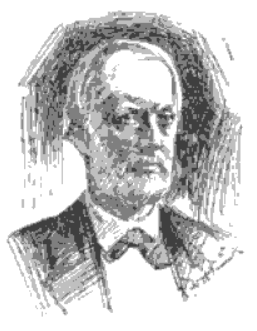
Edwin Reade
Former U.S. Representative · North Carolina District 5 · 1855–1857 · American
Edwin Reade represented North Carolina's District 5 in the United States House of Representatives (1855–1857) for the American party. The page below collects sourced biographical facts, term history, committee roles, and provenance for Reade.
Bioguide ID: R000095
Key facts
- Full name
- Edwin Reade
- State
- North Carolina
- District
- District 5
- Party
- American
- House service
- 1855–1857
- First House term
- 1855
- Status
- Left office
- Current term ends
- —
- Born
- 1812
- Bioguide ID
- R000095
- Committee assignments
- —
- Dataset version
- 1.20260606
Biographical narrative
889 words · sourced from the Wikipedia REST extract
Edwin Reade was a U.S. Representative from North Carolina, serving in the 34th Congress from 1855 to 1857. A member of the American Party, Reade's political career was marked by his involvement in various judicial roles, including serving in the Confederate Senate during the American Civil War and later as an associate justice of the North Carolina Supreme Court. His legal career spanned several decades, and he was actively engaged in public service throughout his life.
Early life and career
Edwin Godwin Reade was born on November 13, 1812, in Person County, North Carolina. His early years were spent in a rural environment where he gained practical experience through various occupations. Reade worked on a farm, in a carriage shop, as an assistant to a blacksmith, and in a tanyard. This diverse background provided him with a strong work ethic and a foundational understanding of the community's needs.
Reade's educational journey began at the academy of George Morrow in Orange County, where he received instruction that would prepare him for his future endeavors. He later took on the role of assistant teacher in the school run by Reverend Alexander Wilson, furthering his commitment to education. In 1833, he began studying law independently, demonstrating his ambition to enter the legal profession. By 1835, he had successfully passed the bar examination and commenced his legal practice in Roxboro, North Carolina.
In the same year, Reade sought public office as a candidate for the House of Commons, representing the Whig Party. However, this initial foray into politics did not result in electoral success. Undeterred, he continued to build his legal career, practicing law until 1855. During this time, he became a partner in the law firm Reade, Busbee & Busbee, which further established his reputation in the legal community.
House tenure
Reade's political career took a significant turn when he was elected to the United States House of Representatives as a member of the American Party. His term began on March 4, 1855, and he served until March 3, 1857. During his time in Congress, Reade participated in the legislative process, contributing to discussions and decisions that shaped national policy during a turbulent period in American history.
Despite his active engagement in the House, Reade chose not to seek re-election in 1856, opting instead to return to North Carolina. Upon his return, he took on the role of presiding justice in the county court, a position that allowed him to continue his involvement in the legal system and serve his community. He held this position for several years, further solidifying his status as a respected figure in North Carolina's judicial landscape.
In 1860, Reade was elected as a judge of the superior court, a role that underscored his legal expertise and commitment to public service. His judicial responsibilities during this period included overseeing cases and ensuring the fair application of the law. Reade's legal career continued to evolve as he navigated the challenges posed by the Civil War and its aftermath.
Legislative focus and committees
During his brief tenure in the U.S. House of Representatives, Reade's legislative focus aligned with the priorities of the American Party, which was characterized by its opposition to the expansion of slavery into the territories and its advocacy for a more unified national identity. Although specific details regarding the bills he supported or committees he served on are not documented, his alignment with the American Party suggests that he was engaged in the pressing issues of his time, including debates over sectional tensions and the impending conflict that would lead to the Civil War.
Following his congressional service, Reade's career took a notable turn when he was appointed to the Confederate Senate in 1863 by Governor Zebulon Vance. This appointment came after George Davis resigned to take on the role of Attorney General for the Confederacy. In this capacity, Reade was involved in the legislative processes of the Confederate government during a critical period in American history.
After the Civil War, Reade returned to his judicial roots, being re-appointed as a judge of the superior court, a position he held until 1866. His role in the Reconstruction convention in 1865 in Raleigh further demonstrated his commitment to shaping the future of North Carolina during a time of significant change and rebuilding.
In 1868, Reade was appointed as an associate justice of the North Carolina Supreme Court, where he served until 1879. This position allowed him to influence the state's legal framework and contribute to the development of jurisprudence in North Carolina. His tenure on the Supreme Court was marked by his dedication to the rule of law and the principles of justice.
After retiring from active government service, Reade transitioned into the banking sector, becoming involved in financial institutions in Raleigh. He served as president of the Raleigh National Bank, where he applied his legal and administrative skills to the business world.
Reade's personal life included two marriages, first to Emily A. L. Moore and later to Mary E. (née Shaw) Parmalee, the widow of Benjamin J. Parmalee. He was a member of the Presbyterian Church, reflecting his commitment to his faith and community. Edwin Reade passed away on October 18, 1894, in Raleigh, North Carolina, and was laid to rest in Oakwood Cemetery, leaving behind a legacy of public service and legal scholarship.
Notable legislation
Sponsored and co-sponsored legislation for Edwin Reade is pending operator curation. The biographical narrative above carries the same provenance trail until per-bill rows are written.
Sources
- [1]https://en.wikipedia.org/wiki/Edwin_Godwin_ReadeWikipedia · retrieved 2026-06-06
Notable quotes
Sourced quotes for Edwin Reade are pending operator curation. Narrative-scope provenance remains attached below.
Sources
- [1]https://en.wikipedia.org/wiki/Edwin_Godwin_ReadeWikipedia · retrieved 2026-06-06
Key positions
Curated policy positions for Edwin Reade are pending operator review. The biographical narrative above carries the same provenance trail until per-topic positions are written.
Sources
- [1]https://en.wikipedia.org/wiki/Edwin_Godwin_ReadeWikipedia · retrieved 2026-06-06
Terms served
- 1855–1857U.S. House · Term 1 · American
Sources & provenance
Every attributable claim above carries a per-section [N] marker that resolves to the corresponding URL below. Each entry records the upstream provider, the canonical URL, and the timestamp at which the source was retrieved by the ingest pipeline.
Key facts
- https://bioguide.congress.gov/search/bio/R000095bioguide · retrieved 2026-06-06
- https://www.govtrack.us/congress/members/409075govtrack · retrieved 2026-06-06
Biographical narrative
- https://en.wikipedia.org/wiki/Edwin_Godwin_Readewikipedia · retrieved 2026-06-06
Find your representative
Every U.S. state elects representatives by district. Browse North Carolina’s delegation, the full former-representative roster, or explore the role and term length.
Related on The Candidate
- Preceded by John Kerr Jr.Earlier holder of the North Carolina District 5 House seat · Whig.Open
- Succeeded by Alfred ScalesLater holder of the North Carolina District 5 House seat · Democratic.Open
- Alfred GatlinFormer U.S. Representative · North Carolina District 1 · Crawford RepublicanOpen
- Clinton CobbFormer U.S. Representative · North Carolina District 1 · RepublicanOpen
- Eva ClaytonFormer U.S. Representative · North Carolina District 1 · DemocraticOpen
- Frank Ballance Jr.Former U.S. Representative · North Carolina District 1 · DemocraticOpen