
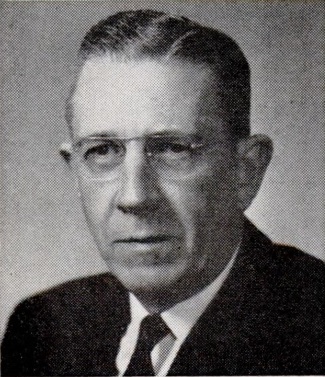
Historical · U.S. House · North Carolina · District 5
Ralph Scott
Former U.S. Representative · North Carolina District 5 · 1957–1967 · Democratic
Ralph Scott represented North Carolina's District 5 in the United States House of Representatives (1957–1967) for the Democratic party. The page below collects sourced biographical facts, term history, committee roles, and provenance for Scott.
Bioguide ID: S000184
Key facts
- Full name
- Ralph Scott
- State
- North Carolina
- District
- District 5
- Party
- Democratic
- House service
- 1957–1967
- First House term
- 1957
- Status
- Left office
- Current term ends
- —
- Born
- 1905
- Bioguide ID
- S000184
- Committee assignments
- —
- Dataset version
- 1.20260605
Biographical narrative
884 words · sourced from the Wikipedia REST extract
Ralph Scott was a Democratic politician who served as a U.S. Representative for North Carolina's 5th congressional district from 1957 until 1967. His political career spanned a decade during which he was involved in various legislative activities and held significant roles within the Democratic Party at both state and national levels. Scott's contributions to North Carolina politics and his service in Congress are marked by a commitment to his constituents and the Democratic Party.
Early life and career
Ralph James Scott was born on October 15, 1905, near Pinnacle, North Carolina, in Surry County. Growing up in a rural area, he attended local public schools, where he laid the foundation for his future academic pursuits. He later enrolled at Wake Forest University, a prominent institution in North Carolina, where he studied law. After completing his legal education, Scott was admitted to the bar in 1930, which allowed him to practice law in Danbury, North Carolina. This legal background would later inform his work as a legislator.
Scott's political career began in earnest in 1936 when he was elected to the North Carolina House of Representatives. His tenure in the state legislature lasted for one term, during which he gained valuable experience in governance and public service. In addition to his role as a state representative, Scott was actively involved in the Democratic Party, serving as a delegate to state party conventions from 1936 to 1968. This involvement showcased his dedication to the party and his commitment to shaping its policies and direction.
In 1938, Scott was appointed as the solicitor for the twenty-first judicial district of North Carolina, a position he held until 1956. This role further solidified his legal expertise and provided him with insights into the judicial system, which would be beneficial during his time in Congress. His long-standing leadership within the Stokes County Democratic Party, where he served as chair of the Executive Committee from 1936 to 1970, demonstrated his influence and commitment to local politics.
House tenure
Ralph Scott's congressional career began when he was elected to the U.S. House of Representatives in 1956, officially taking office on January 3, 1957. He represented North Carolina's 5th congressional district, a position he would hold for five consecutive terms until January 3, 1967. During his time in the House, Scott was part of a significant period in American history marked by social change and legislative challenges.
As a member of Congress, Scott participated in various legislative initiatives and debates that defined the era. His tenure coincided with the Civil Rights Movement, a pivotal time in U.S. history when issues of racial equality and social justice were at the forefront of national discourse. While specific details of his voting record and legislative actions are not provided, it is known that he was part of a Democratic majority in the House during a time when the party was advocating for civil rights and social reforms.
Scott chose not to seek re-election for a sixth term in 1966, concluding his congressional service after a decade. Following his departure from the House, he returned to his law practice in Danbury, North Carolina. His decision to leave Congress marked the end of an important chapter in his political career, but he remained active in his community and continued to contribute to public life.
Legislative focus and committees
Throughout his five terms in the House of Representatives, Ralph Scott's legislative focus encompassed a range of issues pertinent to his constituents and the broader national landscape. Although specific legislative initiatives and committee assignments are not detailed, it is reasonable to infer that his background in law and his experience in state politics informed his approach to governance.
Scott's involvement in the Democratic Party and his leadership roles at the state level likely influenced his legislative priorities. As a member of the House during a time of significant social change, he would have been engaged in discussions surrounding civil rights, economic development, and education. The Democratic Party's platform during the 1960s emphasized social justice, healthcare, and education reform, and Scott's alignment with these issues would have been consistent with his party's goals.
In addition to his legislative work, Scott's role as a delegate to state Democratic conventions and his chairmanship of the Stokes County Democratic Party positioned him as a key figure in local and state politics. His long-standing commitment to the party and his active participation in its activities suggest that he was influential in shaping Democratic policies and strategies in North Carolina.
After leaving Congress, Scott continued to reside in Danbury, where he lived until his death on August 5, 1983. His burial took place in the Pinnacle Baptist Church cemetery, a testament to his deep roots in the community he served throughout his life. Scott's legacy as a public servant is marked by his dedication to his constituents and his contributions to the Democratic Party in North Carolina.
In summary, Ralph Scott's life and career reflect a commitment to public service and political engagement. His journey from a rural upbringing to a significant role in the U.S. Congress illustrates the impact of dedicated individuals in shaping local and national governance. His contributions to the legislative process and his active participation in the Democratic Party underscore the importance of civic involvement in a democratic society.
Notable legislation
Sponsored and co-sponsored legislation for Ralph Scott is pending operator curation. The biographical narrative above carries the same provenance trail until per-bill rows are written.
Sources
- [1]https://en.wikipedia.org/wiki/Ralph_James_ScottWikipedia · retrieved 2026-06-05
Notable quotes
Sourced quotes for Ralph Scott are pending operator curation. Narrative-scope provenance remains attached below.
Sources
- [1]https://en.wikipedia.org/wiki/Ralph_James_ScottWikipedia · retrieved 2026-06-05
Key positions
Curated policy positions for Ralph Scott are pending operator review. The biographical narrative above carries the same provenance trail until per-topic positions are written.
Sources
- [1]https://en.wikipedia.org/wiki/Ralph_James_ScottWikipedia · retrieved 2026-06-05
Terms served
- 1957–1959U.S. House · Term 1 · Democratic
- 1959–1961U.S. House · Term 2 · Democratic
- 1961–1963U.S. House · Term 3 · Democratic
- 1963–1965U.S. House · Term 4 · Democratic
- 1965–1967U.S. House · Term 5 · Democratic
Sources & provenance
Every attributable claim above carries a per-section [N] marker that resolves to the corresponding URL below. Each entry records the upstream provider, the canonical URL, and the timestamp at which the source was retrieved by the ingest pipeline.
Key facts
- https://bioguide.congress.gov/search/bio/S000184bioguide · retrieved 2026-06-05
- https://www.govtrack.us/congress/members/409690govtrack · retrieved 2026-06-05
Biographical narrative
- https://en.wikipedia.org/wiki/Ralph_James_Scottwikipedia · retrieved 2026-06-05
Find your representative
Every U.S. state elects representatives by district. Browse North Carolina’s delegation, the full former-representative roster, or explore the role and term length.
Related on The Candidate
- Preceded by Richard ChathamEarlier holder of the North Carolina District 5 House seat · Democratic.Open
- Succeeded by Wilmer MizellLater holder of the North Carolina District 5 House seat · Republican.Open
- Alfred GatlinFormer U.S. Representative · North Carolina District 1 · Crawford RepublicanOpen
- Clinton CobbFormer U.S. Representative · North Carolina District 1 · RepublicanOpen
- Eva ClaytonFormer U.S. Representative · North Carolina District 1 · DemocraticOpen
- Frank Ballance Jr.Former U.S. Representative · North Carolina District 1 · DemocraticOpen