
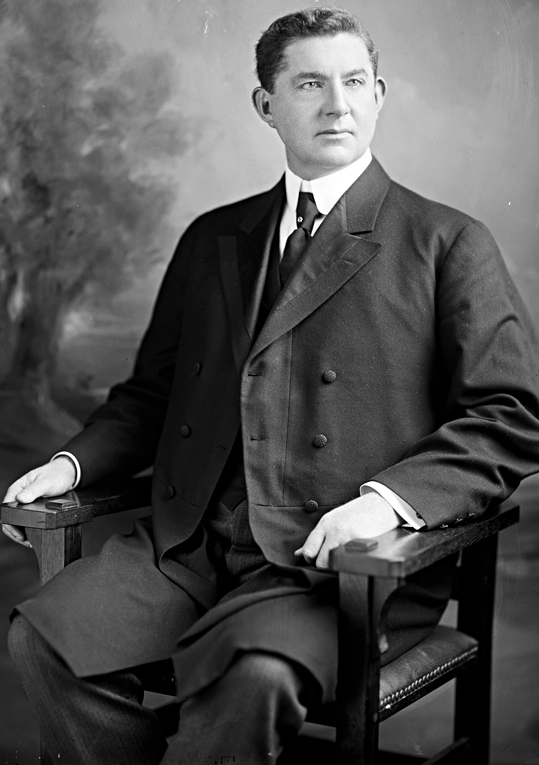
Historical · U.S. House · North Carolina · District 6
Gilbert Patterson
Former U.S. Representative · North Carolina District 6 · 1903–1907 · Democratic
Gilbert Patterson represented North Carolina's District 6 in the United States House of Representatives (1903–1907) for the Democratic party. The page below collects sourced biographical facts, term history, committee roles, and provenance for Patterson.
Bioguide ID: P000117
Key facts
- Full name
- Gilbert Patterson
- State
- North Carolina
- District
- District 6
- Party
- Democratic
- House service
- 1903–1907
- First House term
- 1903
- Status
- Left office
- Current term ends
- —
- Born
- 1863
- Bioguide ID
- P000117
- Committee assignments
- —
- Dataset version
- 1.20260606
Biographical narrative
1,007 words · sourced from the Wikipedia REST extract
Gilbert Patterson was an American lawyer and politician who served as a U.S. Representative for North Carolina's 6th congressional district from 1903 to 1907. A member of the Democratic Party, he was involved in state and national politics during a transformative period in American history. His career in public service was preceded by a solid educational foundation and early involvement in local governance, which laid the groundwork for his later political endeavors. After his congressional tenure, Patterson returned to his law practice and remained active in his community until his death in 1922.
Early life and career
Gilbert Brown Patterson was born on May 29, 1863, in the vicinity of Maxton, located in Robeson County, North Carolina. He was the son of Gilbert and Margaret P. Patterson. Growing up in a rural community, Patterson received his early education at Shoe Heel Academy, a local institution that would later be known as Maxton. He furthered his studies at Laurinburg High School before enrolling at the University of North Carolina at Chapel Hill, where he graduated in 1886. During his time at the university, he was a member of the Sigma Alpha Epsilon fraternity, which provided him with a network of peers that would be beneficial in his later career.
Following his graduation, Patterson began his professional journey by teaching in Elizabeth City from 1886 to 1889. This experience in education likely contributed to his understanding of the importance of civic engagement and public service. While teaching, he also pursued the study of law, a field he was admitted to in 1890. After gaining admission to the bar, Patterson established his law practice in Maxton, where he would become a prominent figure in the local legal community.
Patterson's early political career began when he was elected to the North Carolina House of Representatives, serving from 1899 to 1901. This role allowed him to gain valuable experience in legislative processes and governance, further solidifying his commitment to public service. His tenure in the state legislature provided him with insights into the political landscape of North Carolina and helped him build relationships that would be instrumental in his future congressional campaigns.
House tenure
Gilbert Patterson's congressional career began when he was elected as a Democrat to the Fifty-eighth Congress, serving from March 4, 1903, to March 3, 1907. His election marked a significant step in his political journey, as he transitioned from state-level politics to a national platform. During his time in the House of Representatives, Patterson represented North Carolina's 6th congressional district, a region that was undergoing various social and economic changes during the early 20th century.
Patterson's two terms in Congress coincided with a period marked by significant national issues, including industrialization, labor rights, and the early movements for women's suffrage. While specific details regarding the legislation he supported or opposed during his tenure are not available, it is known that members of Congress during this era were often engaged in debates surrounding these transformative issues. Patterson's role as a representative would have involved participating in discussions and votes on legislation that impacted not only his constituents but also the broader American society.
Throughout his time in office, Patterson would have had the opportunity to advocate for the interests of North Carolinians, addressing local concerns while also contributing to national policy discussions. His experience in the state legislature likely informed his approach to governance at the federal level, as he sought to balance the needs of his district with the responsibilities of a national legislator.
After serving two terms in the House, Patterson's congressional career came to an end on March 3, 1907. Following his departure from Congress, he returned to his law practice in Maxton, where he continued to be an active member of his community.
Legislative focus and committees
While specific details regarding Patterson's legislative focus and committee assignments during his time in Congress are not documented, it is important to understand the context in which he served. The early 1900s were a time of significant change in the United States, with rapid industrialization leading to shifts in economic and social structures. As a representative from North Carolina, Patterson would have been expected to address issues pertinent to his constituents, including agriculture, labor, and economic development.
During this period, many legislators were involved in discussions related to the regulation of industries, labor rights, and the expansion of infrastructure. Given North Carolina's agricultural economy, Patterson may have focused on legislation that supported farmers and rural communities, as well as initiatives aimed at improving transportation and communication networks within the state.
In addition to his legislative responsibilities, Patterson's participation in committees would have played a crucial role in shaping his contributions to Congress. Committees are essential for reviewing proposed legislation, conducting hearings, and making recommendations to the full House. While the specific committees he served on are not recorded, it is likely that he was involved in committees that aligned with the interests of his constituents and the pressing issues of the time.
Patterson's commitment to public service extended beyond his congressional tenure. After leaving office, he remained engaged in his community, practicing law and participating in various civic activities. He married Mattie Virginia McNair Evans, who had a son from a previous marriage, and together they had a daughter. His involvement in local organizations, including his roles as a Master Mason and a Shriner, as well as his position as a ruling elder in the Presbyterian Church, highlighted his dedication to both his faith and his community.
Gilbert Patterson passed away on January 26, 1922, in Maxton, North Carolina. His contributions to his community and the state were recognized posthumously when the Gilbert Patterson Memorial Library was named in his honor, opening in 1927. This library serves as a testament to his legacy and the impact he had on the lives of those in his hometown. Patterson's life and career reflect the complexities of American politics during a time of significant change, and his commitment to public service remains a noteworthy aspect of his biography.
Notable legislation
Sponsored and co-sponsored legislation for Gilbert Patterson is pending operator curation. The biographical narrative above carries the same provenance trail until per-bill rows are written.
Sources
- [1]https://en.wikipedia.org/wiki/Gilbert_B._PattersonWikipedia · retrieved 2026-06-06
Notable quotes
Sourced quotes for Gilbert Patterson are pending operator curation. Narrative-scope provenance remains attached below.
Sources
- [1]https://en.wikipedia.org/wiki/Gilbert_B._PattersonWikipedia · retrieved 2026-06-06
Key positions
Curated policy positions for Gilbert Patterson are pending operator review. The biographical narrative above carries the same provenance trail until per-topic positions are written.
Sources
- [1]https://en.wikipedia.org/wiki/Gilbert_B._PattersonWikipedia · retrieved 2026-06-06
Terms served
- 1903–1905U.S. House · Term 1 · Democratic
- 1905–1907U.S. House · Term 2 · Democratic
Sources & provenance
Every attributable claim above carries a per-section [N] marker that resolves to the corresponding URL below. Each entry records the upstream provider, the canonical URL, and the timestamp at which the source was retrieved by the ingest pipeline.
Key facts
- https://bioguide.congress.gov/search/bio/P000117bioguide · retrieved 2026-06-06
- https://www.govtrack.us/congress/members/408525govtrack · retrieved 2026-06-06
Biographical narrative
- https://en.wikipedia.org/wiki/Gilbert_B._Pattersonwikipedia · retrieved 2026-06-06
Find your representative
Every U.S. state elects representatives by district. Browse North Carolina’s delegation, the full former-representative roster, or explore the role and term length.
Related on The Candidate
- Preceded by John BellamyEarlier holder of the North Carolina District 6 House seat · Democratic.Open
- Succeeded by Hannibal GodwinLater holder of the North Carolina District 6 House seat · Democratic.Open
- Alfred GatlinFormer U.S. Representative · North Carolina District 1 · Crawford RepublicanOpen
- Clinton CobbFormer U.S. Representative · North Carolina District 1 · RepublicanOpen
- Eva ClaytonFormer U.S. Representative · North Carolina District 1 · DemocraticOpen
- Frank Ballance Jr.Former U.S. Representative · North Carolina District 1 · DemocraticOpen