
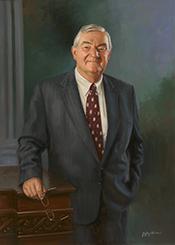
Historical · U.S. House · North Carolina · District 7
Charles Rose III
Former U.S. Representative · North Carolina District 7 · 1973–1997 · Democratic
Charles Rose III represented North Carolina's District 7 in the United States House of Representatives (1973–1997) for the Democratic party. The page below collects sourced biographical facts, term history, committee roles, and provenance for III.
Bioguide ID: R000436
Key facts
- Full name
- Charles Rose III
- State
- North Carolina
- District
- District 7
- Party
- Democratic
- House service
- 1973–1997
- First House term
- 1973
- Status
- Left office
- Current term ends
- —
- Born
- 1939
- Bioguide ID
- R000436
- Committee assignments
- —
- Dataset version
- 1.20260605
Biographical narrative
973 words · sourced from the Wikipedia REST extract
Charlie Rose was an American attorney and politician who served as a U.S. Representative for North Carolina's 7th congressional district from 1973 until 1997. A member of the Democratic Party, Rose was known for his liberal populist stance, which was somewhat atypical for his predominantly conservative district. Throughout his twelve terms in Congress, he was recognized for his advocacy on behalf of farmers, particularly tobacco growers, and for his efforts to modernize congressional operations through technology.
Early life and career
Charlie Rose was born on August 10, 1939, in Fayetteville, North Carolina. He pursued higher education at Davidson College, where he earned a Bachelor of Laws degree. Following this, he attended the University of North Carolina at Chapel Hill, where he obtained his Juris Doctor. During his time as an undergraduate, he worked as a photographer for The News and Observer, which likely contributed to his lifelong interest in technology and media.
After completing his education, Rose began his professional career as an attorney. He practiced law for several years before transitioning into public service. In 1967, he took on the role of prosecutor for the Fayetteville district courts, where he gained experience in the legal system and public administration. His political ambitions became evident when he ran for Congress in 1970, challenging the incumbent Congressman Alton Lennon in the Democratic primary. Although he did not win, he garnered over 40% of the vote, indicating a solid base of support that would serve him well in future campaigns.
In 1972, following Lennon's decision to step down, Rose successfully secured the Democratic nomination for North Carolina's 7th congressional district. He faced a primary challenge from Hector McGeachy, a state senator endorsed by Lennon, but ultimately emerged victorious. This victory set the stage for his long tenure in the U.S. House of Representatives.
House tenure
Charlie Rose was first elected to the U.S. House of Representatives in 1973, representing a district that extended from Fayetteville to Wilmington along the North Carolina coast. His political ideology as a liberal populist was somewhat at odds with the conservative leanings of many constituents in his district. Nevertheless, he managed to maintain a strong connection with his constituents, largely due to his advocacy for agricultural interests, particularly those of tobacco farmers, who were a significant part of the local economy.
Throughout his congressional career, Rose served on several important committees, including the Intelligence and Agriculture Committees. His role on these committees allowed him to influence legislation related to national security and agricultural policy, both critical issues for his district. From 1991 to 1994, he held the position of chairman of the United States House Committee on House Administration, a role that earned him the nickname "mayor of the Capitol." In this capacity, he was instrumental in overseeing the operations of the House and implementing various administrative reforms.
Rose was also known for his interest in technology and modernization within Congress. He advocated for the use of television to broadcast congressional proceedings, which contributed to the establishment of C-SPAN. His enthusiasm for technological advancements extended to promoting the use of computers and fiber optics in congressional operations, reflecting his belief in the importance of transparency and accessibility in government.
In 1991, Rose chaired a significant investigation into the George H. W. Bush administration's involvement in selling military supplies to Iraq. This investigation was part of a broader effort to hold the administration accountable for its actions and decisions during a critical period in U.S. foreign policy.
As the political landscape shifted in the early 1990s, Rose faced new challenges. Following the Republican Revolution of 1994, in which the Democratic Party lost control of Congress, he sought to challenge the incumbent House Democratic Leader Dick Gephardt for the position of minority leader. However, he was unsuccessful in this bid, losing by a substantial margin.
After serving twelve terms in the House, Charlie Rose chose to retire in 1997. His departure marked the end of a significant chapter in North Carolina's political history, as he had been a prominent figure in the state’s representation at the federal level.
Legislative focus and committees
During his time in Congress, Charlie Rose focused on a range of issues that reflected the needs and interests of his constituents. His work on the Agriculture Committee was particularly notable, as he advocated for policies that supported farmers and rural communities. This focus was especially relevant in a district where agriculture played a vital role in the local economy.
Rose's tenure on the Intelligence Committee allowed him to engage with national security issues, contributing to discussions and decisions that affected both domestic and international security. His involvement in these critical areas underscored his commitment to ensuring the safety and well-being of his constituents while navigating the complexities of national and global challenges.
In addition to his committee work, Rose's leadership as chairman of the House Administration Committee was marked by efforts to improve the efficiency and effectiveness of congressional operations. His initiatives in this role included advocating for greater transparency and public access to congressional proceedings, reflecting his belief in the importance of an informed electorate.
Throughout his career, Rose was recognized for his ability to bridge the gap between his liberal beliefs and the conservative values of his district. His popularity among constituents was largely attributed to his dedication to agricultural issues and his efforts to modernize the legislative process. After leaving Congress, he transitioned into a lobbying career, where he continued to influence policy and advocate for various interests, including those related to his previous legislative focus.
Charlie Rose passed away on September 3, 2012, leaving behind a legacy of public service and commitment to the people of North Carolina. His contributions to the U.S. House of Representatives and his advocacy for agricultural and technological advancements remain a significant part of his political legacy.
Notable legislation
Sponsored and co-sponsored legislation for Charles Rose III is pending operator curation. The biographical narrative above carries the same provenance trail until per-bill rows are written.
Sources
- [1]https://en.wikipedia.org/wiki/Charlie_Rose_(politician)Wikipedia · retrieved 2026-06-05
Notable quotes
Sourced quotes for Charles Rose III are pending operator curation. Narrative-scope provenance remains attached below.
Sources
- [1]https://en.wikipedia.org/wiki/Charlie_Rose_(politician)Wikipedia · retrieved 2026-06-05
Key positions
Curated policy positions for Charles Rose III are pending operator review. The biographical narrative above carries the same provenance trail until per-topic positions are written.
Sources
- [1]https://en.wikipedia.org/wiki/Charlie_Rose_(politician)Wikipedia · retrieved 2026-06-05
Terms served
- 1973–1975U.S. House · Term 1 · Democratic
- 1975–1977U.S. House · Term 2 · Democratic
- 1977–1979U.S. House · Term 3 · Democratic
- 1979–1981U.S. House · Term 4 · Democratic
- 1981–1983U.S. House · Term 5 · Democratic
- 1983–1985U.S. House · Term 6 · Democratic
- 1985–1987U.S. House · Term 7 · Democratic
- 1987–1989U.S. House · Term 8 · Democratic
- 1989–1991U.S. House · Term 9 · Democratic
- 1991–1993U.S. House · Term 10 · Democratic
- 1993–1995U.S. House · Term 11 · Democratic
- 1995–1997U.S. House · Term 12 · Democratic
Sources & provenance
Every attributable claim above carries a per-section [N] marker that resolves to the corresponding URL below. Each entry records the upstream provider, the canonical URL, and the timestamp at which the source was retrieved by the ingest pipeline.
Key facts
- https://bioguide.congress.gov/search/bio/R000436bioguide · retrieved 2026-06-05
- https://www.govtrack.us/congress/members/409400govtrack · retrieved 2026-06-05
Biographical narrative
- https://en.wikipedia.org/wiki/Charlie_Rose_(politician)wikipedia · retrieved 2026-06-05
Find your representative
Every U.S. state elects representatives by district. Browse North Carolina’s delegation, the full former-representative roster, or explore the role and term length.
Related on The Candidate
- Preceded by Frank CarlyleEarlier holder of the North Carolina District 7 House seat · Democratic.Open
- Succeeded by Mike McIntyreLater holder of the North Carolina District 7 House seat · Democratic.Open
- Alfred GatlinFormer U.S. Representative · North Carolina District 1 · Crawford RepublicanOpen
- Clinton CobbFormer U.S. Representative · North Carolina District 1 · RepublicanOpen
- Eva ClaytonFormer U.S. Representative · North Carolina District 1 · DemocraticOpen
- Frank Ballance Jr.Former U.S. Representative · North Carolina District 1 · DemocraticOpen