
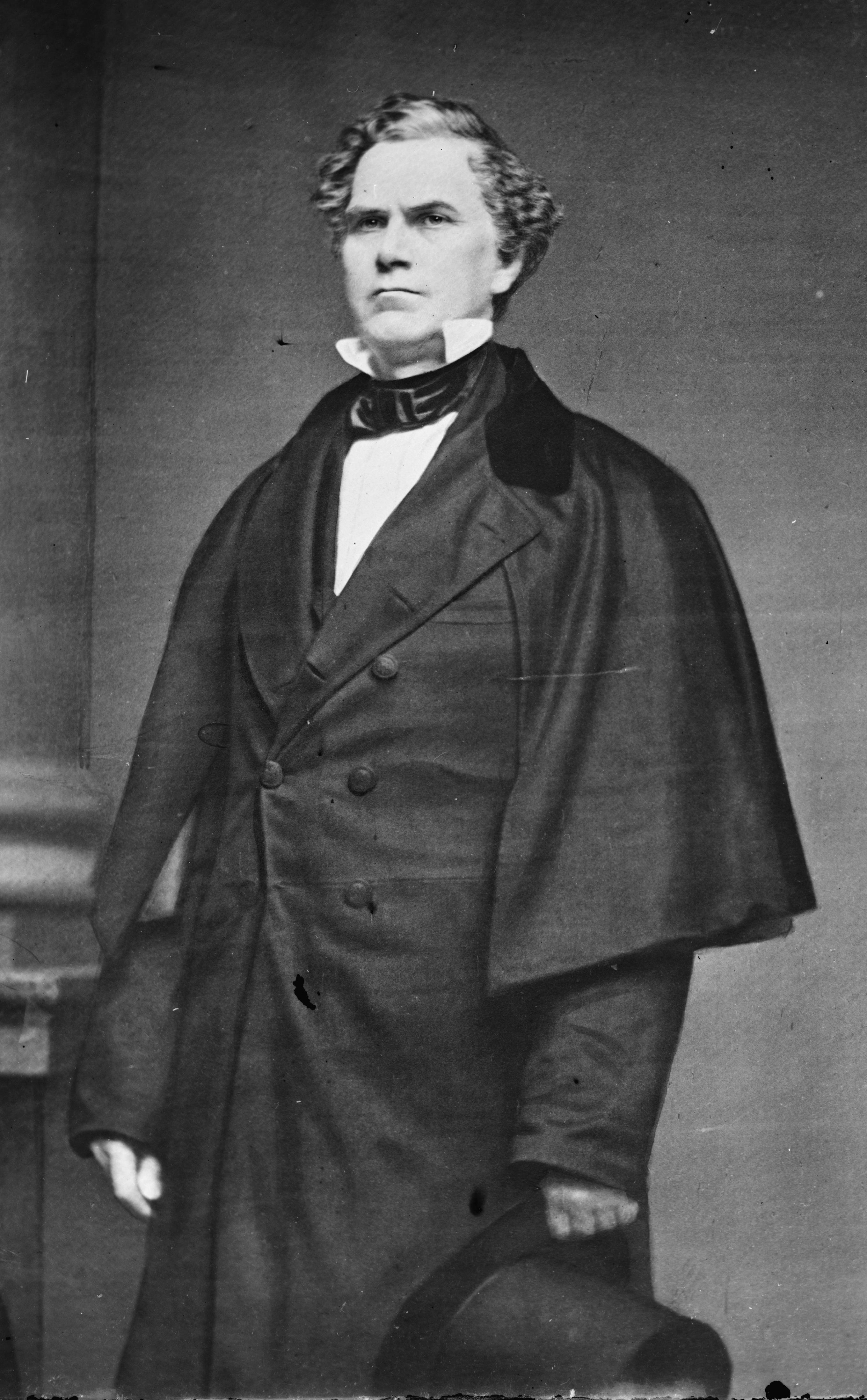
Historical · U.S. House · North Carolina · District 7
Francis Craige
Former U.S. Representative · North Carolina District 7 · 1853–1861 · Democratic
Francis Craige represented North Carolina's District 7 in the United States House of Representatives (1853–1861) for the Democratic party. The page below collects sourced biographical facts, term history, committee roles, and provenance for Craige.
Bioguide ID: C000862
Key facts
- Full name
- Francis Craige
- State
- North Carolina
- District
- District 7
- Party
- Democratic
- House service
- 1853–1861
- First House term
- 1853
- Status
- Left office
- Current term ends
- —
- Born
- 1811
- Bioguide ID
- C000862
- Committee assignments
- —
- Dataset version
- 1.20260606
Biographical narrative
944 words · sourced from the Wikipedia REST extract
Francis Craige was a prominent American politician and lawyer who served as a U.S. Representative for North Carolina's 7th congressional district. A member of the Democratic Party, Craige's congressional career spanned from 1853 to 1861, during which he participated in significant legislative activities and held various leadership roles. His early life and career were marked by a strong educational foundation and involvement in local journalism, which paved the way for his later political endeavors.
Early life and career
Francis Craige was born on March 13, 1811, in North Carolina, specifically near the south fork of the Yadkin River, approximately five miles from Salisbury. He was the youngest son of David and Mary Foster Craige. His early education took place at a classical private school in Salisbury, where he developed a strong academic background. In 1829, he graduated from the University of North Carolina at Chapel Hill, where he pursued studies in law. After completing his education, Craige was admitted to the bar in 1832 at the young age of 21, marking the beginning of his legal career in Salisbury.
In addition to his legal practice, Craige was involved in journalism. He served as the editor and proprietor of the Salisbury Western Carolinian from 1829 to 1831. Under his leadership, the newspaper became a significant advocate for the concept of Nullification in North Carolina, aligning with South Carolina's stance during its conflict with President Andrew Jackson. This early involvement in media and politics showcased Craige's commitment to public discourse and his emerging political ideology.
In 1836, Craige married Elizabeth Phifer Erwin, who was the granddaughter of Matthew Locke, a former member of Congress. The couple had five children together: James Alexander, Kerr, Francis Burton Jr., Mary Elizabeth, and Annie Erwin. Craige's family life was rooted in the community, and he remained active in local affairs throughout his life.
Craige's political career began in earnest when he was elected to the North Carolina State House of Representatives, where he served from 1832 to 1834. He was one of the last borough representatives during this period. Although he faced challenges in his political aspirations, including a defeat by Abraham Rencher in 1835 while vying for a congressional seat, Craige's determination and political acumen would soon lead him to greater opportunities.
House tenure
Francis Craige's tenure in the U.S. House of Representatives began on March 4, 1853, when he was elected as a Democrat to represent North Carolina's 7th congressional district. He served in the 33rd through the 36th Congresses, concluding his service on March 3, 1861. Over the course of his four terms, Craige was involved in various legislative activities and discussions that were pivotal to the period leading up to the Civil War.
During his time in Congress, Craige held several important positions, including serving as the Chairman of the Committee on Public Buildings and Grounds during the 33rd Congress. This role allowed him to influence decisions regarding federal infrastructure and public facilities, which were crucial to the growing nation. His leadership in this committee underscored his commitment to addressing the needs of his constituents and the broader public.
In addition to his congressional duties, Craige was also a delegate to the Provisional Congress of the Confederate States, where he participated in meetings held in Richmond, Virginia, from July 1861 to February 1862. This involvement reflected the political tensions of the time and Craige's alignment with the Southern cause during the Civil War. His participation in the Confederate Congress marked a significant chapter in his political career, as he navigated the complexities of a nation divided.
Legislative focus and committees
Throughout his congressional career, Francis Craige's legislative focus was shaped by the political climate of the time and his commitment to his constituents in North Carolina. As a member of the Democratic Party, he aligned himself with the party's principles and priorities, which often included issues related to states' rights, infrastructure development, and economic policies that favored agrarian interests.
Craige's role as Chairman of the Committee on Public Buildings and Grounds allowed him to advocate for the construction and maintenance of federal buildings, which were essential for the functioning of the government and the services it provided to the public. His leadership in this area demonstrated his understanding of the importance of infrastructure in supporting both local and national interests.
In addition to his work on public buildings, Craige's legislative activities were influenced by the broader national debates surrounding slavery, states' rights, and the impending conflict that would lead to the Civil War. His alignment with the Confederate cause during his later involvement in the Provisional Congress indicated his commitment to the Southern perspective during a tumultuous period in American history.
Despite the challenges he faced, including the political divisions of the era, Craige's contributions to the legislative process and his active participation in key committees reflected his dedication to serving his constituents and addressing the pressing issues of his time. His tenure in the House of Representatives was marked by a commitment to public service and a focus on the needs of his district, which he represented during a critical period in American history.
Francis Craige passed away on December 30, 1875, in Concord, North Carolina, while attending the Cabarrus County Superior Court. He was laid to rest in the Old English Cemetery in Salisbury, North Carolina. His legacy includes not only his contributions to the political landscape of his time but also his impact on the community he served. In recognition of his achievements, a freshman residence hall at the University of North Carolina at Chapel Hill bears his name, ensuring that his contributions to education and public service are remembered.
Notable legislation
Sponsored and co-sponsored legislation for Francis Craige is pending operator curation. The biographical narrative above carries the same provenance trail until per-bill rows are written.
Sources
- [1]https://en.wikipedia.org/wiki/F._Burton_CraigeWikipedia · retrieved 2026-06-06
Notable quotes
Sourced quotes for Francis Craige are pending operator curation. Narrative-scope provenance remains attached below.
Sources
- [1]https://en.wikipedia.org/wiki/F._Burton_CraigeWikipedia · retrieved 2026-06-06
Key positions
Curated policy positions for Francis Craige are pending operator review. The biographical narrative above carries the same provenance trail until per-topic positions are written.
Sources
- [1]https://en.wikipedia.org/wiki/F._Burton_CraigeWikipedia · retrieved 2026-06-06
Terms served
- 1853–1855U.S. House · Term 1 · Democratic
- 1855–1857U.S. House · Term 2 · Democratic
- 1857–1859U.S. House · Term 3 · Democratic
- 1859–1861U.S. House · Term 4 · Democratic
Sources & provenance
Every attributable claim above carries a per-section [N] marker that resolves to the corresponding URL below. Each entry records the upstream provider, the canonical URL, and the timestamp at which the source was retrieved by the ingest pipeline.
Key facts
- https://bioguide.congress.gov/search/bio/C000862bioguide · retrieved 2026-06-06
- https://www.govtrack.us/congress/members/402977govtrack · retrieved 2026-06-06
Biographical narrative
- https://en.wikipedia.org/wiki/F._Burton_Craigewikipedia · retrieved 2026-06-06
Find your representative
Every U.S. state elects representatives by district. Browse North Carolina’s delegation, the full former-representative roster, or explore the role and term length.
Related on The Candidate
- Preceded by James McKayEarlier holder of the North Carolina District 7 House seat · Democratic.Open
- Succeeded by Alexander JonesLater holder of the North Carolina District 7 House seat · Republican.Open
- Alfred GatlinFormer U.S. Representative · North Carolina District 1 · Crawford RepublicanOpen
- Clinton CobbFormer U.S. Representative · North Carolina District 1 · RepublicanOpen
- Eva ClaytonFormer U.S. Representative · North Carolina District 1 · DemocraticOpen
- Frank Ballance Jr.Former U.S. Representative · North Carolina District 1 · DemocraticOpen