
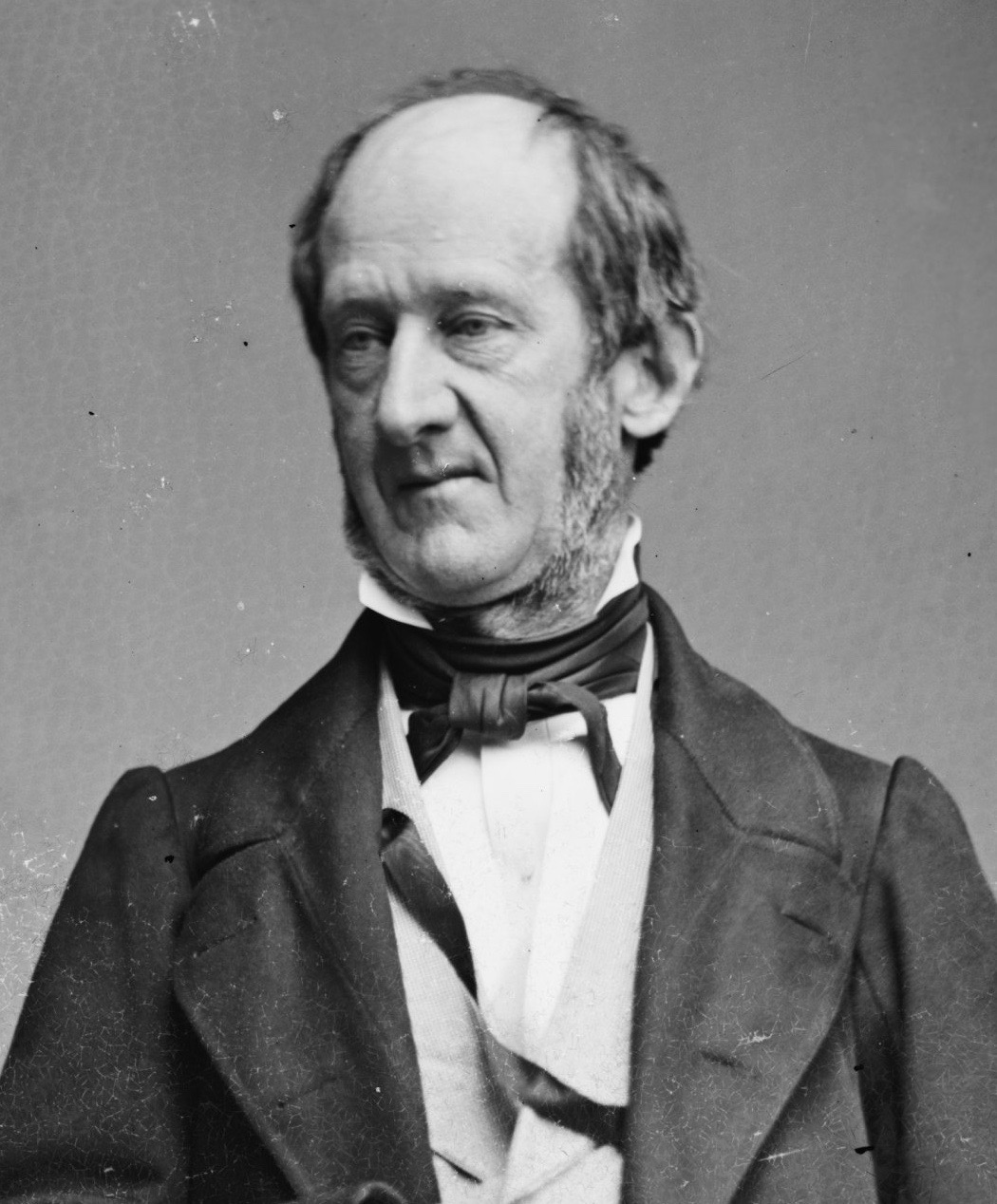
Historical · U.S. House · North Carolina · District 8
Edward Stanly
Former U.S. Representative · North Carolina District 8 · 1837–1853 · Whig
Edward Stanly represented North Carolina's District 8 in the United States House of Representatives (1837–1853) for the Whig party. The page below collects sourced biographical facts, term history, committee roles, and provenance for Stanly.
Bioguide ID: S000799
Key facts
- Full name
- Edward Stanly
- State
- North Carolina
- District
- District 8
- Party
- Whig
- House service
- 1837–1853
- First House term
- 1837
- Status
- Left office
- Current term ends
- —
- Born
- 1810
- Bioguide ID
- S000799
- Committee assignments
- —
- Dataset version
- 1.20260606
Biographical narrative
914 words · sourced from the Wikipedia REST extract
Edward Stanly was an American lawyer and politician who served as a U.S. Representative from North Carolina's 8th congressional district. A member of the Whig Party, Stanly was known for his oratory skills and his commitment to the Union during a time of increasing sectional tensions in the United States. His congressional career spanned five terms, beginning in 1837 and concluding in 1853. Following his time in Congress, he briefly served as the military governor of eastern North Carolina during the Civil War and later pursued a legal career in California.
Early life and career
Edward Stanly was born on January 10, 1810, in New Bern, North Carolina. He was the son of John Stanly, a former U.S. Representative, and was related to notable political figures, including his cousin George Edmund Badger, who served as a U.S. Senator. Stanly received his early education at New Bern Academy before attending the American Literary, Scientific and Military Academy, now known as Norwich University, from which he graduated in 1829. Following his graduation, he studied law and was admitted to the bar in 1832, establishing his legal practice in Beaufort County, North Carolina.
In 1836, Stanly entered politics by successfully running for a seat in the United States House of Representatives as a member of the Whig Party. His election marked the beginning of a significant political career that would see him serve five terms in Congress. During his first term, which began on March 4, 1837, Stanly quickly gained recognition for his oratory skills, earning a reputation as one of the most prominent speakers of his time in North Carolina. His ability to articulate the concerns and aspirations of his constituents contributed to his popularity and effectiveness as a legislator.
Stanly's political career was characterized by his strong support for the Union, particularly during a period when sectionalism was becoming increasingly pronounced in American politics. He was known for advocating a vision of the Union that emphasized cooperation among states rather than a strict adherence to states' rights. His leadership during this tumultuous time earned him the nickname "the Conqueror" during his re-election campaign in 1839.
House tenure
Stanly served in the U.S. House of Representatives during the Twenty-fifth, Twenty-sixth, and Twenty-seventh Congresses, with his tenure extending from March 4, 1837, to March 3, 1843. His time in Congress was marked by significant national debates, including issues related to slavery, state sovereignty, and the role of the federal government. However, in 1843, he faced a setback when he was unable to secure re-election due to unfavorable redistricting in North Carolina.
After his departure from Congress, Stanly returned to North Carolina, where he continued to be active in state politics. He served in the North Carolina House of Commons from 1844 to 1846 and again in 1848. During his time in the state legislature, he was elected Speaker of the House, a position he held from 1844 to 1846. His leadership in this role was noted for restoring dignity and impartiality to the proceedings of the House, which had previously been marred by political strife.
In 1847, Stanly briefly served as the Attorney General of North Carolina before returning to the national political scene. In 1849, he was re-elected to the U.S. House of Representatives, serving two additional terms until March 3, 1853. His decision not to seek a sixth term in 1853 marked the end of his congressional career, as he chose to relocate to California, where he continued his legal practice in San Francisco.
Legislative focus and committees
Throughout his congressional career, Stanly was involved in various legislative efforts that reflected the political climate of his time. His commitment to the Union and his opposition to the growing influence of sectionalism were central themes in his work. He was known for his ability to engage in debates on critical issues, including those related to the expansion of slavery and the rights of states versus the federal government.
Stanly's tenure in Congress coincided with significant national events, including the lead-up to the Civil War. His oratory skills and ability to articulate the concerns of his constituents allowed him to navigate the complex political landscape of the era. While specific details of his committee assignments and legislative initiatives are not extensively documented, his reputation as a leading orator and a proponent of Unionist principles suggests that he played a significant role in discussions surrounding key legislation of the time.
After leaving Congress, Stanly's political ambitions continued, as he sought the governorship of California in 1857 as a candidate for the Republican Party. Although he did not win this election, his continued involvement in politics demonstrated his enduring commitment to public service.
During the American Civil War, Stanly served as a general in the Union Army. His military service included an appointment as the military governor of eastern North Carolina, a position he held from May 1862 until his resignation in March 1863. His resignation stemmed from a disagreement with President Abraham Lincoln regarding the Emancipation Proclamation, reflecting the complexities of his views on slavery and governance.
After the war, Stanly returned to California, where he resumed his legal practice until his death on July 12, 1872, in San Francisco. He was interred in the Stanly family plot at Mountain View Cemetery in Oakland, California. His life and career reflect the dynamic political landscape of the mid-nineteenth century United States, marked by significant challenges and transformations that would shape the nation for years to come.
Notable legislation
Sponsored and co-sponsored legislation for Edward Stanly is pending operator curation. The biographical narrative above carries the same provenance trail until per-bill rows are written.
Sources
- [1]https://en.wikipedia.org/wiki/Edward_StanlyWikipedia · retrieved 2026-06-06
Notable quotes
Sourced quotes for Edward Stanly are pending operator curation. Narrative-scope provenance remains attached below.
Sources
- [1]https://en.wikipedia.org/wiki/Edward_StanlyWikipedia · retrieved 2026-06-06
Key positions
Curated policy positions for Edward Stanly are pending operator review. The biographical narrative above carries the same provenance trail until per-topic positions are written.
Sources
- [1]https://en.wikipedia.org/wiki/Edward_StanlyWikipedia · retrieved 2026-06-06
Terms served
- 1837–1839U.S. House · Term 1 · Whig
- 1839–1841U.S. House · Term 2 · Whig
- 1841–1843U.S. House · Term 3 · Whig
- 1849–1851U.S. House · Term 4 · Whig
- 1851–1853U.S. House · Term 5 · Whig
Sources & provenance
Every attributable claim above carries a per-section [N] marker that resolves to the corresponding URL below. Each entry records the upstream provider, the canonical URL, and the timestamp at which the source was retrieved by the ingest pipeline.
Key facts
- https://bioguide.congress.gov/search/bio/S000799bioguide · retrieved 2026-06-06
- https://www.govtrack.us/congress/members/410265govtrack · retrieved 2026-06-06
Biographical narrative
- https://en.wikipedia.org/wiki/Edward_Stanlywikipedia · retrieved 2026-06-06
Find your representative
Every U.S. state elects representatives by district. Browse North Carolina’s delegation, the full former-representative roster, or explore the role and term length.
Related on The Candidate
- Preceded by Daniel BarringerEarlier holder of the North Carolina District 8 House seat.Open
- Succeeded by Robert VanceLater holder of the North Carolina District 8 House seat · Democratic.Open
- Alfred GatlinFormer U.S. Representative · North Carolina District 1 · Crawford RepublicanOpen
- Clinton CobbFormer U.S. Representative · North Carolina District 1 · RepublicanOpen
- Eva ClaytonFormer U.S. Representative · North Carolina District 1 · DemocraticOpen
- Frank Ballance Jr.Former U.S. Representative · North Carolina District 1 · DemocraticOpen