
Historical · U.S. House · North Dakota · District 2
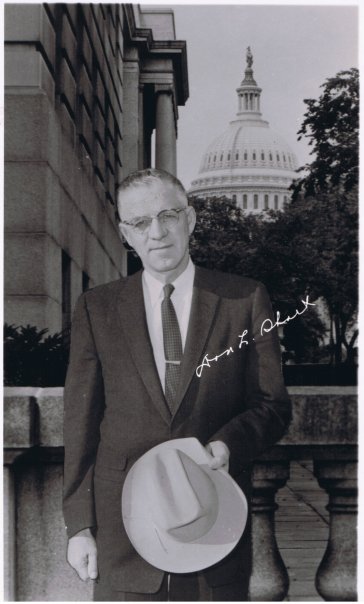
Don Short
Former U.S. Representative · North Dakota District 2 · 1959–1965 · Republican
Don Short represented North Dakota's District 2 in the United States House of Representatives (1959–1965) for the Republican party. The page below collects sourced biographical facts, term history, committee roles, and provenance for Short.
Bioguide ID: S000378
Key facts
- Full name
- Don Short
- State
- North Dakota
- District
- District 2
- Party
- Republican
- House service
- 1959–1965
- First House term
- 1959
- Status
- Left office
- Current term ends
- —
- Born
- 1903
- Bioguide ID
- S000378
- Committee assignments
- —
- Dataset version
- 1.20260605
Biographical narrative
850 words · sourced from the Wikipedia REST extract
Don Short was a U.S. Representative from North Dakota who served in the House of Representatives from 1959 to 1965. A member of the Republican Party, Short's political career was marked by his commitment to rural issues and his background as a cattle rancher. He represented North Dakota's 2nd congressional district during a time of significant social change in the United States, participating in key legislative discussions of the era.
Early life and career
Don Short was born on June 22, 1903, in Le Mars, Iowa, to Hugh Connoran and Anne Otely Corkery Short. Shortly after his birth, his family relocated to North Dakota, where they established the Short Ranch in Billings County, near the town of Medora. Short received his early education in public schools and later attended the St. James School in Faribault, Minnesota. He pursued further studies at Montana State University in Bozeman, where he completed an agricultural short course. In 1921, he graduated from Pillsbury Military Academy in Owatonna, Minnesota, before enrolling at the University of Minnesota, where he studied from 1922 to 1926 and became a member of the Phi Kappa Psi fraternity.
After completing his education, Short returned to manage the family ranch. He married Edith Esther Whittemore, a school teacher from Medora, in 1929. Together, they operated the ranch, which became an integral part of their lives. Their son, Con Short, also known as Buzzie, joined them in running the ranch until Don Short's health began to decline in his late 70s. In his later years, he was diagnosed with Alzheimer's disease, which affected his ability to engage in outdoor activities. Despite this, he continued to enjoy driving between Beach, North Dakota, and the ranch to check on cattle and crops until his passing on May 10, 1982, in Dickinson, North Dakota. He was interred in Medora Cemetery, where his gravestone is inscribed with the word "COWBOY," overlooking the town of Medora.
Short's initial foray into politics began with his role as a County Supervisor for the Farm Security Administration from 1937 to 1938. His political career gained momentum when he was elected to the North Dakota House of Representatives in 1957. This position provided him with a platform to address the concerns of his constituents and to advocate for rural issues.
House tenure
Don Short's tenure in the U.S. House of Representatives commenced on January 3, 1959, after he was elected as a Republican to represent North Dakota's 2nd congressional district. He served in the Eighty-sixth, Eighty-seventh, and Eighty-eighth Congresses, participating in legislative discussions during a period marked by significant social and political change in the United States. His time in office was characterized by a focus on issues pertinent to his constituents, particularly those related to agriculture and rural development.
During his congressional career, Short faced various challenges, including political opposition within his party. In 1964, he sought re-election but was ultimately defeated. This loss was attributed to the efforts of Senator Milton Young, a fellow Republican from North Dakota, who actively campaigned against him. Young's opposition was rooted in a disagreement over land use and development, particularly regarding a proposed highway through the scenic Badlands of North Dakota. Short's commitment to preserving the natural landscape led him to vote against the construction of the highway, a stance that ultimately aligned with the interests of conservationists and local residents.
Despite his defeat in 1964, Short's contributions to the House of Representatives were notable. He participated in key legislative votes, including his support for the Civil Rights Act of 1960, while opposing the Civil Rights Act of 1964. His voting record reflected the complexities of the political landscape during this transformative period in American history.
Legislative focus and committees
Throughout his congressional career, Don Short was primarily focused on issues that affected rural communities and the agricultural sector. His background as a cattle rancher informed his legislative priorities, as he sought to advocate for policies that would benefit farmers and ranchers in North Dakota. Short's commitment to rural issues was evident in his voting patterns and the initiatives he supported during his time in office.
In addition to his focus on agriculture, Short was involved in broader discussions regarding civil rights and social justice. His support for the Civil Rights Act of 1960 indicated an awareness of the changing social dynamics in the country, although his subsequent opposition to the Civil Rights Act of 1964 highlighted the complexities of political alignment during this era. Short's legislative decisions were often influenced by the perspectives of his constituents and the prevailing political climate.
Short's tenure in the House also included interactions with prominent political figures of the time, such as George H. W. Bush and Richard Nixon. These relationships underscored his engagement in national politics and his role in the broader Republican Party during the 1960s.
After leaving Congress, Short returned to his ranching operations and declined further political opportunities, focusing instead on his agricultural pursuits. His legacy as a U.S. Representative is marked by his dedication to rural issues and his efforts to balance development with conservation in North Dakota.
Notable legislation
Sponsored and co-sponsored legislation for Don Short is pending operator curation. The biographical narrative above carries the same provenance trail until per-bill rows are written.
Sources
- [1]https://en.wikipedia.org/wiki/Don_L._ShortWikipedia · retrieved 2026-06-05
Notable quotes
Sourced quotes for Don Short are pending operator curation. Narrative-scope provenance remains attached below.
Sources
- [1]https://en.wikipedia.org/wiki/Don_L._ShortWikipedia · retrieved 2026-06-05
Key positions
Curated policy positions for Don Short are pending operator review. The biographical narrative above carries the same provenance trail until per-topic positions are written.
Sources
- [1]https://en.wikipedia.org/wiki/Don_L._ShortWikipedia · retrieved 2026-06-05
Terms served
- 1959–1961U.S. House · Term 1 · Republican
- 1961–1963U.S. House · Term 2 · Republican
- 1963–1965U.S. House · Term 3 · Republican
Sources & provenance
Every attributable claim above carries a per-section [N] marker that resolves to the corresponding URL below. Each entry records the upstream provider, the canonical URL, and the timestamp at which the source was retrieved by the ingest pipeline.
Key facts
- https://bioguide.congress.gov/search/bio/S000378bioguide · retrieved 2026-06-05
- https://www.govtrack.us/congress/members/409872govtrack · retrieved 2026-06-05
Biographical narrative
- https://en.wikipedia.org/wiki/Don_L._Shortwikipedia · retrieved 2026-06-05
Find your representative
Every U.S. state elects representatives by district. Browse North Dakota’s delegation, the full former-representative roster, or explore the role and term length.
Related on The Candidate
- Preceded by Thomas HallEarlier holder of the North Dakota District 2 House seat · Republican.Open
- Succeeded by Rolland RedlinLater holder of the North Dakota District 2 House seat · Democratic.Open
- Henry HelgesenFormer U.S. Representative · North Dakota District 1 · RepublicanOpen
- Hjalmar NygaardFormer U.S. Representative · North Dakota District 1 · RepublicanOpen
- John BaerFormer U.S. Representative · North Dakota District 1 · RepublicanOpen
- Olger BurtnessFormer U.S. Representative · North Dakota District 1 · RepublicanOpen