
Historical · U.S. House · North Dakota · District 2
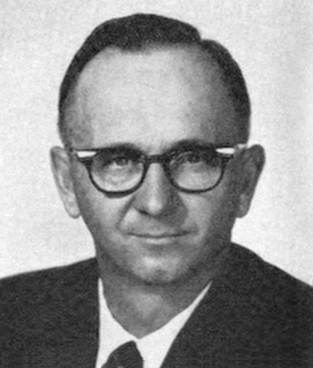
Rolland Redlin
Former U.S. Representative · North Dakota District 2 · 1965–1967 · Democratic
Rolland Redlin represented North Dakota's District 2 in the United States House of Representatives (1965–1967) for the Democratic party. The page below collects sourced biographical facts, term history, committee roles, and provenance for Redlin.
Bioguide ID: R000107
Key facts
- Full name
- Rolland Redlin
- State
- North Dakota
- District
- District 2
- Party
- Democratic
- House service
- 1965–1967
- First House term
- 1965
- Status
- Left office
- Current term ends
- —
- Born
- 1920
- Bioguide ID
- R000107
- Committee assignments
- —
- Dataset version
- 1.20260605
Biographical narrative
833 words · sourced from the Wikipedia REST extract
Rolland Redlin was a U.S. Representative from North Dakota who served in the House of Representatives from 1965 to 1967. A member of the Democratic-NPL Party, he was notable for being the first Democratic Representative to represent Western North Dakota. Prior to his tenure in Congress, Redlin held various positions in state politics, including a significant role in the North Dakota Senate. His legislative career was marked by a commitment to civil rights and public service, reflecting the political landscape of his time.
Early life and career
Rolland William Redlin was born on February 29, 1920. His early life and education laid the groundwork for his future involvement in politics. Redlin's formative years were spent in North Dakota, where he developed a strong connection to the community that would later shape his political career. He began his public service in the North Dakota Senate, where he first served from 1959 to 1963. This initial foray into politics provided him with valuable experience in governance and legislative processes.
After his first term in the state Senate, Redlin continued to engage with local political matters, ultimately returning to the North Dakota Senate in 1973. His long-standing commitment to public service was evident as he continued to represent his constituents for nearly three decades, culminating in his retirement in 2000. Throughout his career, Redlin was known for his dedication to the people of North Dakota, and he held various leadership roles, including serving as Senate President Pro Tempore from 1987 to 1989 and later in Minority Leadership during his final years in the Senate.
House tenure
Redlin's tenure in the U.S. House of Representatives began when he won election in 1964, unseating the incumbent Republican Don L. Short. This victory was significant as it marked a shift in the political landscape of Western North Dakota, where Redlin became the first Democratic Representative to hold office. His election was a reflection of the changing dynamics in the region, as voters sought representation that aligned with their interests and values.
During his time in Congress, which lasted from 1965 until 1967, Redlin participated in various legislative activities and contributed to discussions on key issues of the day. He was part of a broader movement within the Democratic Party that sought to address civil rights and social justice, aligning with national trends that emphasized the importance of these issues in American society. Redlin's commitment to civil rights was exemplified by his support for the Voting Rights Act of 1965, a landmark piece of legislation aimed at eliminating barriers to voting for African Americans and ensuring equal access to the electoral process.
Despite his efforts and contributions, Redlin faced challenges in maintaining his congressional seat. In 1966, he was defeated in his bid for re-election by Thomas Kleppe, a former mayor of Bismarck. Following this loss, Redlin made another attempt to return to Congress in 1968 but was unsuccessful, losing by a narrow margin. These electoral setbacks did not diminish his commitment to public service, as he continued to be active in state politics.
Legislative focus and committees
Throughout his congressional career, Rolland Redlin focused on issues that were pivotal to his constituents and reflective of the broader national discourse. His support for civil rights, particularly through his vote for the Voting Rights Act, highlighted his commitment to ensuring equal rights for all citizens. This legislative focus was consistent with the Democratic Party's platform during the 1960s, which sought to address social inequalities and promote civil liberties.
In addition to civil rights, Redlin's legislative priorities included various issues pertinent to North Dakota and its residents. His background in state politics provided him with insights into the unique challenges faced by his constituents, including agricultural concerns, economic development, and infrastructure needs. While specific committee assignments during his time in the House are not detailed, it is likely that he participated in discussions and initiatives that aligned with his interests and the needs of his district.
Redlin's reflections on his time in Congress reveal a deep concern for the state of political discourse in the United States. He expressed disappointment regarding the breakdown of civil discourse in American politics, indicating a desire for more constructive dialogue and cooperation among lawmakers. This perspective underscores the challenges faced by politicians in navigating the complexities of governance and public opinion during a time of significant social change.
Following his congressional tenure, Redlin returned to the North Dakota Senate, where he continued to influence state policy and serve his constituents until his retirement in 2000. His long career in public service, spanning both state and federal levels, exemplifies a dedication to the principles of democracy and civic engagement.
Rolland Redlin passed away on September 23, 2011, at the age of 91 in Rapid City, South Dakota, where he had moved to be closer to family. His legacy as a public servant is remembered in the context of North Dakota's political history and the broader narrative of civil rights progress in the United States.
Notable legislation
Sponsored and co-sponsored legislation for Rolland Redlin is pending operator curation. The biographical narrative above carries the same provenance trail until per-bill rows are written.
Sources
- [1]https://en.wikipedia.org/wiki/Rolland_W._RedlinWikipedia · retrieved 2026-06-05
Notable quotes
Sourced quotes for Rolland Redlin are pending operator curation. Narrative-scope provenance remains attached below.
Sources
- [1]https://en.wikipedia.org/wiki/Rolland_W._RedlinWikipedia · retrieved 2026-06-05
Key positions
Curated policy positions for Rolland Redlin are pending operator review. The biographical narrative above carries the same provenance trail until per-topic positions are written.
Sources
- [1]https://en.wikipedia.org/wiki/Rolland_W._RedlinWikipedia · retrieved 2026-06-05
Terms served
- 1965–1967U.S. House · Term 1 · Democratic
Sources & provenance
Every attributable claim above carries a per-section [N] marker that resolves to the corresponding URL below. Each entry records the upstream provider, the canonical URL, and the timestamp at which the source was retrieved by the ingest pipeline.
Key facts
- https://bioguide.congress.gov/search/bio/R000107bioguide · retrieved 2026-06-05
- https://www.govtrack.us/congress/members/409086govtrack · retrieved 2026-06-05
Biographical narrative
- https://en.wikipedia.org/wiki/Rolland_W._Redlinwikipedia · retrieved 2026-06-05
Find your representative
Every U.S. state elects representatives by district. Browse North Dakota’s delegation, the full former-representative roster, or explore the role and term length.
Related on The Candidate
- Preceded by Don ShortEarlier holder of the North Dakota District 2 House seat · Republican.Open
- Succeeded by Thomas KleppeLater holder of the North Dakota District 2 House seat · Republican.Open
- Henry HelgesenFormer U.S. Representative · North Dakota District 1 · RepublicanOpen
- Hjalmar NygaardFormer U.S. Representative · North Dakota District 1 · RepublicanOpen
- John BaerFormer U.S. Representative · North Dakota District 1 · RepublicanOpen
- Olger BurtnessFormer U.S. Representative · North Dakota District 1 · RepublicanOpen