
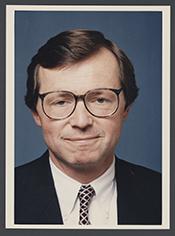
Historical · U.S. House · North Dakota · At-Large
Earl Pomeroy
Former U.S. Representative · North Dakota At-Large · 1993–2011 · Democratic
Earl Pomeroy represented North Dakota's At-Large in the United States House of Representatives (1993–2011) for the Democratic party. The page below collects sourced biographical facts, term history, committee roles, and provenance for Pomeroy.
Bioguide ID: P000422
Key facts
- Full name
- Earl Pomeroy
- State
- North Dakota
- District
- At-Large
- Party
- Democratic
- House service
- 1993–2011
- First House term
- 1993
- Status
- Left office
- Current term ends
- —
- Born
- 1952
- Bioguide ID
- P000422
- Committee assignments
- —
- Dataset version
- 1.20260605
Biographical narrative
973 words · sourced from the Wikipedia REST extract
Earl Pomeroy is an American lawyer and politician who served as the U.S. Representative for North Dakota's at-large congressional district from 1993 until 2011. A member of the Democratic Party, Pomeroy's political career spans nearly three decades, including significant roles in both state and federal government. He is noted for being the last Democrat to represent North Dakota in the U.S. House of Representatives as of 2026. Following his congressional tenure, he transitioned to a career in law, currently serving as senior counsel for a prominent Washington, D.C. law firm.
Early life and career
Earl Pomeroy was born on September 2, 1952, in Valley City, North Dakota, located in Barnes County in the eastern part of the state. He pursued higher education at Valley City State University, where he became a member of the Tau Kappa Epsilon fraternity. Pomeroy later transferred to the University of North Dakota at Grand Forks, where he earned a Bachelor of Arts degree in political science. His academic pursuits continued internationally, as he engaged in graduate research in legal history at Durham University in England.
Upon returning to North Dakota, Pomeroy attended the University of North Dakota School of Law, where he received his Juris Doctor degree in 1979. His contributions to the field of law and education were recognized in 2011 when he was awarded an honorary Doctor of Letters degree by the University of North Dakota.
Pomeroy began his political career in the North Dakota House of Representatives, where he was elected in 1980. His legislative experience continued to grow when he was appointed as North Dakota's Insurance Commissioner in 1985, a position he held until 1992. This role allowed him to gain valuable insights into state governance and public policy, setting the stage for his future endeavors in the U.S. Congress.
House tenure
Earl Pomeroy was first elected to the U.S. House of Representatives in 1992, representing North Dakota's at-large congressional district. He served a total of nine terms in the House, with his first term commencing in 1993 and concluding on January 3, 2011. Throughout his congressional career, Pomeroy was known for his active participation in various committees and coalitions, which shaped his legislative priorities and influence.
During his time in the House, Pomeroy was a member of the Committee on Agriculture, where he served on several subcommittees, including those focused on conservation, credit, energy, and research, as well as general farm commodities and risk management. Additionally, he was a member of the Committee on Ways and Means, which is responsible for taxation and revenue-related legislation. Within this committee, he participated in subcommittees on trade, health, and social security, where he served as chair of the Social Security subcommittee.
Pomeroy's political career was characterized by his involvement in bipartisan efforts, notably as a co-chair of the Rural Health Care Coalition, which aimed to address health care issues affecting rural communities. He was also a member of the Blue Dog Coalition, a group of moderate Democrats focused on fiscal responsibility and centrist policies.
Legislative focus and committees
Throughout his congressional tenure, Earl Pomeroy focused on a variety of legislative issues that reflected the interests and needs of his constituents in North Dakota. His early support for the Iraq War in 2002 evolved over time, leading him to express opposition to the conflict and advocate for the well-being of U.S. soldiers deployed overseas. He voiced concerns regarding the troop surge plan proposed by the Bush administration, emphasizing the importance of ensuring that military missions had a reasonable chance of success and that soldiers received adequate support during their deployments.
Pomeroy was also a proponent of health care reform, voting in favor of the Affordable Health Care for America Act in 2009. He acknowledged the imperfections of the existing health care system while advocating for improvements that would benefit the American public.
Another significant aspect of Pomeroy's legislative agenda was his strong support for the adoption tax credit, which allowed parents to deduct expenses incurred during the adoption process. His personal connection to this issue was highlighted when he brought his adopted daughter to the House floor on the day of the vote, underscoring his commitment to promoting family-friendly policies.
Pomeroy's electoral campaigns reflected a competitive political landscape in North Dakota. He was first elected to the House with a modest victory margin, and while he faced challenges in subsequent elections, he gradually increased his support among voters. In 2004, he achieved a notable re-election victory, securing nearly 60 percent of the vote. His popularity continued in the 2006 and 2008 elections, where he won re-election with significant margins. However, his tenure came to an end in 2010 when he was defeated by Republican candidate Rick Berg, marking a shift in the political representation of North Dakota's at-large district.
After leaving Congress, Pomeroy transitioned to the private sector, joining the law firm Alston & Bird as a lobbyist, where he focuses on health care issues. His swift move to the lobbying profession was notable, as he registered as a lobbyist shortly after his congressional career ended.
In his personal life, Pomeroy is a Presbyterian and has two children, Kathryn and Scott. He married Mary Berglund in a private ceremony at his family's homestead in Valley City, North Dakota, in 2009. Pomeroy has also been involved in sports, having been a charter member of the rugby club at the University of North Dakota, and he played rugby during his time at Durham University.
Earl Pomeroy's career in public service and law reflects a commitment to addressing the needs of his constituents and engaging in the legislative process at both the state and federal levels. His legacy includes his role as a prominent Democratic figure in North Dakota's political history and his contributions to various legislative initiatives during his time in the U.S. House of Representatives.
Notable legislation
Sponsored and co-sponsored legislation for Earl Pomeroy is pending operator curation. The biographical narrative above carries the same provenance trail until per-bill rows are written.
Sources
- [1]https://en.wikipedia.org/wiki/Earl_PomeroyWikipedia · retrieved 2026-06-05
Notable quotes
Sourced quotes for Earl Pomeroy are pending operator curation. Narrative-scope provenance remains attached below.
Sources
- [1]https://en.wikipedia.org/wiki/Earl_PomeroyWikipedia · retrieved 2026-06-05
Key positions
Curated policy positions for Earl Pomeroy are pending operator review. The biographical narrative above carries the same provenance trail until per-topic positions are written.
Sources
- [1]https://en.wikipedia.org/wiki/Earl_PomeroyWikipedia · retrieved 2026-06-05
Terms served
- 1993–1995U.S. House · Term 1 · Democratic
- 1995–1997U.S. House · Term 2 · Democratic
- 1997–1999U.S. House · Term 3 · Democratic
- 1999–2001U.S. House · Term 4 · Democratic
- 2001–2003U.S. House · Term 5 · Democratic
- 2003–2005U.S. House · Term 6 · Democratic
- 2005–2007U.S. House · Term 7 · Democratic
- 2007–2009U.S. House · Term 8 · Democratic
- 2009–2011U.S. House · Term 9 · Democratic
Sources & provenance
Every attributable claim above carries a per-section [N] marker that resolves to the corresponding URL below. Each entry records the upstream provider, the canonical URL, and the timestamp at which the source was retrieved by the ingest pipeline.
Key facts
- https://bioguide.congress.gov/search/bio/P000422bioguide · retrieved 2026-06-05
- http://www.house.gov/pomeroyhouse.gov · retrieved 2026-06-05
Biographical narrative
- https://en.wikipedia.org/wiki/Earl_Pomeroywikipedia · retrieved 2026-06-05
Find your representative
Every U.S. state elects representatives by district. Browse North Dakota’s delegation, the full former-representative roster, or explore the role and term length.
Related on The Candidate
- Preceded by Otto KruegerEarlier holder of the North Dakota At-Large House seat · Republican.Open
- Succeeded by Rick BergLater holder of the North Dakota At-Large House seat · Republican.Open
- Henry HelgesenFormer U.S. Representative · North Dakota District 1 · RepublicanOpen
- Hjalmar NygaardFormer U.S. Representative · North Dakota District 1 · RepublicanOpen
- John BaerFormer U.S. Representative · North Dakota District 1 · RepublicanOpen
- Olger BurtnessFormer U.S. Representative · North Dakota District 1 · RepublicanOpen