
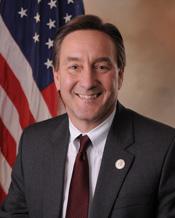
Historical · U.S. House · North Dakota · At-Large
Rick Berg
Former U.S. Representative · North Dakota At-Large · 2011–2013 · Republican
Rick Berg represented North Dakota's At-Large in the United States House of Representatives (2011–2013) for the Republican party. The page below collects sourced biographical facts, term history, committee roles, and provenance for Berg.
Bioguide ID: B001272
Key facts
- Full name
- Rick Berg
- State
- North Dakota
- District
- At-Large
- Party
- Republican
- House service
- 2011–2013
- First House term
- 2011
- Status
- Left office
- Current term ends
- —
- Born
- 1959
- Bioguide ID
- B001272
- Committee assignments
- —
- Dataset version
- 1.20260605
Biographical narrative
885 words · sourced from the Wikipedia REST extract
Rick Berg is a former U.S. Representative who served North Dakota's at-large congressional district from 2011 to 2013. A member of the Republican Party, Berg's political career began in the North Dakota House of Representatives, where he held various leadership positions before transitioning to federal office. He is known for his involvement in committees that address fiscal policy and rural health care, and he has been active in advocating for business interests and conservative social policies.
Early life and career
Rick Berg was born on August 16, 1959, in Maddock, North Dakota. He grew up on a farm in Hettinger, where his father worked as a large animal veterinarian and his mother was a writer. His family's background includes Norwegian heritage, as his grandfather immigrated to the United States from Norway. Berg completed his secondary education at Hettinger High School and subsequently earned a wrestling scholarship to the North Dakota State College of Science. After one year, he transferred to North Dakota State University, where he graduated with a Bachelor of Arts degree in agricultural economics.
Following his education, Berg co-founded Midwest Management Company in 1982, a real estate management firm based in Fargo, North Dakota. The company underwent a rebranding in 1994, becoming Goldmark Property Management. In 1987, he transitioned to an affiliate commercial real estate company that was spun off from Midwest Management. In 1996, he played a pivotal role in founding Goldmark Commercial Corporation, which has since been renamed Goldmark Schlossman Commercial Real Estate.
House tenure
Berg's political career began in the North Dakota House of Representatives, where he first ran for office in 1984, winning a seat in the 10th House District, which is located in Fargo. He successfully secured re-election every four years, establishing a long-standing presence in state politics. Following redistricting in 2002, he ran for a seat in the newly drawn 45th House District, winning with 31% of the vote. His re-election in 2006 saw him garner 28% of the votes.
During his tenure in the state legislature, Berg held several leadership roles. He became chair of the House Republican caucus in 1991 and briefly served as speaker of the House in 1993. In 2003, he ascended to the position of House majority leader. His time as speaker was marked by his proposal of a new education funding system aimed at creating more equitable payments. Berg was also known for his support of President George W. Bush's initiative to partially privatize Social Security through private accounts in 2005. His legislative actions included a controversial vote in 2007 on a bill that sought to classify abortion as a class AA felony, even in cases of rape and incest. For his contributions to the state, he received accolades such as the Petroleum Council's Legislator of the Year and the Greater North Dakotan award from the North Dakota Chamber of Commerce in 2009.
Berg announced his candidacy for the U.S. House of Representatives on January 20, 2010. He won the Republican nomination at the state convention and subsequently challenged incumbent Democratic Representative Earl Pomeroy for North Dakota's at-large congressional seat. In the general election, Berg successfully unseated Pomeroy, receiving 55% of the vote and becoming the first Republican to represent North Dakota's at-large congressional district since 1980. At the time of his election, he was noted as one of the wealthiest members of Congress.
Legislative focus and committees
During his time in the U.S. House of Representatives, which began in 2011, Berg served on the House Ways and Means Committee, where he focused on issues related to taxation and fiscal policy. He was an advocate for a balanced-budget amendment to the Constitution and supported significant budgetary reforms, including the Paul Ryan budget plan, which aimed to restructure Medicare and Medicaid.
Berg was also known for his strong support of gun rights, having voted in favor of the National Right-to-Carry Reciprocity Act and receiving high ratings from the NRA Political Victory Fund. His commitment to rural health care was evident in his efforts to protect the critical access hospital program, which provides essential support to rural hospitals in North Dakota.
In addition to his fiscal and health care initiatives, Berg was active in environmental policy, advocating for the reduction of EPA regulations that he argued could hinder small businesses. He proposed drilling for oil in federal lands, including areas within North Dakota's Theodore Roosevelt National Park, as a means to generate funding for Social Security.
Berg's social policy positions included a staunch anti-abortion stance. He voted to prohibit the use of federal funds for health care plans that cover abortions and was a member of the Congressional Prayer Caucus, reflecting his alignment with conservative social values.
Throughout his congressional career, Berg was a member of various caucuses, including the Congressional Western Caucus, the Unmanned Systems Caucus, and the Rural Health Care Coalition, among others. These affiliations underscored his focus on issues pertinent to his constituents and his commitment to advocating for rural and agricultural interests.
In 2011, Berg announced his candidacy for the U.S. Senate seat being vacated by Democratic incumbent Kent Conrad. However, he lost the election to former state Attorney General Heidi Heitkamp by a narrow margin. Following his congressional tenure, which ended on January 3, 2013, Berg continued to engage in public service and business endeavors.
Notable legislation
Sponsored and co-sponsored legislation for Rick Berg is pending operator curation. The biographical narrative above carries the same provenance trail until per-bill rows are written.
Sources
- [1]https://en.wikipedia.org/wiki/Rick_BergWikipedia · retrieved 2026-06-05
Notable quotes
Sourced quotes for Rick Berg are pending operator curation. Narrative-scope provenance remains attached below.
Sources
- [1]https://en.wikipedia.org/wiki/Rick_BergWikipedia · retrieved 2026-06-05
Key positions
Curated policy positions for Rick Berg are pending operator review. The biographical narrative above carries the same provenance trail until per-topic positions are written.
Sources
- [1]https://en.wikipedia.org/wiki/Rick_BergWikipedia · retrieved 2026-06-05
Terms served
- 2011–2013U.S. House · Term 1 · Republican
Sources & provenance
Every attributable claim above carries a per-section [N] marker that resolves to the corresponding URL below. Each entry records the upstream provider, the canonical URL, and the timestamp at which the source was retrieved by the ingest pipeline.
Key facts
- https://bioguide.congress.gov/search/bio/B001272bioguide · retrieved 2026-06-05
- http://berg.house.gov/house.gov · retrieved 2026-06-05
Biographical narrative
- https://en.wikipedia.org/wiki/Rick_Bergwikipedia · retrieved 2026-06-05
Find your representative
Every U.S. state elects representatives by district. Browse North Dakota’s delegation, the full former-representative roster, or explore the role and term length.
Related on The Candidate
- Preceded by Earl PomeroyEarlier holder of the North Dakota At-Large House seat · Democratic.Open
- Succeeded by Kelly ArmstrongLater holder of the North Dakota At-Large House seat · Republican.Open
- Henry HelgesenFormer U.S. Representative · North Dakota District 1 · RepublicanOpen
- Hjalmar NygaardFormer U.S. Representative · North Dakota District 1 · RepublicanOpen
- John BaerFormer U.S. Representative · North Dakota District 1 · RepublicanOpen
- Olger BurtnessFormer U.S. Representative · North Dakota District 1 · RepublicanOpen