
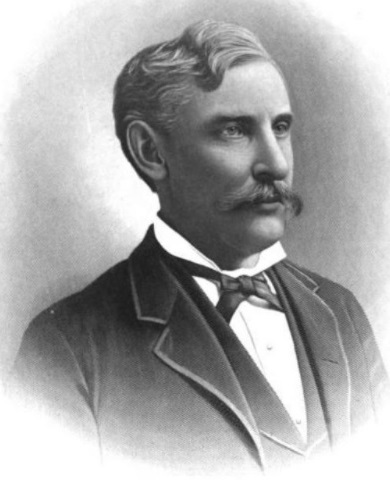
Historical · U.S. House · Nebraska · District 1
Archibald Weaver
Former U.S. Representative · Nebraska District 1 · 1883–1887 · Republican
Archibald Weaver represented Nebraska's District 1 in the United States House of Representatives (1883–1887) for the Republican party. The page below collects sourced biographical facts, term history, committee roles, and provenance for Weaver.
Bioguide ID: W000223
Key facts
- Full name
- Archibald Weaver
- State
- Nebraska
- District
- District 1
- Party
- Republican
- House service
- 1883–1887
- First House term
- 1883
- Status
- Left office
- Current term ends
- —
- Born
- 1843
- Bioguide ID
- W000223
- Committee assignments
- —
- Dataset version
- 1.20260606
Biographical narrative
946 words · sourced from the Wikipedia REST extract
Archibald Weaver was an American lawyer and politician who served as a U.S. Representative for Nebraska's 1st congressional district from 1883 to 1887. A member of the Republican Party, Weaver's political career was marked by his involvement in both the legislative and judicial branches of Nebraska's government. He is also recognized for his familial connections to Nebraska politics, being the father of Governor Arthur J. Weaver and the grandfather of subsequent Nebraska politicians.
Early life and career
Archibald Weaver was born on April 15, 1843, in Dundaff, Pennsylvania. His early education was completed at Wyoming Seminary, a well-regarded institution located in Kingston, Pennsylvania. Following his graduation, Weaver transitioned into a role as a faculty member at the same seminary, where he taught from 1864 until 1867. This experience in education likely contributed to his later pursuits in law and politics, as it provided him with a foundation in public speaking and civic engagement.
In 1869, Weaver graduated from Harvard Law School, one of the most prestigious legal institutions in the United States. After completing his legal education, he was admitted to the bar in Boston, Massachusetts, which allowed him to practice law professionally. Shortly thereafter, he moved to Falls City, Nebraska, where he began his legal career. This relocation was significant, as it coincided with a period of considerable growth and development in Nebraska, a state that was still in its formative years following its admission to the Union in 1867.
Weaver's legal career in Nebraska quickly expanded beyond private practice. He participated in the state constitutional conventions of 1871 and 1875, which were crucial in shaping Nebraska's governance and legal framework. His involvement in these conventions demonstrated his commitment to public service and his interest in the legal underpinnings of the state. In 1872, he was elected as the district attorney for the first district of Nebraska, a role that further solidified his reputation in the legal community. His tenure as district attorney allowed him to gain valuable experience in the prosecution of criminal cases and the administration of justice.
Weaver's judicial career began in earnest when he was elected as a judge for the first judicial district of Nebraska in 1875. He was re-elected to this position in 1879, indicating a strong level of support from his constituents and a recognition of his capabilities as a jurist. During his time on the bench, Weaver would have been responsible for presiding over a variety of cases, contributing to the development of legal precedents in the state.
House tenure
In 1883, Archibald Weaver transitioned from the judiciary to the legislative branch when he was elected as a Republican to the Forty-eighth United States Congress. This marked the beginning of his congressional career, during which he represented Nebraska's 1st congressional district. His election to Congress came at a time when the Republican Party was gaining prominence in national politics, particularly in the wake of the Civil War and during the Reconstruction era.
Weaver served in the House of Representatives until 1887, during which time he was re-elected to the Forty-ninth United States Congress. His legislative tenure was characterized by his engagement in the political issues of the day, although specific details regarding the bills he sponsored or supported during his time in office are not documented in the available records. His decision not to seek re-election in 1886 suggests a strategic choice, possibly influenced by the political landscape or personal considerations at the time.
After completing his second term in Congress, Weaver sought to further his political career by running for the United States Senate in 1887. However, he was unsuccessful in this endeavor. Following his defeat, he returned to his legal practice in Falls City, where he continued to contribute to the legal profession and engage with the community.
Legislative focus and committees
While specific details about Archibald Weaver's legislative focus during his time in Congress are limited, it is important to consider the broader context of the political environment in which he served. The late 19th century was a period of significant change in the United States, marked by industrialization, westward expansion, and various social and economic challenges. As a representative from Nebraska, Weaver would have been involved in discussions related to land use, agricultural policy, and the needs of a rapidly growing state.
Weaver's background as a lawyer and judge likely informed his perspectives on legal and judicial matters, which may have influenced his contributions to legislative debates. Additionally, his experience in state government and his understanding of the needs of his constituents would have played a role in shaping his approach to policy-making.
During his time in the House, Weaver would have participated in various committees, although specific committee assignments are not detailed in the available records. These committees would have provided him with opportunities to engage with specific issues, advocate for his constituents, and collaborate with fellow legislators on matters of national importance.
Archibald Weaver's political legacy is also intertwined with his family. He was the father of Arthur J. Weaver, who later served as the Governor of Nebraska. This familial connection to Nebraska politics continued with his grandchildren, Arthur J. Weaver Jr. and Phillip Hart Weaver, who also became involved in public service. This lineage underscores the lasting impact of Weaver's political career on subsequent generations in Nebraska.
Weaver's life came to an end on April 18, 1887, just a few days after his death, he was laid to rest in Steele Cemetery in Falls City. His contributions to both the legal and political landscapes of Nebraska remain a part of the state's history, reflecting the complexities and challenges of governance during a transformative era in American history.
Notable legislation
Sponsored and co-sponsored legislation for Archibald Weaver is pending operator curation. The biographical narrative above carries the same provenance trail until per-bill rows are written.
Sources
- [1]https://en.wikipedia.org/wiki/Archibald_J._WeaverWikipedia · retrieved 2026-06-06
Notable quotes
Sourced quotes for Archibald Weaver are pending operator curation. Narrative-scope provenance remains attached below.
Sources
- [1]https://en.wikipedia.org/wiki/Archibald_J._WeaverWikipedia · retrieved 2026-06-06
Key positions
Curated policy positions for Archibald Weaver are pending operator review. The biographical narrative above carries the same provenance trail until per-topic positions are written.
Sources
- [1]https://en.wikipedia.org/wiki/Archibald_J._WeaverWikipedia · retrieved 2026-06-06
Terms served
- 1883–1885U.S. House · Term 1 · Republican
- 1885–1887U.S. House · Term 2 · Republican
Sources & provenance
Every attributable claim above carries a per-section [N] marker that resolves to the corresponding URL below. Each entry records the upstream provider, the canonical URL, and the timestamp at which the source was retrieved by the ingest pipeline.
Key facts
- https://bioguide.congress.gov/search/bio/W000223bioguide · retrieved 2026-06-06
- https://www.govtrack.us/congress/members/411391govtrack · retrieved 2026-06-06
Biographical narrative
- https://en.wikipedia.org/wiki/Archibald_J._Weaverwikipedia · retrieved 2026-06-06
Find your representative
Every U.S. state elects representatives by district. Browse Nebraska’s delegation, the full former-representative roster, or explore the role and term length.
Related on The Candidate
- Preceded by Frank WelchEarlier holder of the Nebraska District 1 House seat · Republican.Open
- Succeeded by John McShaneLater holder of the Nebraska District 1 House seat · Democratic.Open
- Charles ReavisFormer U.S. Representative · Nebraska District 1 · RepublicanOpen
- Charles ThoneFormer U.S. Representative · Nebraska District 1 · RepublicanOpen
- Clair CallanFormer U.S. Representative · Nebraska District 1 · DemocraticOpen
- Doug BereuterFormer U.S. Representative · Nebraska District 1 · RepublicanOpen