
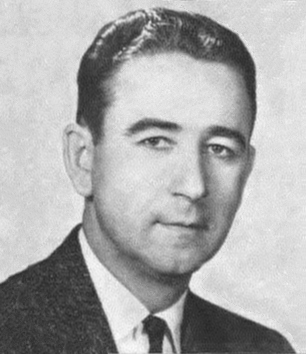
Historical · U.S. House · Nebraska · District 1
Clair Callan
Former U.S. Representative · Nebraska District 1 · 1965–1967 · Democratic
Clair Callan represented Nebraska's District 1 in the United States House of Representatives (1965–1967) for the Democratic party. The page below collects sourced biographical facts, term history, committee roles, and provenance for Callan.
Bioguide ID: C000054
Key facts
- Full name
- Clair Callan
- State
- Nebraska
- District
- District 1
- Party
- Democratic
- House service
- 1965–1967
- First House term
- 1965
- Status
- Left office
- Current term ends
- —
- Born
- 1920
- Bioguide ID
- C000054
- Committee assignments
- —
- Dataset version
- 1.20260605
Biographical narrative
860 words · sourced from the Wikipedia REST extract
Clair Callan was an American politician who served as a U.S. Representative for Nebraska's 1st congressional district from 1965 to 1967. A member of the Democratic Party, Callan's political career was marked by his contributions to significant legislation, including the establishment of Medicare and Medicaid, as well as the Voting Rights Act of 1965. His tenure in Congress was characterized by a narrow victory over an incumbent and a subsequent defeat in his bid for reelection.
Early life and career
Clair Armstrong Callan was born on March 29, 1920, in Odell, Nebraska. He completed his primary education at Odell High School, graduating in 1938. Following high school, Callan pursued higher education at Nebraska State Teachers College, now known as Peru State College, where he graduated in 1942. His early life was influenced by his family's involvement in local governance; his father, John Callan, was a participant in Nebraska's first state legislative session.
During World War II, Callan served in the United States Navy, attaining the rank of lieutenant. He was assigned to a destroyer in the Pacific Theater, where he contributed to the war effort. After the war concluded, Callan returned to his hometown of Odell, where he became involved in the family business, Callan Hardware and Implement, which provided him with experience in entrepreneurship and community engagement.
In addition to his business pursuits, Callan was active in local governance. He served on various boards, including the Odell Village Board, the Odell School Board, the Gage County School Reorganization Board, the Gage County Fair Board, and the Gage County Extension Board. His leadership roles extended to chairing the Governor's Committee on State Government Reorganization Board and the Nebraska Power Review Board. Alongside his political and business activities, Callan also worked as a farmer, further grounding him in the agricultural community of Nebraska.
House tenure
Clair Callan's political career at the federal level began when he ran for the U.S. House of Representatives in 1962, seeking to represent Nebraska's 1st congressional district. In this initial attempt, he faced incumbent Republican Ralph Beermann but was unsuccessful, losing the election by a margin of 50% to 44%. Despite this setback, Callan remained committed to his political aspirations and sought a rematch in the following election cycle.
In 1964, Callan successfully defeated Beermann, winning the election with a narrow margin of 51% to 49%. This victory coincided with a national trend in which the Democratic Party gained a significant number of seats in the House of Representatives. Callan's term in Congress began on January 3, 1965, and he served until January 3, 1967. His time in office was marked by active participation in legislative processes and a focus on issues relevant to his constituents.
During his tenure, Callan was involved in the development of key legislation that had a lasting impact on American society. He played a role in the creation of Medicare and Medicaid, programs that provided health care coverage to millions of Americans, particularly the elderly and low-income individuals. Additionally, he contributed to the Voting Rights Act of 1965, a landmark piece of legislation aimed at eliminating racial discrimination in voting practices.
Despite his legislative achievements, Callan faced challenges in his bid for reelection in 1966. He was narrowly defeated by Republican candidate Robert V. Denney, marking the end of his congressional career. Callan attempted to regain his seat in a rematch against Denney in 1968 but was unsuccessful once again.
Legislative focus and committees
During his time in the House of Representatives, Clair Callan focused on several key areas that reflected the needs and interests of his constituents in Nebraska's 1st congressional district. His involvement in the development of Medicare and Medicaid highlighted his commitment to improving health care access for vulnerable populations. These programs have since become integral components of the American health care system, providing essential services to millions.
Callan's participation in the Voting Rights Act of 1965 demonstrated his dedication to civil rights and the protection of democratic processes. This legislation aimed to dismantle barriers that prevented African Americans and other minority groups from exercising their right to vote, marking a significant step forward in the struggle for equality in the United States.
While specific details regarding the committees on which Callan served during his congressional tenure are not available, it is evident that his legislative focus aligned with the broader Democratic agenda of the 1960s, which sought to address social issues and promote civil rights. His contributions to significant legislation during this period underscore his role in shaping policies that aimed to improve the lives of Americans.
After leaving Congress, Callan continued to engage in public service and business. He served as the Deputy Administrator of the Rural Electrification Administration from 1967 to 1968. In the years that followed, he held leadership positions in various organizations, including serving as president of Allied Industries International, Inc. and Agri-Tech in Nashville, Tennessee.
Clair Callan passed away on May 28, 2005, in Fairbury, Nebraska, leaving behind a legacy of public service and contributions to American legislation. His career reflects the complexities of mid-20th century American politics and the ongoing efforts to address social issues through legislative action.
Notable legislation
Sponsored and co-sponsored legislation for Clair Callan is pending operator curation. The biographical narrative above carries the same provenance trail until per-bill rows are written.
Sources
- [1]https://en.wikipedia.org/wiki/Clair_A._CallanWikipedia · retrieved 2026-06-05
Notable quotes
Sourced quotes for Clair Callan are pending operator curation. Narrative-scope provenance remains attached below.
Sources
- [1]https://en.wikipedia.org/wiki/Clair_A._CallanWikipedia · retrieved 2026-06-05
Key positions
Curated policy positions for Clair Callan are pending operator review. The biographical narrative above carries the same provenance trail until per-topic positions are written.
Sources
- [1]https://en.wikipedia.org/wiki/Clair_A._CallanWikipedia · retrieved 2026-06-05
Terms served
- 1965–1967U.S. House · Term 1 · Democratic
Sources & provenance
Every attributable claim above carries a per-section [N] marker that resolves to the corresponding URL below. Each entry records the upstream provider, the canonical URL, and the timestamp at which the source was retrieved by the ingest pipeline.
Key facts
- https://bioguide.congress.gov/search/bio/C000054bioguide · retrieved 2026-06-05
- https://www.govtrack.us/congress/members/402213govtrack · retrieved 2026-06-05
Biographical narrative
- https://en.wikipedia.org/wiki/Clair_A._Callanwikipedia · retrieved 2026-06-05
Find your representative
Every U.S. state elects representatives by district. Browse Nebraska’s delegation, the full former-representative roster, or explore the role and term length.
Related on The Candidate
- Preceded by Ralph BeermannEarlier holder of the Nebraska District 1 House seat · Republican.Open
- Succeeded by Robert DenneyLater holder of the Nebraska District 1 House seat · Republican.Open
- Archibald WeaverFormer U.S. Representative · Nebraska District 1 · RepublicanOpen
- Charles ReavisFormer U.S. Representative · Nebraska District 1 · RepublicanOpen
- Charles ThoneFormer U.S. Representative · Nebraska District 1 · RepublicanOpen
- Doug BereuterFormer U.S. Representative · Nebraska District 1 · RepublicanOpen