
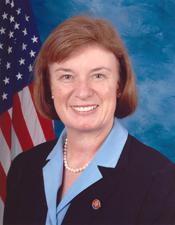
Historical · U.S. House · New Hampshire · District 1
Carol Shea-Porter
Former U.S. Representative · New Hampshire District 1 · 2007–2019 · Democratic
Carol Shea-Porter represented New Hampshire's District 1 in the United States House of Representatives (2007–2019) for the Democratic party. The page below collects sourced biographical facts, term history, committee roles, and provenance for Shea-Porter.
Bioguide ID: S001170
Key facts
- Full name
- Carol Shea-Porter
- State
- New Hampshire
- District
- District 1
- Party
- Democratic
- House service
- 2007–2019
- First House term
- 2007
- Status
- Left office
- Current term ends
- —
- Born
- 1952
- Bioguide ID
- S001170
- Committee assignments
- —
- Dataset version
- 1.20260605
Biographical narrative
1,003 words · sourced from the Wikipedia REST extract
Carol Shea-Porter is an American politician and member of the Democratic Party who served as a U.S. Representative for New Hampshire's 1st congressional district. Her tenure in the House of Representatives spanned four terms, beginning in 2007 and concluding in 2019. Shea-Porter is notable for being the first woman elected to Congress from New Hampshire, a significant milestone in the state's political history. Throughout her congressional career, she focused on various issues, including veterans' affairs, healthcare, and energy policy.
Early life and career
Carol Shea-Porter was born on December 2, 1952, in New York City. She spent her formative years in the Seacoast Region of New Hampshire, where she attended local public schools. Shea-Porter pursued higher education at the University of New Hampshire, earning a bachelor's degree in social services and a master's degree in public administration. Her educational background laid the foundation for her future work in social services and public policy.
Before entering the political arena, Shea-Porter had a diverse career. She worked as a social worker and served as a community college instructor in various states, including Colorado, Louisiana, and Maryland. This experience provided her with insights into the challenges faced by individuals and communities, which would later inform her political positions and advocacy.
Upon returning to New Hampshire, Shea-Porter became actively involved in political campaigns. She worked for Wesley Clark's presidential campaign and volunteered for John Kerry's presidential run. Her early activism and commitment to progressive causes helped establish her reputation as a community-oriented leader. Shea-Porter is married to Gene Porter, a former U.S. Army officer, and they have two grown children together.
House tenure
Shea-Porter's political career in the U.S. House of Representatives began with her election in 2006. At that time, she was a liberal community activist with no prior experience in elected office. Shea-Porter gained national attention when she was escorted from a George W. Bush rally for wearing a T-shirt that read "Turn Your Back On Bush." This act of protest highlighted her strong opposition to the Iraq War, which became a central theme of her campaign. In addition to her anti-war stance, Shea-Porter advocated for increasing the minimum wage and implementing universal healthcare.
In the Democratic primary held on September 12, 2006, Shea-Porter faced several opponents, including state legislator Jim Craig, who received support from the Democratic Congressional Campaign Committee (DCCC). Despite being outspent by her opponents, Shea-Porter won the primary with a significant margin, securing 54% of the vote. She then advanced to the general election, where she narrowly defeated incumbent Republican Jeb Bradley on November 7, 2006, receiving 51% of the vote compared to Bradley's 49%. This victory marked a historic moment as Shea-Porter became the first woman to represent New Hampshire in Congress.
In 2008, Shea-Porter successfully secured a second term by defeating Bradley again, this time with a slightly larger margin of 52% to 46%. The Concord Monitor, which had previously endorsed Bradley, shifted its support to Shea-Porter, citing her positions on key issues such as veterans' affairs and economic policies. During her re-election campaign, she sought financial assistance from the DCCC, which enrolled her in their "Frontline" program designed to support vulnerable incumbents.
However, Shea-Porter's fortunes changed in the 2010 election when she was defeated by Republican Frank Guinta, who won by a margin of 54% to 42%. This loss marked the end of her first congressional term, and she left office in January 2011. Following her defeat, Shea-Porter remained active in politics and launched a campaign to reclaim her House seat in 2012. She received endorsements from various progressive organizations, including Democracy for America, and successfully defeated Guinta in a rematch, regaining her position in Congress.
In 2014, Shea-Porter sought re-election but faced Guinta once more. Despite her efforts and support from organizations like EMILY's List and Mayday PAC, she lost the election again, this time by a narrow margin of 52% to 48%. After another brief hiatus from Congress, Shea-Porter announced her intention to run for her old seat again in 2015. In the 2016 election, she ran unopposed in the Democratic primary and faced Guinta and independent candidate Shawn O'Connor in the general election. Shea-Porter emerged victorious, receiving 44.2% of the vote, marking her return to Congress for her fourth term.
On October 6, 2017, Shea-Porter announced that she would not seek re-election in 2018. Following her departure from Congress, fellow Democrat Chris Pappas was elected to succeed her in the 116th United States Congress.
Legislative focus and committees
During her time in the House of Representatives, Shea-Porter was known for her advocacy on various issues, particularly those related to veterans, healthcare, and energy policy. In 2010, she took a leading role as a co-sponsor of legislation aimed at protecting U.S. troops in Iraq and Afghanistan from the harmful effects of toxic waste disposal in open-air burn pits. This initiative reflected her commitment to addressing the health and safety concerns of military personnel.
Shea-Porter also co-sponsored legislation to establish a national commission focused on studying urological war injuries, further demonstrating her dedication to veterans' health issues. Following the 2012 Benghazi attack, she emphasized the importance of maintaining a relationship with Libya to support the country's democratic aspirations.
In terms of energy policy, Shea-Porter advocated for reducing U.S. reliance on foreign energy sources. She aligned with various objectives championed by energy financier T. Boone Pickens, highlighting her interest in promoting energy independence and sustainability.
Throughout her congressional career, Shea-Porter served on several committees, where she contributed to discussions and decisions on a range of legislative matters. Her committee assignments allowed her to influence policy and advocate for the interests of her constituents in New Hampshire's 1st congressional district.
Overall, Carol Shea-Porter's tenure in the U.S. House of Representatives was marked by her commitment to progressive values and her focus on issues affecting veterans, healthcare, and energy policy. Her electoral journey, characterized by both victories and defeats, reflects the dynamic nature of American politics and the challenges faced by public servants in representing their constituents.
Notable legislation
Sponsored and co-sponsored legislation for Carol Shea-Porter is pending operator curation. The biographical narrative above carries the same provenance trail until per-bill rows are written.
Sources
- [1]https://en.wikipedia.org/wiki/Carol_Shea-PorterWikipedia · retrieved 2026-06-05
Notable quotes
Sourced quotes for Carol Shea-Porter are pending operator curation. Narrative-scope provenance remains attached below.
Sources
- [1]https://en.wikipedia.org/wiki/Carol_Shea-PorterWikipedia · retrieved 2026-06-05
Key positions
Curated policy positions for Carol Shea-Porter are pending operator review. The biographical narrative above carries the same provenance trail until per-topic positions are written.
Sources
- [1]https://en.wikipedia.org/wiki/Carol_Shea-PorterWikipedia · retrieved 2026-06-05
Terms served
- 2007–2009U.S. House · Term 1 · Democratic
- 2009–2011U.S. House · Term 2 · Democratic
- 2013–2015U.S. House · Term 3 · Democratic
- 2017–2019U.S. House · Term 4 · Democratic
Sources & provenance
Every attributable claim above carries a per-section [N] marker that resolves to the corresponding URL below. Each entry records the upstream provider, the canonical URL, and the timestamp at which the source was retrieved by the ingest pipeline.
Key facts
- https://bioguide.congress.gov/search/bio/S001170bioguide · retrieved 2026-06-05
- https://shea-porter.house.govhouse.gov · retrieved 2026-06-05
Biographical narrative
- https://en.wikipedia.org/wiki/Carol_Shea-Porterwikipedia · retrieved 2026-06-05
Find your representative
Every U.S. state elects representatives by district. Browse New Hampshire’s delegation, the full former-representative roster, or explore the role and term length.
Related on The Candidate
- Preceded by Jeb BradleyEarlier holder of the New Hampshire District 1 House seat · Republican.Open
- Alonzo NuteFormer U.S. Representative · New Hampshire District 1 · RepublicanOpen
- Alphonse RoyFormer U.S. Representative · New Hampshire District 1 · DemocraticOpen
- Amos TuckFormer U.S. Representative · New Hampshire District 1 · WhigOpen
- Arthur JenksFormer U.S. Representative · New Hampshire District 1 · RepublicanOpen
- Democratic PartyFederal candidates and office holders on the Democratic line.Open