
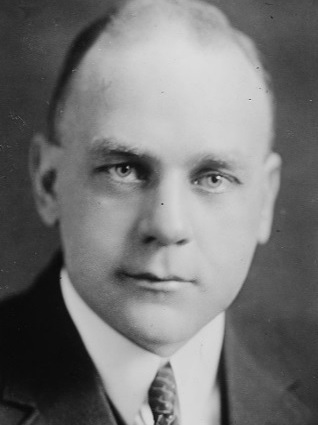
Historical · U.S. House · New Hampshire · District 1
William Rogers
Former U.S. Representative · New Hampshire District 1 · 1923–1937 · Democratic
William Rogers represented New Hampshire's District 1 in the United States House of Representatives (1923–1937) for the Democratic party. The page below collects sourced biographical facts, term history, committee roles, and provenance for Rogers.
Bioguide ID: R000408
Key facts
- Full name
- William Rogers
- State
- New Hampshire
- District
- District 1
- Party
- Democratic
- House service
- 1923–1937
- First House term
- 1923
- Status
- Left office
- Current term ends
- —
- Born
- 1892
- Bioguide ID
- R000408
- Committee assignments
- —
- Dataset version
- 1.20260605
Biographical narrative
937 words · sourced from the Wikipedia REST extract
William Nathaniel Rogers was a prominent political figure in New Hampshire, serving as a U.S. Representative for the state's first congressional district. A member of the Democratic Party, Rogers had a notable career in public service and law, spanning several decades. His tenure in the U.S. House of Representatives included four terms, during which he engaged in various legislative activities and represented the interests of his constituents. Born in 1892, Rogers's early life and education laid the foundation for his future roles in both law and politics, culminating in his service in Congress until 1937.
Early life and career
William Rogers was born on January 10, 1892, in Sanbornville, New Hampshire. Growing up in a small town, he attended local public schools, where he began to develop his educational foundation. He furthered his studies at Brewster Free Academy in Wolfeboro, a preparatory school that provided him with a rigorous academic environment. His pursuit of higher education continued at Dartmouth College, located in Hanover, New Hampshire, where he likely honed his skills in critical thinking and public discourse.
After completing his undergraduate education, Rogers enrolled in the law department of the University of Maine at Orono, graduating in 1916. This achievement marked the beginning of his legal career, as he was admitted to the bar the same year. Following his admission, Rogers established his law practice in Sanbornville and later expanded his work to Rochester, New Hampshire. His legal expertise would serve him well in his future political endeavors.
Rogers's involvement in politics began at the state level, where he served as a member of the New Hampshire House of Representatives. His terms in the state legislature occurred in 1917, 1919, and 1921, during which he gained valuable experience in governance and public policy. This early political engagement provided him with insights into the legislative process and the needs of his constituents, which would inform his later work in Congress.
House tenure
William Rogers's congressional career began when he was elected as a Democrat to the Sixty-eighth Congress, serving from March 4, 1923, to March 3, 1925. His initial election to the U.S. House of Representatives marked a significant milestone in his political journey, allowing him to represent New Hampshire's first congressional district on a national stage. However, his first term was followed by a setback; he was unsuccessful in his bid for reelection in 1924 to the Sixty-ninth Congress. After this defeat, Rogers returned to practicing law in Concord, New Hampshire, where he continued to build his legal career.
Despite this initial setback, Rogers's political aspirations did not wane. On January 5, 1932, he was elected to fill a vacancy in the Seventy-second Congress, which had arisen due to the death of fellow Congressman Fletcher Hale. This election marked the beginning of a renewed period of service, as Rogers was subsequently reelected to the Seventy-third and Seventy-fourth Congresses, serving from January 5, 1932, until January 3, 1937. During these terms, he was involved in various legislative activities, contributing to discussions and decisions that impacted both his district and the nation.
Rogers chose not to seek renomination at the conclusion of his fourth term in Congress. Instead, he shifted his focus to a campaign for a seat in the United States Senate in 1936. However, this attempt was unsuccessful, leading him to return to his law practice in Concord. His political career in Congress had concluded, but he remained engaged in public service at the local level.
Legislative focus and committees
Throughout his time in the U.S. House of Representatives, William Rogers was involved in various legislative initiatives and discussions that reflected the priorities and concerns of his constituents. While specific details regarding the bills he sponsored or supported during his tenure are not provided, it can be inferred that, as a member of the Democratic Party during a time of significant national change, he likely engaged in issues related to the economic challenges of the Great Depression and the evolving role of government in addressing social and economic issues.
Rogers's legislative focus may have included matters pertinent to his constituents in New Hampshire, such as economic development, infrastructure, and social welfare programs. The 1930s were a transformative period in American history, characterized by the New Deal initiatives aimed at economic recovery and reform. As a member of Congress during this time, Rogers would have been positioned to contribute to discussions surrounding these critical issues.
In addition to his legislative work, Rogers's experience in the New Hampshire House of Representatives likely informed his approach to governance and public policy. His background in law would have provided him with a strong understanding of legal frameworks and the implications of legislation on the lives of ordinary citizens. This combination of legal expertise and political experience would have been valuable in his role as a U.S. Representative.
After concluding his congressional service in 1937, Rogers returned to the practice of law in Concord, where he continued to serve his community until 1943. At that time, he relocated back to Sanbornville, where he maintained his legal practice until his death on September 25, 1945. His contributions to both law and politics left a lasting impact on the communities he served, and he was laid to rest in Lovell Lake Cemetery in Sanbornville.
William Rogers's life reflects the journey of a dedicated public servant who navigated the complexities of both law and politics. His early experiences in education and local governance laid the groundwork for his eventual role in the U.S. Congress, where he represented the interests of New Hampshire's first congressional district during a pivotal era in American history.
Notable legislation
Sponsored and co-sponsored legislation for William Rogers is pending operator curation. The biographical narrative above carries the same provenance trail until per-bill rows are written.
Sources
- [1]https://en.wikipedia.org/wiki/William_N._RogersWikipedia · retrieved 2026-06-05
Notable quotes
Sourced quotes for William Rogers are pending operator curation. Narrative-scope provenance remains attached below.
Sources
- [1]https://en.wikipedia.org/wiki/William_N._RogersWikipedia · retrieved 2026-06-05
Key positions
Curated policy positions for William Rogers are pending operator review. The biographical narrative above carries the same provenance trail until per-topic positions are written.
Sources
- [1]https://en.wikipedia.org/wiki/William_N._RogersWikipedia · retrieved 2026-06-05
Terms served
- 1923–1925U.S. House · Term 1 · Democratic
- 1931–1933U.S. House · Term 2 · Democratic
- 1933–1935U.S. House · Term 3 · Democratic
- 1935–1937U.S. House · Term 4 · Democratic
Sources & provenance
Every attributable claim above carries a per-section [N] marker that resolves to the corresponding URL below. Each entry records the upstream provider, the canonical URL, and the timestamp at which the source was retrieved by the ingest pipeline.
Key facts
- https://bioguide.congress.gov/search/bio/R000408bioguide · retrieved 2026-06-05
- https://www.govtrack.us/congress/members/409374govtrack · retrieved 2026-06-05
Biographical narrative
- https://en.wikipedia.org/wiki/William_N._Rogerswikipedia · retrieved 2026-06-05
Find your representative
Every U.S. state elects representatives by district. Browse New Hampshire’s delegation, the full former-representative roster, or explore the role and term length.
Related on The Candidate
- Preceded by Sherman BurroughsEarlier holder of the New Hampshire District 1 House seat · Republican.Open
- Succeeded by Alphonse RoyLater holder of the New Hampshire District 1 House seat · Democratic.Open
- Alonzo NuteFormer U.S. Representative · New Hampshire District 1 · RepublicanOpen
- Amos TuckFormer U.S. Representative · New Hampshire District 1 · WhigOpen
- Arthur JenksFormer U.S. Representative · New Hampshire District 1 · RepublicanOpen
- Democratic PartyFederal candidates and office holders on the Democratic line.Open