
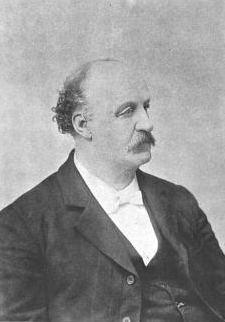
Historical · U.S. House · New Hampshire · District 2
James Briggs
Former U.S. Representative · New Hampshire District 2 · 1877–1883 · Republican
James Briggs represented New Hampshire's District 2 in the United States House of Representatives (1877–1883) for the Republican party. The page below collects sourced biographical facts, term history, committee roles, and provenance for Briggs.
Bioguide ID: B000831
Key facts
- Full name
- James Briggs
- State
- New Hampshire
- District
- District 2
- Party
- Republican
- House service
- 1877–1883
- First House term
- 1877
- Status
- Left office
- Current term ends
- —
- Born
- 1827
- Bioguide ID
- B000831
- Committee assignments
- —
- Dataset version
- 1.20260606
Biographical narrative
801 words · sourced from the Wikipedia REST extract
James Briggs was an American politician who served as a U.S. Representative for New Hampshire's 2nd congressional district from 1877 to 1883. A member of the Republican Party, Briggs had a diverse career that included military service during the Civil War, legal practice, and various roles in state government. His tenure in the U.S. House of Representatives was marked by his involvement in legislative matters and his leadership on significant committees.
Early life and career
James Briggs was born on October 23, 1827, in Bury, Lancashire, England, to parents John and Nancy (Frankland) Briggs. In 1829, when Briggs was just two years old, his family immigrated to the United States, settling in Holderness, New Hampshire. His parents were factory workers in England, and their move to America was part of a broader trend of seeking better opportunities. In New Hampshire, Briggs attended local common schools and Newbury Academy, where he received a foundational education.
Briggs began his legal studies in 1848 under the mentorship of William O. Thompson in Plymouth, New Hampshire. However, due to his father's illness, he returned home for a year, continuing his legal education during this time. Afterward, he worked with Joseph Barrows, a local attorney, and continued his studies under Judge Joseph Burrows in Holderness. Briggs was admitted to the bar in 1851 and began practicing law in Hillsborough, New Hampshire. He maintained his legal practice until 1871, when he moved to Manchester, New Hampshire.
With the onset of the Civil War, Briggs enlisted in the Eleventh Regiment of the New Hampshire Volunteer Infantry, where he served as a Major. He was appointed quartermaster on the staff of Colonel Walter Harriman. After the Battle of Fredericksburg, he resigned but was reappointed shortly thereafter, participating in significant military engagements, including the Siege of Vicksburg. Briggs was officially discharged from military service in August 1863.
In addition to his military service, Briggs was active in local politics. He served in the New Hampshire House of Representatives from 1856 to 1858 and again in 1874. His political career continued to evolve when he was elected to the New Hampshire Senate in 1876, further establishing his presence in state governance.
House tenure
Briggs was elected to the U.S. House of Representatives as a Republican, serving three consecutive terms from March 4, 1877, to March 3, 1883. He was a member of the Forty-fifth, Forty-sixth, and Forty-seventh Congresses. During his time in the House, he was involved in various legislative activities and served as chairman of the Committee on Expenditures in the Department of War during the Forty-seventh Congress. This role placed him at the forefront of discussions regarding military expenditures and oversight, reflecting the importance of fiscal responsibility in government operations.
Despite his active role in Congress, Briggs chose not to seek renomination in 1882 after completing his third term. Following his departure from the House, he returned to practicing law, continuing his legal career in New Hampshire.
Legislative focus and committees
Throughout his congressional tenure, Briggs was engaged in issues related to military expenditures, reflecting his background and experience as a veteran. His leadership as chairman of the Committee on Expenditures in the Department of War allowed him to influence decisions regarding the allocation of resources within the military sector. This position underscored his commitment to ensuring that government spending was managed effectively, particularly in areas critical to national defense.
After leaving Congress, Briggs remained active in state politics. He returned to the New Hampshire House of Representatives in 1883 and served again in 1891 and 1897, during which time he held the position of speaker in 1897. His repeated service in the state legislature demonstrated his ongoing commitment to public service and governance at the state level. Additionally, he participated as a delegate in the State constitutional convention in 1889, contributing to discussions that would shape the legal framework of New Hampshire.
In the latter part of his life, Briggs gradually reduced his law practice and shifted his focus toward serving as a director and legal advisor for various manufacturing and financial institutions. This transition reflected his adaptability and the breadth of his professional experience, as he utilized his legal expertise in the business sector.
Briggs passed away on January 21, 1905, in Manchester, New Hampshire, at the age of 77. He is interred in Green Grove Cemetery in Ashland, New Hampshire. His legacy includes not only his contributions to the U.S. Congress and state government but also his involvement in the legal and business communities of New Hampshire.
Briggs was married to Roxanna Smith, and together they had one son, Frank Obadiah Briggs. His family life, alongside his professional and political endeavors, paints a picture of a dedicated public servant who engaged with his community through various roles over the course of his life.
Notable legislation
Sponsored and co-sponsored legislation for James Briggs is pending operator curation. The biographical narrative above carries the same provenance trail until per-bill rows are written.
Sources
- [1]https://en.wikipedia.org/wiki/James_F._BriggsWikipedia · retrieved 2026-06-06
Notable quotes
Sourced quotes for James Briggs are pending operator curation. Narrative-scope provenance remains attached below.
Sources
- [1]https://en.wikipedia.org/wiki/James_F._BriggsWikipedia · retrieved 2026-06-06
Key positions
Curated policy positions for James Briggs are pending operator review. The biographical narrative above carries the same provenance trail until per-topic positions are written.
Sources
- [1]https://en.wikipedia.org/wiki/James_F._BriggsWikipedia · retrieved 2026-06-06
Terms served
- 1877–1879U.S. House · Term 1 · Republican
- 1879–1881U.S. House · Term 2 · Republican
- 1881–1883U.S. House · Term 3 · Republican
Sources & provenance
Every attributable claim above carries a per-section [N] marker that resolves to the corresponding URL below. Each entry records the upstream provider, the canonical URL, and the timestamp at which the source was retrieved by the ingest pipeline.
Key facts
- https://bioguide.congress.gov/search/bio/B000831bioguide · retrieved 2026-06-06
- https://www.govtrack.us/congress/members/401788govtrack · retrieved 2026-06-06
Biographical narrative
- https://en.wikipedia.org/wiki/James_F._Briggswikipedia · retrieved 2026-06-06
Find your representative
Every U.S. state elects representatives by district. Browse New Hampshire’s delegation, the full former-representative roster, or explore the role and term length.
Related on The Candidate
- Preceded by Samuel BellEarlier holder of the New Hampshire District 2 House seat · Democratic.Open
- Succeeded by Orren MooreLater holder of the New Hampshire District 2 House seat · Republican.Open
- Alonzo NuteFormer U.S. Representative · New Hampshire District 1 · RepublicanOpen
- Alphonse RoyFormer U.S. Representative · New Hampshire District 1 · DemocraticOpen
- Amos TuckFormer U.S. Representative · New Hampshire District 1 · WhigOpen
- Arthur JenksFormer U.S. Representative · New Hampshire District 1 · RepublicanOpen