
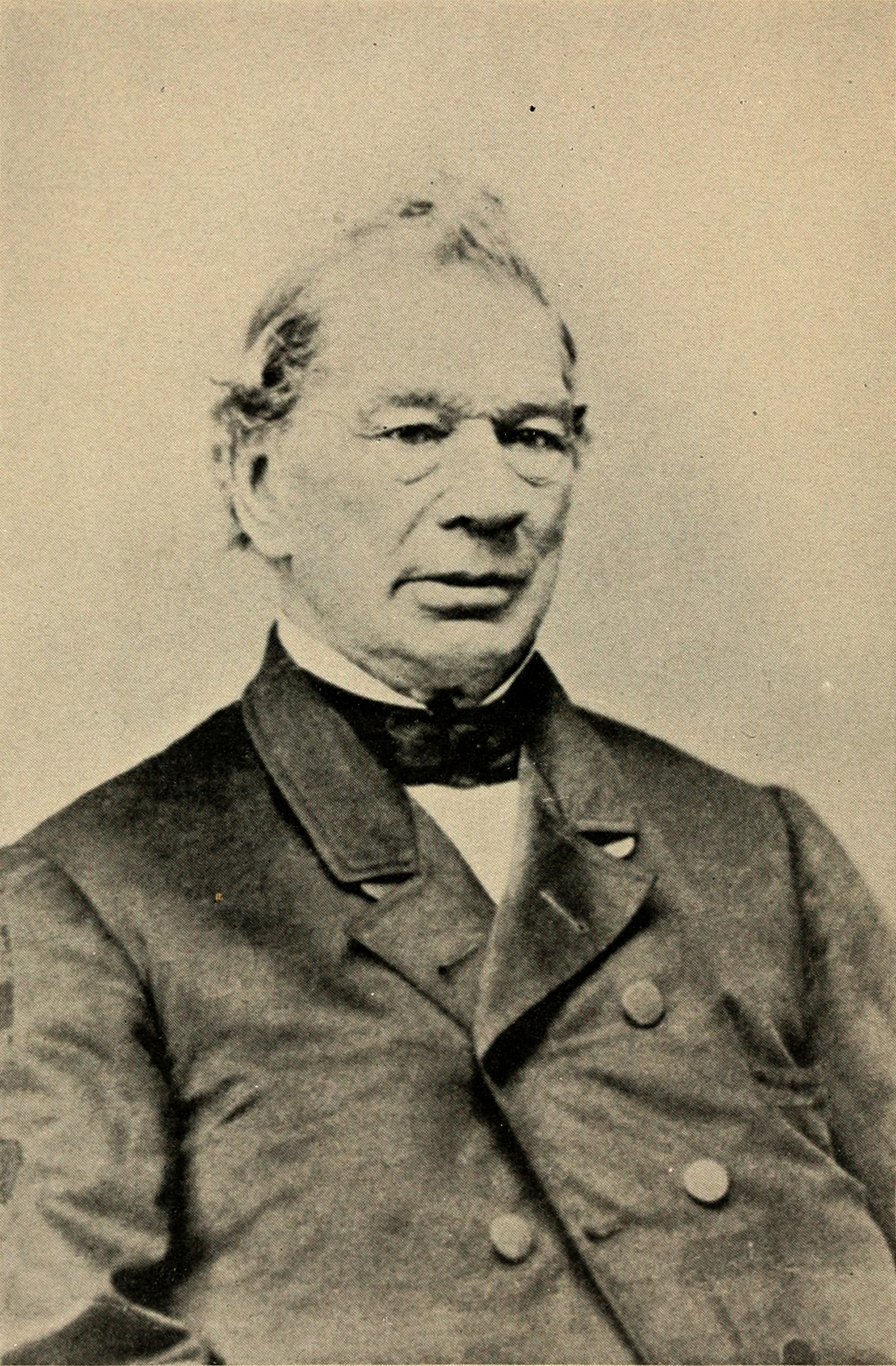
Historical · U.S. House · New Hampshire · District 3
James Wilson
Former U.S. Representative · New Hampshire District 3 · 1847–1851 · Whig
James Wilson represented New Hampshire's District 3 in the United States House of Representatives (1847–1851) for the Whig party. The page below collects sourced biographical facts, term history, committee roles, and provenance for Wilson.
Bioguide ID: W000587
Key facts
- Full name
- James Wilson
- State
- New Hampshire
- District
- District 3
- Party
- Whig
- House service
- 1847–1851
- First House term
- 1847
- Status
- Left office
- Current term ends
- —
- Born
- 1797
- Bioguide ID
- W000587
- Committee assignments
- —
- Dataset version
- 1.20260606
Biographical narrative
860 words · sourced from the Wikipedia REST extract
James Wilson was a prominent political figure in the 19th century, serving as a U.S. Representative from New Hampshire. A member of the Whig Party, he held office during a transformative period in American politics. His congressional career spanned two terms, beginning in 1847 and concluding in 1851. Wilson's background as a lawyer, military officer, and state legislator contributed to his political career and shaped his legislative priorities during his time in the House of Representatives.
Early life and career
James Wilson was born on March 18, 1797, in Peterborough, New Hampshire. He received his early education at New Ipswich Academy and furthered his studies at the academies in Atkinson and Exeter. In 1815, Wilson and his family relocated to Keene, New Hampshire, where he continued his education and eventually graduated from Middlebury College in Vermont in 1820.
Following his graduation, Wilson pursued a career in law. He studied law and was admitted to the bar in 1823, establishing his legal practice in Keene. His involvement in public service began early in his career; he served in the New Hampshire State militia from 1820 to 1840, achieving the rank of major general. Wilson's commitment to public service extended into politics, where he was elected to the New Hampshire House of Representatives multiple times, serving from 1825 to 1837, as well as in 1840 and 1846. His leadership abilities were recognized when he was elected Speaker of the House in 1828.
In addition to his legislative duties, Wilson was active in the Whig Party. He participated as a delegate at the Whig National Convention in 1840. His political aspirations included attempts to secure the governorship of New Hampshire, although he was unsuccessful in his bids in 1835 and 1838. From 1841 to 1845, he served as the Surveyor General of Public Lands for the Territories of Wisconsin and Iowa, a position that further solidified his reputation in public service.
House tenure
Wilson's congressional career began when he was elected as a Whig to the Thirtieth Congress, taking office on March 4, 1847. He served in the House of Representatives until September 9, 1850, when he resigned from his position. During his time in Congress, Wilson was known for his alignment with prominent Whig leaders, particularly Daniel Webster, and was often viewed as a supporter of Webster's political agenda.
Throughout his two terms, Wilson was actively involved in various legislative matters. He served as the chairman of the Committee on Expenditures in the Post Office Department during the Thirtieth Congress. His role in this committee involved overseeing the financial aspects of the postal service, a critical function given the importance of communication and transportation in the growing nation.
Wilson's tenure in Congress was marked by the political tensions of the era, including debates over issues such as slavery and states' rights. However, specific details regarding his voting record or positions on particular legislation during his time in office are not extensively documented. After resigning from Congress in 1850, Wilson continued his public service by being appointed as one of the land claim commissioners for California in 1851, a role he held until 1853.
Legislative focus and committees
During his time in the House of Representatives, James Wilson's legislative focus was primarily on issues related to public expenditure and land management, reflecting his previous experience as Surveyor General of Public Lands. His role as chairman of the Committee on Expenditures in the Post Office Department indicated a commitment to ensuring the efficient use of government resources, particularly in the realm of postal services.
Wilson's political affiliations and connections, especially with Daniel Webster, influenced his legislative priorities. As a member of the Whig Party, he was part of a political movement that advocated for economic modernization, infrastructure development, and a strong federal government. The Whigs were known for their opposition to the expansion of slavery into the territories, which was a significant issue during Wilson's time in office. However, specific details about his stance on slavery or other contentious issues of the day are not well-documented.
After leaving Congress, Wilson's career continued in various capacities, including his appointment as a land claim commissioner in California. This role involved adjudicating land claims in a state that was experiencing rapid growth and change during the Gold Rush era. Wilson's experience in land management would have been valuable in addressing the complex legal and administrative challenges associated with land ownership and settlement in California.
Following his time in California, Wilson returned to Keene, New Hampshire, where he remained active in local politics. He was again elected to the New Hampshire House of Representatives in 1871 and 1872, demonstrating his enduring commitment to public service and civic engagement.
James Wilson passed away on May 29, 1881, in Keene, New Hampshire, at the age of 84. He was interred in Woodland Cemetery, leaving behind a legacy of public service that spanned several decades and encompassed various roles in both state and national government. His contributions to New Hampshire politics and his involvement in the Whig Party reflect a significant period in American history, characterized by political realignment and the emergence of new social and economic challenges.
Notable legislation
Sponsored and co-sponsored legislation for James Wilson is pending operator curation. The biographical narrative above carries the same provenance trail until per-bill rows are written.
Sources
- [1]https://en.wikipedia.org/wiki/James_Wilson_IIWikipedia · retrieved 2026-06-06
Notable quotes
Sourced quotes for James Wilson are pending operator curation. Narrative-scope provenance remains attached below.
Sources
- [1]https://en.wikipedia.org/wiki/James_Wilson_IIWikipedia · retrieved 2026-06-06
Key positions
Curated policy positions for James Wilson are pending operator review. The biographical narrative above carries the same provenance trail until per-topic positions are written.
Sources
- [1]https://en.wikipedia.org/wiki/James_Wilson_IIWikipedia · retrieved 2026-06-06
Terms served
- 1847–1849U.S. House · Term 1 · Whig
- 1849–1851U.S. House · Term 2 · Whig
Sources & provenance
Every attributable claim above carries a per-section [N] marker that resolves to the corresponding URL below. Each entry records the upstream provider, the canonical URL, and the timestamp at which the source was retrieved by the ingest pipeline.
Key facts
- https://bioguide.congress.gov/search/bio/W000587bioguide · retrieved 2026-06-06
- https://www.govtrack.us/congress/members/411745govtrack · retrieved 2026-06-06
Biographical narrative
- https://en.wikipedia.org/wiki/James_Wilson_IIwikipedia · retrieved 2026-06-06
Find your representative
Every U.S. state elects representatives by district. Browse New Hampshire’s delegation, the full former-representative roster, or explore the role and term length.
Related on The Candidate
- Succeeded by Jared PerkinsLater holder of the New Hampshire District 3 House seat · Whig.Open
- Alonzo NuteFormer U.S. Representative · New Hampshire District 1 · RepublicanOpen
- Alphonse RoyFormer U.S. Representative · New Hampshire District 1 · DemocraticOpen
- Amos TuckFormer U.S. Representative · New Hampshire District 1 · WhigOpen
- Arthur JenksFormer U.S. Representative · New Hampshire District 1 · RepublicanOpen
- Representatives from New HampshireEvery former U.S. Representative who has represented New Hampshire.Open