
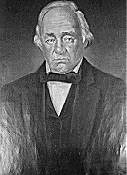
Historical · U.S. House · New Hampshire · At-Large
Aaron Matson
Former U.S. Representative · New Hampshire At-Large · 1821–1825
Aaron Matson represented New Hampshire's At-Large in the United States House of Representatives (1821–1825). The page below collects sourced biographical facts, term history, committee roles, and provenance for Matson.
Bioguide ID: M000247
Key facts
- Full name
- Aaron Matson
- State
- New Hampshire
- District
- At-Large
- Party
- —
- House service
- 1821–1825
- First House term
- 1821
- Status
- Left office
- Current term ends
- —
- Born
- —
- Bioguide ID
- M000247
- Committee assignments
- —
- Dataset version
- 1.20260606
Biographical narrative
1,006 words · sourced from the Wikipedia REST extract
Aaron Matson was a notable figure in early American politics, serving as a U.S. Representative from New Hampshire during the early 19th century. His political career spanned several years, during which he held various positions at both the state and federal levels. Matson's contributions to the political landscape of New Hampshire and his involvement in the U.S. Congress reflect the dynamics of American governance during a formative period in the nation's history.
Early life and career
Aaron Matson was born in 1770 in Plymouth, Massachusetts. While specific details about his early life are limited, it is known that he eventually relocated to Cheshire County, New Hampshire. This move marked the beginning of his long-standing involvement in local governance and politics. In Cheshire County, he served as the county judge of probate, a position that likely provided him with valuable experience in legal and administrative matters, as well as a deeper understanding of the needs and concerns of his constituents.
Matson's political career began in earnest when he was elected to the New Hampshire House of Representatives. His tenure in this legislative body spanned multiple terms, specifically from 1806 to 1808, again from 1810 to 1814, and then in 1817 and 1818. These years in the state legislature allowed him to engage with various issues pertinent to New Hampshire and its residents, establishing his reputation as a committed public servant. His repeated elections to the state house suggest that he maintained a level of support from his peers and constituents, indicating his effectiveness as a legislator.
In addition to his role in the New Hampshire House of Representatives, Matson also served on the Executive Council from 1819 to 1821. This council was an important advisory body to the governor, and Matson's participation in it further solidified his standing in state politics. His experience in these various roles prepared him for his subsequent election to the U.S. Congress, where he would represent New Hampshire on a national stage.
House tenure
Aaron Matson's congressional career began when he was elected to the Seventeenth Congress as a member of the Democratic-Republican Party. His term commenced on March 4, 1821, and he was subsequently re-elected to the Eighteenth Congress, serving until March 3, 1825. During this period, Matson was part of a significant era in American politics characterized by the evolution of party systems and the shifting political landscape following the War of 1812.
As a member of the Democratic-Republican Party, Matson aligned himself with the political philosophies that emphasized agrarian interests, states' rights, and a limited federal government. His affiliation with the party reflected the broader national trends of the time, as the Democratic-Republicans were the dominant political force following the decline of the Federalist Party. Matson's re-election to the Eighteenth Congress as an Adams-Clay Republican indicates a shift in his political alignment, as the party began to evolve into what would later be known as the National Republican Party. This transition illustrates the fluid nature of political affiliations during this period, as various factions emerged and redefined themselves in response to changing political realities.
Throughout his two terms in Congress, Matson participated in the legislative processes that shaped the early 19th century. While specific details regarding his legislative initiatives and voting record are not documented, his role as a U.S. Representative would have involved addressing a range of issues pertinent to both New Hampshire and the nation as a whole. The early 1820s were marked by significant developments, including debates over internal improvements, tariffs, and the expansion of the United States, all of which would have been relevant to a representative from a growing state like New Hampshire.
After concluding his service in the House of Representatives in 1825, Matson returned to state politics, demonstrating his continued commitment to public service. He was again elected to the New Hampshire House of Representatives in 1827 and 1828, indicating that he remained an active participant in the political life of the state even after his congressional tenure.
Legislative focus and committees
While specific details regarding Aaron Matson's legislative focus and committee assignments during his time in Congress are not provided, it is important to contextualize his role within the broader legislative framework of the early 19th century. The period in which he served was characterized by significant political and social changes, including the westward expansion of the United States, the rise of new economic interests, and the ongoing debates surrounding slavery and states' rights.
As a U.S. Representative from New Hampshire, Matson would have been involved in discussions and decisions that impacted both his state and the nation. New Hampshire, being a northern state, had its own unique set of interests, particularly in relation to issues such as trade, infrastructure development, and the balance of power between federal and state authorities. The early 1820s also saw the emergence of the "American System," which advocated for a strong role of the federal government in promoting economic development through infrastructure projects and protective tariffs. Matson's alignment with the Democratic-Republican Party suggests that he may have had a nuanced position on these issues, balancing the interests of his constituents with the broader national agenda.
In addition to his legislative responsibilities, Matson's experience as a county judge of probate and his service in the New Hampshire House of Representatives would have equipped him with insights into legal and administrative matters. This background may have influenced his approach to legislative issues, particularly those related to property rights, probate law, and local governance.
Aaron Matson's political career came to an end after his final term in the House of Representatives, but his legacy continued through his family. His granddaughter, Ann Matson, became notable in her own right as the first wife of Edmund Burke, a prominent New Hampshire lawyer and congressman. Matson passed away on July 18, 1855, in Newport, Vermont, leaving behind a history of public service that reflected the evolving political landscape of early America. His contributions to both state and national politics remain a part of New Hampshire's rich political heritage.
Notable legislation
Sponsored and co-sponsored legislation for Aaron Matson is pending operator curation. The biographical narrative above carries the same provenance trail until per-bill rows are written.
Sources
- [1]https://en.wikipedia.org/wiki/Aaron_MatsonWikipedia · retrieved 2026-06-06
Notable quotes
Sourced quotes for Aaron Matson are pending operator curation. Narrative-scope provenance remains attached below.
Sources
- [1]https://en.wikipedia.org/wiki/Aaron_MatsonWikipedia · retrieved 2026-06-06
Key positions
Curated policy positions for Aaron Matson are pending operator review. The biographical narrative above carries the same provenance trail until per-topic positions are written.
Sources
- [1]https://en.wikipedia.org/wiki/Aaron_MatsonWikipedia · retrieved 2026-06-06
Terms served
- 1821–1823U.S. House · Term 1 · Republican
- 1823–1825U.S. House · Term 2
Sources & provenance
Every attributable claim above carries a per-section [N] marker that resolves to the corresponding URL below. Each entry records the upstream provider, the canonical URL, and the timestamp at which the source was retrieved by the ingest pipeline.
Key facts
- https://bioguide.congress.gov/search/bio/M000247bioguide · retrieved 2026-06-06
- https://www.govtrack.us/congress/members/407265govtrack · retrieved 2026-06-06
Biographical narrative
- https://en.wikipedia.org/wiki/Aaron_Matsonwikipedia · retrieved 2026-06-06
Find your representative
Every U.S. state elects representatives by district. Browse New Hampshire’s delegation, the full former-representative roster, or explore the role and term length.
Related on The Candidate
- Preceded by Clifton ClagettEarlier holder of the New Hampshire At-Large House seat · Republican.Open
- Succeeded by Jonathan HarveyLater holder of the New Hampshire At-Large House seat · Jackson.Open
- Alonzo NuteFormer U.S. Representative · New Hampshire District 1 · RepublicanOpen
- Alphonse RoyFormer U.S. Representative · New Hampshire District 1 · DemocraticOpen
- Amos TuckFormer U.S. Representative · New Hampshire District 1 · WhigOpen
- Arthur JenksFormer U.S. Representative · New Hampshire District 1 · RepublicanOpen