
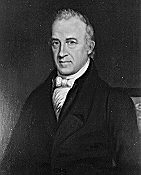
Historical · U.S. House · New Hampshire · At-Large
Arthur Livermore
Former U.S. Representative · New Hampshire At-Large · 1817–1825 · Republican
Arthur Livermore represented New Hampshire's At-Large in the United States House of Representatives (1817–1825) for the Republican party. The page below collects sourced biographical facts, term history, committee roles, and provenance for Livermore.
Bioguide ID: L000362
Key facts
- Full name
- Arthur Livermore
- State
- New Hampshire
- District
- At-Large
- Party
- Republican
- House service
- 1817–1825
- First House term
- 1817
- Status
- Left office
- Current term ends
- —
- Born
- 1766
- Bioguide ID
- L000362
- Committee assignments
- —
- Dataset version
- 1.20260606
Biographical narrative
1,019 words · sourced from the Wikipedia REST extract
Arthur Livermore was an American politician and attorney who served as a United States Representative from New Hampshire. A member of the Republican Party, he held office during a transformative period in American history. Livermore's political career spanned several decades, during which he engaged in various roles within the state and federal government. He was known for his legal expertise, his involvement in the early legislative efforts concerning slavery, and his contributions to the judicial system in New Hampshire.
Early life and career
Arthur Livermore was born on July 29, 1766, in Londonderry, which was then part of the Province of New Hampshire. He received a classical education at home, where his parents provided him with foundational knowledge that would serve him throughout his career. Livermore pursued the study of law, a decision that would eventually lead him to a successful legal practice. After being admitted to the bar, he began his legal career in Concord, New Hampshire, in 1792. The following year, he relocated to Chester, where he continued to build his reputation as an attorney.
Livermore's political career began in the mid-1790s when he was elected to the New Hampshire House of Representatives, serving in 1794 and 1795. His early involvement in state politics laid the groundwork for his future endeavors. In 1796, he was appointed as the solicitor for Rockingham County, a position he held until 1798. This role allowed him to gain further experience in legal matters and public service.
In 1798, Livermore moved to Holderness, New Hampshire, where he continued his legal career. He was appointed as an associate justice of the superior court, a position he held from 1798 until 1809. His judicial responsibilities expanded when he became the chief justice of the superior court, serving from 1809 to 1813. During this time, he was also active in the political landscape as a presidential elector on the Federalist ticket in the election of 1800. Following his tenure as chief justice, Livermore served as an associate justice of the New Hampshire Supreme Court from 1813 to 1816, further solidifying his influence within the state's legal system.
House tenure
Livermore's congressional career began when he was elected as a Democratic-Republican to represent New Hampshire in the United States House of Representatives. He served in the Fifteenth and Sixteenth Congresses from March 4, 1817, to March 3, 1821. During his time in Congress, Livermore was actively involved in legislative matters, particularly those concerning postal services and expenditures. He held the position of chairman for both the Committee on the Post Office and Post Roads during the Fifteenth and Sixteenth Congresses. Additionally, he chaired the Committee on Expenditures in the Post Office Department during the Sixteenth Congress, demonstrating his commitment to improving the efficiency and accountability of postal operations.
One of Livermore's notable legislative actions during his tenure was his proposal in 1818 to eliminate slavery through a constitutional amendment. This initiative reflected the growing national discourse surrounding the issue of slavery and highlighted Livermore's engagement with significant moral and political questions of his time. His efforts in this area contributed to the broader abolitionist movement, which would gain momentum in the following decades.
After his initial terms in Congress, Livermore sought reelection in 1822 but was unsuccessful in his bid for the Seventeenth Congress. Following this defeat, he continued to serve the public in other capacities, including a role in the New Hampshire Senate in 1821 and 1822. He also served as the judge of probate for Grafton County during the years 1822 and 1823, further showcasing his dedication to public service.
In 1823, Livermore was elected as an Adams-Clay Republican to the Eighteenth Congress, where he served from March 4, 1823, to March 3, 1825. His decision not to seek renomination in 1824 marked the end of his congressional career. After leaving Congress, he continued to contribute to the legal field by serving as the chief justice of the court of common pleas from 1825 to 1832. In 1827, he moved to Campton, New Hampshire, where he remained active in local affairs.
Legislative focus and committees
Throughout his congressional career, Arthur Livermore demonstrated a strong focus on issues related to the postal service and public expenditures. His leadership roles in various committees allowed him to influence legislation that was critical to the functioning of the federal government. As chairman of the Committee on the Post Office and Post Roads, he played a pivotal role in shaping policies that affected mail delivery and communication across the nation. This was particularly important during a time when the expansion of the United States necessitated efficient postal services to connect distant regions.
Livermore's proposal to amend the Constitution to eliminate slavery was a significant aspect of his legislative focus. This initiative underscored his awareness of the moral implications of slavery and his willingness to engage in contentious political debates. While the proposal did not succeed, it reflected the growing tensions surrounding the issue of slavery in the early 19th century and positioned Livermore as a figure concerned with social justice and human rights.
In addition to his legislative work, Livermore's judicial experience enriched his contributions to Congress. His background as a judge and legal scholar provided him with a unique perspective on the implications of legislation and the importance of upholding the rule of law. His tenure on the New Hampshire Supreme Court and his role as chief justice of the court of common pleas further enhanced his understanding of legal principles and their application in governance.
Livermore's career spanned a period of significant change in American society and politics. His involvement in both state and federal government, coupled with his legal expertise, allowed him to navigate the complexities of early American governance. His legacy includes contributions to the judicial system, efforts to address the issue of slavery, and a commitment to public service that extended beyond his time in Congress. After his death on July 1, 1853, Livermore was interred at Trinity Churchyard in Holderness, New Hampshire, leaving behind a record of a dedicated public servant who engaged with the pressing issues of his time.
Notable legislation
Sponsored and co-sponsored legislation for Arthur Livermore is pending operator curation. The biographical narrative above carries the same provenance trail until per-bill rows are written.
Sources
- [1]https://en.wikipedia.org/wiki/Arthur_LivermoreWikipedia · retrieved 2026-06-06
Notable quotes
Sourced quotes for Arthur Livermore are pending operator curation. Narrative-scope provenance remains attached below.
Sources
- [1]https://en.wikipedia.org/wiki/Arthur_LivermoreWikipedia · retrieved 2026-06-06
Key positions
Curated policy positions for Arthur Livermore are pending operator review. The biographical narrative above carries the same provenance trail until per-topic positions are written.
Sources
- [1]https://en.wikipedia.org/wiki/Arthur_LivermoreWikipedia · retrieved 2026-06-06
Terms served
- 1817–1819U.S. House · Term 1 · Republican
- 1819–1821U.S. House · Term 2 · Republican
- 1823–1825U.S. House · Term 3 · Republican
Sources & provenance
Every attributable claim above carries a per-section [N] marker that resolves to the corresponding URL below. Each entry records the upstream provider, the canonical URL, and the timestamp at which the source was retrieved by the ingest pipeline.
Key facts
- https://bioguide.congress.gov/search/bio/L000362bioguide · retrieved 2026-06-06
- https://www.govtrack.us/congress/members/406854govtrack · retrieved 2026-06-06
Biographical narrative
- https://en.wikipedia.org/wiki/Arthur_Livermorewikipedia · retrieved 2026-06-06
Find your representative
Every U.S. state elects representatives by district. Browse New Hampshire’s delegation, the full former-representative roster, or explore the role and term length.
Related on The Candidate
- Preceded by Bradbury CilleyEarlier holder of the New Hampshire At-Large House seat · Federalist.Open
- Succeeded by Jonathan HarveyLater holder of the New Hampshire At-Large House seat · Jackson.Open
- Alonzo NuteFormer U.S. Representative · New Hampshire District 1 · RepublicanOpen
- Alphonse RoyFormer U.S. Representative · New Hampshire District 1 · DemocraticOpen
- Amos TuckFormer U.S. Representative · New Hampshire District 1 · WhigOpen
- Arthur JenksFormer U.S. Representative · New Hampshire District 1 · RepublicanOpen