
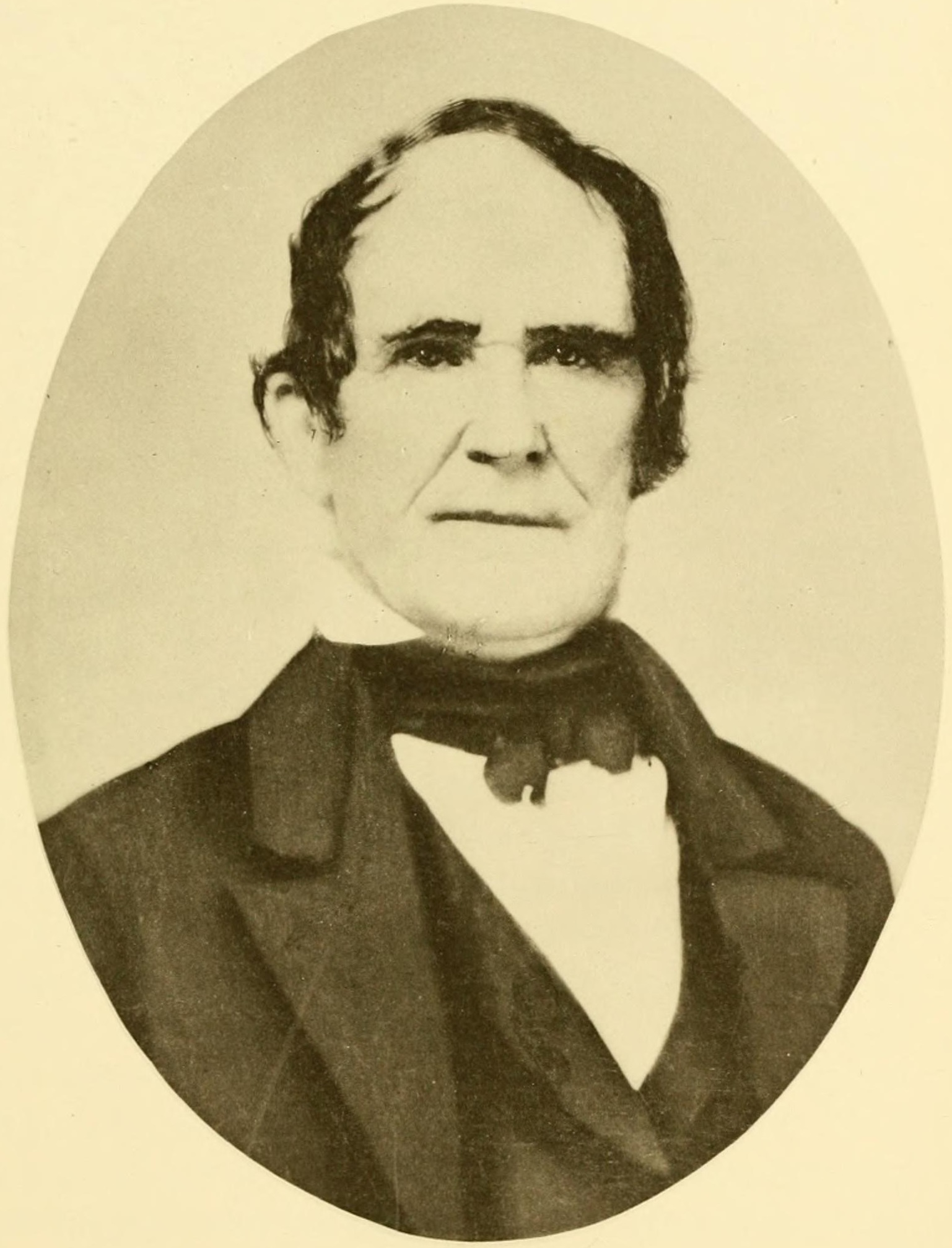
Historical · U.S. House · New Hampshire · At-Large
Matthew Harvey
Former U.S. Representative · New Hampshire At-Large · 1821–1825
Matthew Harvey represented New Hampshire's At-Large in the United States House of Representatives (1821–1825). The page below collects sourced biographical facts, term history, committee roles, and provenance for Harvey.
Bioguide ID: H000309
Key facts
- Full name
- Matthew Harvey
- State
- New Hampshire
- District
- At-Large
- Party
- —
- House service
- 1821–1825
- First House term
- 1821
- Status
- Left office
- Current term ends
- —
- Born
- 1781
- Bioguide ID
- H000309
- Committee assignments
- —
- Dataset version
- 1.20260606
Biographical narrative
933 words · sourced from the Wikipedia REST extract
Matthew Harvey was a prominent political figure in early 19th-century America, serving as a U.S. Representative from New Hampshire, as well as holding significant roles in state governance and the federal judiciary. Born in 1781, Harvey's career spanned various facets of public service, including legislative, executive, and judicial positions. He is remembered for his contributions to both state and national politics during a formative period in American history.
Early life and career
Matthew Harvey was born on June 21, 1781, in Sutton, New Hampshire. His early education was conducted under private tutors, a common practice at the time for families seeking quality education outside of formal schooling systems. Harvey's academic pursuits culminated in his graduation from Dartmouth College in 1806, a prestigious institution that has produced numerous influential leaders in various fields. Following his graduation, Harvey began to study law, a profession that would define much of his early career. He completed his legal studies in 1809 and was subsequently admitted to the bar, allowing him to practice law.
From 1809 until 1814, Harvey engaged in private legal practice in Hopkinton, New Hampshire. His legal career provided him with a foundation in public service and governance, as the skills he developed as an attorney would later serve him well in his political endeavors. In 1814, he transitioned into a political role by becoming a member of the New Hampshire House of Representatives. His tenure in the state legislature lasted until 1821, during which he distinguished himself as a capable leader. Harvey served as Speaker of the House for three terms from 1818 to 1820, a position that underscored his influence and leadership within the state government.
House tenure
Matthew Harvey's congressional career began when he was elected as a Democratic-Republican to represent New Hampshire's at-large congressional district in the 17th United States Congress. His election marked the start of a significant period of service in the U.S. House of Representatives, where he served from March 4, 1821, until March 3, 1825. Harvey was subsequently reelected as a National Republican for the 18th United States Congress, further solidifying his political standing.
During his time in Congress, Harvey was known for his dedication to his constituents and his commitment to the principles of his party. His service coincided with a time of considerable change in the United States, as the nation was navigating the complexities of post-war recovery and the expansion of its territories. Harvey's contributions during this period were part of the broader legislative efforts aimed at addressing the needs of a growing nation.
An interesting aspect of Harvey's presence in Congress was his physical condition; he had a club foot on his right leg, which earned him the ironic nickname "Lefty" among his fellow Congress members. This moniker reflected the camaraderie and sometimes humorous interactions that characterized relationships among lawmakers during that era. Despite any physical challenges he faced, Harvey's commitment to public service remained unwavering, and he continued to engage actively in the legislative process.
Legislative focus and committees
While specific details regarding the bills Harvey sponsored or the committees on which he served are not provided, it is understood that members of Congress during this period were typically involved in a range of legislative issues that reflected the interests and needs of their constituents. Given his background in law and his experience in state government, it is likely that Harvey focused on matters pertinent to legal and governance reforms, as well as issues related to the economic and social development of New Hampshire and the nation as a whole.
After completing his congressional service, Harvey continued to be active in New Hampshire politics. He served in the New Hampshire Senate from 1825 to 1827, where he held the position of President of the Senate. This role further demonstrated his leadership capabilities and his ongoing commitment to public service at the state level. Following his time in the Senate, he was appointed to the Executive Council of New Hampshire, serving from 1828 to 1829. His political journey culminated in his election as the 13th Governor of New Hampshire in 1830. However, he resigned from this position on February 28, 1831, to accept a federal judicial appointment.
In 1830, President Andrew Jackson appointed Harvey to the United States District Court for the District of New Hampshire, a significant position that allowed him to influence the judicial landscape of the region. His appointment was a recess appointment, which was later confirmed by the Senate. Harvey served in this capacity until his death on April 7, 1866. His long tenure as a federal judge is notable, as it reflects his sustained commitment to public service and the law.
Throughout his life, Matthew Harvey's contributions to governance and the judiciary were significant. His career spanned several important roles, including that of a state legislator, a U.S. Representative, and a federal judge. His experiences in these various capacities provided him with a comprehensive understanding of the legal and political systems of his time. Harvey's legacy is marked by his dedication to public service and his influence on both state and national levels.
In summary, Matthew Harvey's life and career encapsulate a significant period in American history, characterized by growth and change. His journey from a young lawyer in New Hampshire to a respected member of Congress and a federal judge illustrates the opportunities available in early American politics and the important roles played by individuals in shaping the nation's governance. Harvey's contributions remain a part of New Hampshire's rich political history, and his legacy continues to be recognized in the context of American governance.
Notable legislation
Sponsored and co-sponsored legislation for Matthew Harvey is pending operator curation. The biographical narrative above carries the same provenance trail until per-bill rows are written.
Sources
- [1]https://en.wikipedia.org/wiki/Matthew_HarveyWikipedia · retrieved 2026-06-06
Notable quotes
Sourced quotes for Matthew Harvey are pending operator curation. Narrative-scope provenance remains attached below.
Sources
- [1]https://en.wikipedia.org/wiki/Matthew_HarveyWikipedia · retrieved 2026-06-06
Key positions
Curated policy positions for Matthew Harvey are pending operator review. The biographical narrative above carries the same provenance trail until per-topic positions are written.
Sources
- [1]https://en.wikipedia.org/wiki/Matthew_HarveyWikipedia · retrieved 2026-06-06
Terms served
- 1821–1823U.S. House · Term 1 · Republican
- 1823–1825U.S. House · Term 2
Sources & provenance
Every attributable claim above carries a per-section [N] marker that resolves to the corresponding URL below. Each entry records the upstream provider, the canonical URL, and the timestamp at which the source was retrieved by the ingest pipeline.
Key facts
- https://bioguide.congress.gov/search/bio/H000309bioguide · retrieved 2026-06-06
- https://www.govtrack.us/congress/members/405182govtrack · retrieved 2026-06-06
Biographical narrative
- https://en.wikipedia.org/wiki/Matthew_Harveywikipedia · retrieved 2026-06-06
Find your representative
Every U.S. state elects representatives by district. Browse New Hampshire’s delegation, the full former-representative roster, or explore the role and term length.
Related on The Candidate
- Preceded by Clifton ClagettEarlier holder of the New Hampshire At-Large House seat · Republican.Open
- Succeeded by Jonathan HarveyLater holder of the New Hampshire At-Large House seat · Jackson.Open
- Alonzo NuteFormer U.S. Representative · New Hampshire District 1 · RepublicanOpen
- Alphonse RoyFormer U.S. Representative · New Hampshire District 1 · DemocraticOpen
- Amos TuckFormer U.S. Representative · New Hampshire District 1 · WhigOpen
- Arthur JenksFormer U.S. Representative · New Hampshire District 1 · RepublicanOpen