
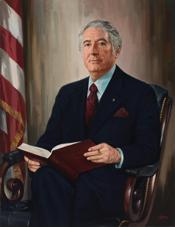
Historical · U.S. House · New Jersey · District 10
Peter Rodino Jr.
Former U.S. Representative · New Jersey District 10 · 1949–1989 · Democratic
Peter Rodino Jr. represented New Jersey's District 10 in the United States House of Representatives (1949–1989) for the Democratic party. The page below collects sourced biographical facts, term history, committee roles, and provenance for Jr..
Bioguide ID: R000374
Key facts
- Full name
- Peter Rodino Jr.
- State
- New Jersey
- District
- District 10
- Party
- Democratic
- House service
- 1949–1989
- First House term
- 1949
- Status
- Left office
- Current term ends
- —
- Born
- 1909
- Bioguide ID
- R000374
- Committee assignments
- —
- Dataset version
- 1.20260605
Biographical narrative
960 words · sourced from the Wikipedia REST extract
Peter W. Rodino Jr. was a prominent American politician who served as a member of the United States House of Representatives for New Jersey's 10th congressional district from 1949 until 1989. A member of the Democratic Party, Rodino was known for his liberal stance and played a significant role in various legislative matters during his lengthy tenure. He is particularly remembered for his leadership as chairman of the House Judiciary Committee, where he oversaw the impeachment hearings of President Richard Nixon in 1974, a pivotal moment in American political history. Rodino's service in Congress spanned four decades, making him one of New Jersey's longest-serving representatives until surpassed by Chris Smith in 2021.
Early life and career
Peter Wallace Rodino Jr. was born Pelligrino Rodino Jr. on June 7, 1909, in the North Ward of Newark, New Jersey. He was the youngest of three children in a family of Italian immigrants. His father, Pelligrino Rodino, emigrated from Atripalda, Italy, around 1900 and worked in various capacities, including as a machinist and toolmaker. His mother, Giuseppina Girard, passed away when Rodino was just four years old, leading to a significant change in his family dynamics. His father later remarried.
Rodino's early education took place in Newark, where he attended McKinley Grammar School and later graduated from Barringer High School. He pursued higher education at the University of Newark and earned a law degree from Newark Law School, both of which are now part of Rutgers University. During his studies, Rodino faced challenges, including a speech impediment resulting from a childhood illness. He undertook self-directed speech therapy, which included reciting literature to improve his articulation.
While pursuing his law degree, Rodino worked various jobs to support himself, including positions with the Public Service Railroad and Transportation Company, as an insurance salesman, and at Ronson Art Metal Works. He also taught public speaking and citizenship classes in Newark and dabbled in songwriting. His commitment to public service was evident early on, as he served as an appeals agent for the Newark Draft Board under President Franklin Roosevelt's administration. Although this role exempted him from the draft, Rodino chose to enlist in the U.S. Army in 1941, serving from 1942 to 1946. He was commissioned as a second lieutenant and served in the First Armored Division in North Africa and Italy, where he earned a Bronze Star for his service.
Rodino's first attempt at public office came in 1940 when he ran as a Democratic candidate for the New Jersey General Assembly but was unsuccessful. However, his political career gained momentum after World War II. In 1946, he challenged the nine-term Republican incumbent Fred A. Hartley Jr. for a congressional seat but lost. Hartley did not seek re-election in 1948, which opened the door for Rodino to run for the vacant 10th district seat.
House tenure
Rodino's congressional career began in 1949 when he won the Democratic primary unopposed and then defeated Republican Anthony Giuliano in the general election. His victory was aided by the popularity of President Harry Truman, who endorsed him during a campaign event in Newark. Rodino's initial election marked the beginning of a long and influential tenure in the House of Representatives, where he would serve for 20 consecutive terms.
Throughout his time in Congress, Rodino faced various electoral challenges but consistently secured re-election. In 1950, he won his second term against Republican William H. Rawson by a significant margin. Despite a national political climate that leaned Republican in 1952, Rodino managed to secure a third term. His electoral success continued in subsequent years, with victories over various Republican challengers, including William E. McGlynn and G. George Addonizio. Rodino's ability to maintain a strong voter base was evident as he consistently garnered over 60% of the vote in his re-elections after 1956.
Rodino's political career was characterized by his commitment to the Democratic Party's principles and his advocacy for liberal policies. His long tenure in the House allowed him to build a reputation as a knowledgeable and influential legislator, particularly in matters related to civil rights, social justice, and government oversight.
Legislative focus and committees
During his time in the House of Representatives, Rodino's legislative focus encompassed a wide range of issues, reflecting the evolving political landscape of the United States. He gained prominence as the chairman of the House Judiciary Committee, a position he held during a critical period in American history. One of his most notable achievements was overseeing the impeachment hearings against President Richard Nixon in 1974, which ultimately led to Nixon's resignation. This experience solidified Rodino's reputation as a key figure in American governance and law.
In addition to his work on the Judiciary Committee, Rodino was involved in various other legislative initiatives and committees throughout his career. His commitment to civil rights and social justice was evident in his support for legislation aimed at promoting equality and protecting the rights of marginalized communities. He played a role in shaping policies that addressed issues such as immigration, labor rights, and government accountability.
Rodino's tenure in Congress also coincided with significant social and political changes in the United States, including the civil rights movement and the Watergate scandal. His ability to navigate these complex issues and contribute to meaningful legislation underscored his importance as a legislator.
Rodino's legacy is marked by his long service in the House of Representatives and his role in pivotal moments in American political history. His commitment to public service and advocacy for liberal policies left a lasting impact on his constituents and the broader political landscape of New Jersey and the nation. After serving in Congress for four decades, Rodino's final term ended on January 3, 1989, concluding a distinguished career that spanned significant changes in American society and governance.
Notable legislation
Sponsored and co-sponsored legislation for Peter Rodino Jr. is pending operator curation. The biographical narrative above carries the same provenance trail until per-bill rows are written.
Sources
- [1]https://en.wikipedia.org/wiki/Peter_W._RodinoWikipedia · retrieved 2026-06-05
Notable quotes
Sourced quotes for Peter Rodino Jr. are pending operator curation. Narrative-scope provenance remains attached below.
Sources
- [1]https://en.wikipedia.org/wiki/Peter_W._RodinoWikipedia · retrieved 2026-06-05
Key positions
Curated policy positions for Peter Rodino Jr. are pending operator review. The biographical narrative above carries the same provenance trail until per-topic positions are written.
Sources
- [1]https://en.wikipedia.org/wiki/Peter_W._RodinoWikipedia · retrieved 2026-06-05
Terms served
- 1949–1951U.S. House · Term 1 · Democratic
- 1951–1953U.S. House · Term 2 · Democratic
- 1953–1955U.S. House · Term 3 · Democratic
- 1955–1957U.S. House · Term 4 · Democratic
- 1957–1959U.S. House · Term 5 · Democratic
- 1959–1961U.S. House · Term 6 · Democratic
- 1961–1963U.S. House · Term 7 · Democratic
- 1963–1965U.S. House · Term 8 · Democratic
- 1965–1967U.S. House · Term 9 · Democratic
- 1967–1969U.S. House · Term 10 · Democratic
- 1969–1971U.S. House · Term 11 · Democratic
- 1971–1973U.S. House · Term 12 · Democratic
- 1973–1975U.S. House · Term 13 · Democratic
- 1975–1977U.S. House · Term 14 · Democratic
- 1977–1979U.S. House · Term 15 · Democratic
- 1979–1981U.S. House · Term 16 · Democratic
- 1981–1983U.S. House · Term 17 · Democratic
- 1983–1985U.S. House · Term 18 · Democratic
- 1985–1987U.S. House · Term 19 · Democratic
- 1987–1989U.S. House · Term 20 · Democratic
Sources & provenance
Every attributable claim above carries a per-section [N] marker that resolves to the corresponding URL below. Each entry records the upstream provider, the canonical URL, and the timestamp at which the source was retrieved by the ingest pipeline.
Key facts
- https://bioguide.congress.gov/search/bio/R000374bioguide · retrieved 2026-06-05
- https://www.govtrack.us/congress/members/409344govtrack · retrieved 2026-06-05
Biographical narrative
- https://en.wikipedia.org/wiki/Peter_W._Rodinowikipedia · retrieved 2026-06-05
Find your representative
Every U.S. state elects representatives by district. Browse New Jersey’s delegation, the full former-representative roster, or explore the role and term length.
Related on The Candidate
- Preceded by Fred Hartley Jr.Earlier holder of the New Jersey District 10 House seat · Republican.Open
- Succeeded by Donald PayneLater holder of the New Jersey District 10 House seat · Democratic.Open
- Andrew HayFormer U.S. Representative · New Jersey District 1 · WhigOpen
- Charles WolvertonFormer U.S. Representative · New Jersey District 1 · RepublicanOpen
- Christopher BergenFormer U.S. Representative · New Jersey District 1 · RepublicanOpen
- Clement SinnicksonFormer U.S. Representative · New Jersey District 1 · RepublicanOpen